-
-
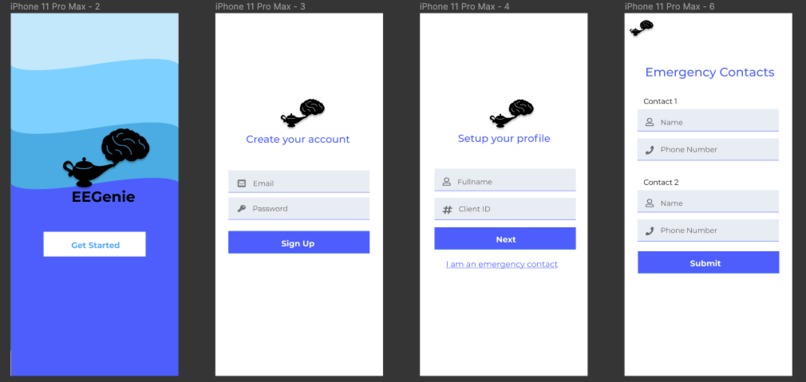
User Setup
-
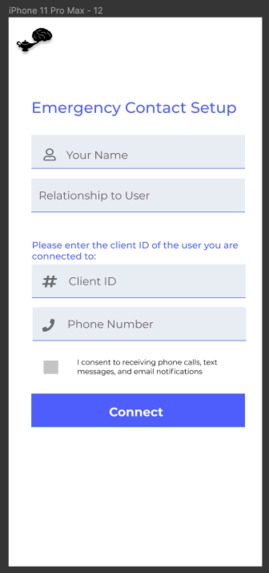
Emergency Contact Setup
-
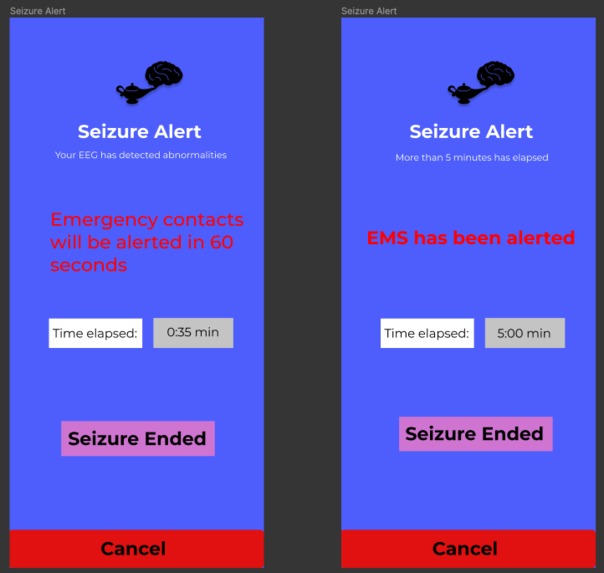
User Alert
-
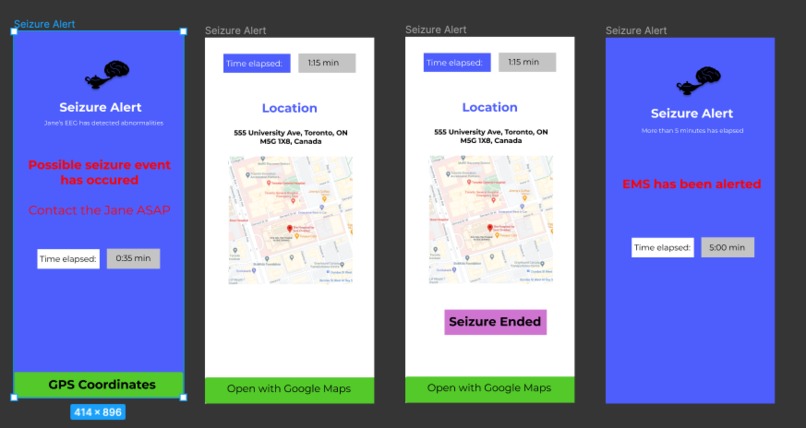
Emergency Contact Alert
-
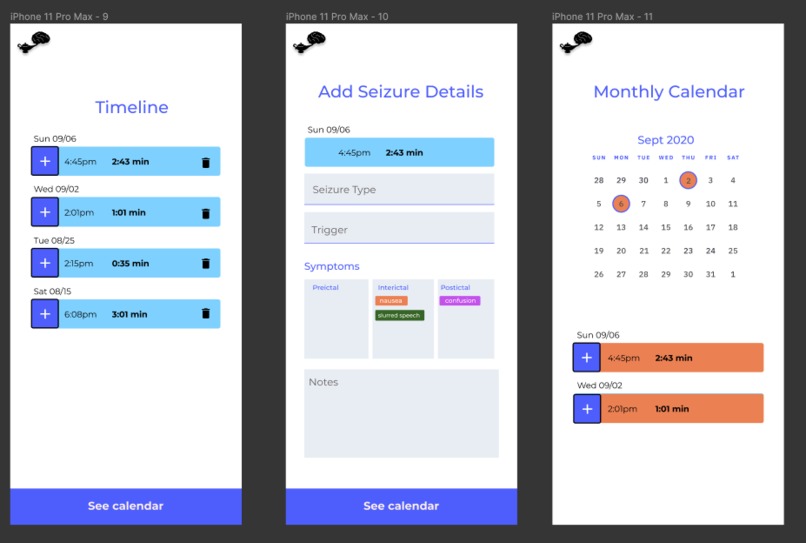
Seizure Diary
-
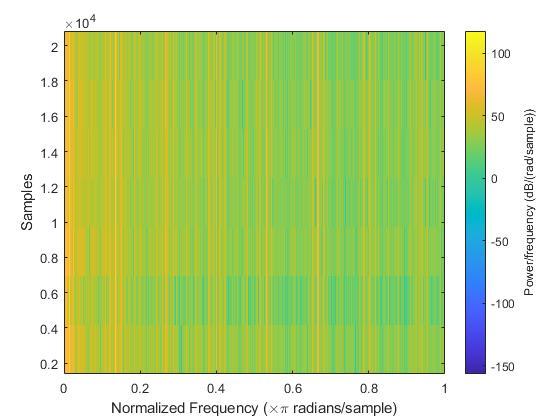
Preictal Spectrogram
-
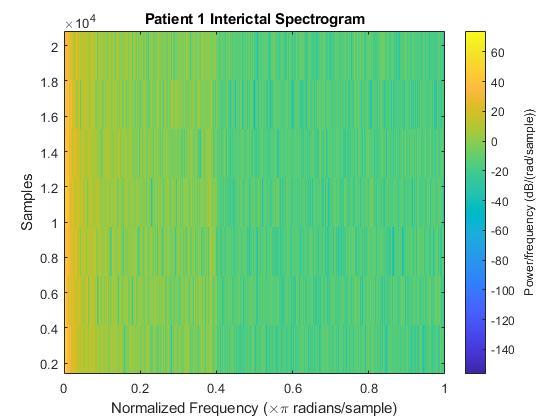
Interictal Spectrogram


Inspiration
Epilepsy affects 50 million people worldwide, and often epileptics experience depression and anxiety due to the unexpected nature of seizure onset. Patients who live alone or those who do not recall seizures are especially vulnerable. 75% of seizures can be attributed to unknown causes and could benefit from personalized treatment and analysis.
What it does
EEG is used as the "gold standard" in clinical seizure diagnosis, and portable EEG shows great promise for collection of high quality data. Our software aims to not only integrate resources such as seizure diary and emergency/EMS contact, but also to use machine learning to determine whether or not the user is heading into a seizure (preictal stage). We believe EEGenie can lower anxiety from unexpected seizures, help users understand their seizures/triggers, and lower risk of injury by warning and informing emergency contacts by leveraging personal data.
How we built it
The workflow of the prediction classifier involves Short-Time Fourier Transform to de-noise the data and prepare it for a convolutional neural network. The output is then passed through SVM classifier to finally determine if a seizure occurring is likely or not. The goal is to have this classifier located on a server, such that the computations involved in predicting seizures are done on the cloud--so as to not burn through the user's battery. The mockup of the front end of the app we have is generated in Figma and would be implemented in React Native to make API calls to and from the server. The mockup includes the emergency alert system and the seizure diary.
Challenges we ran into
One of the most important challenges we faced was the machine learning of large datasets and lack of processing power. False positives and negatives were also a concern that could be improved by analysis as more data becomes available. Meanwhile they have been mitigated by cancel buttons, cancel notifications, and a 60s delay before emergency contacts are alerted.
Data privacy and confidentiality most be considered as the personal datasets generated may be useful for future research. Enforcing patient consent and anonymizing names with client/patient IDs can be used to address this.
Finally the difference in signal quality from consumer and medical EEGs was a concern. Studies such as a 'Comparison of Medical and Consumer Wireless EEG Systems for Use in Clinical Trials' by Ratti et al. have demonstrated the Mindwave Fp1 to be comparable in power spectra medical EEGs, but more considerations must be taken into account on the limitations of portable EEGs.
Accomplishments that we're proud of
Researching the portable EEG and finding promising results with the same and designing the prediction algorithm were one of our biggest accomplishments.
What we learned
Interesting facts about the epileptic patients and also furthering our knowledge about Machine Learning. And more importantly, working with a team that helped each other every step of the way.
What's next for EEGenie
Test with consumer (portable) and medical EEGs Incorporate more parameters like biochemical changes in the data set. Add a fall protection in the form of an inflatable to protect the head. To record all data and improve prediction rate and make it personalized to the patient
Built With
- datasets
- eeg
- figma
- flask
- python
- raspberry-pi
- react-native
- tensorflow






Log in or sign up for Devpost to join the conversation.