-
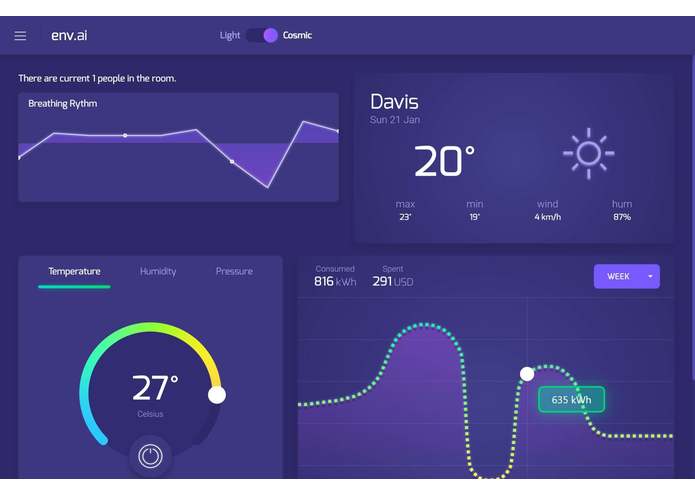
Analytics dashboard

Inspiration
Pollution in the world
What it does
Using a combination of sensor feedback and cloud-based analytics tools, it self-regulates rooms to minimize energy usage while maximizing human comfort.
How we built it
With time and effort. Things we used include: Node.js, Python, AngularJS, multi-platform chatbot, GCP, AWS, ML, analytics dashboard, Arduino board, and a Walabot board.
Challenges we ran into
- Retrieving and syncing data from multiple sources (AWS IoT and python to firebase)
- Training the ML models with the right parameters
- Interfacing with the Walabot due to lack of documentation to implement the API
Accomplishments that we're proud of
Getting most of what we wanted done
What we learned
How to use new languages and platforms, mainly the Walabot and some of GCP functions
What's next for env.ai
more sensor input, even better analytics algorithms, etc
Built With
- amazon-web-services
- angular.js
- arduino
- dialogflow
- firebase
- gcp
- govdata
- iot
- node.js
- python
- stm32
- walabot


Log in or sign up for Devpost to join the conversation.