-
-
-
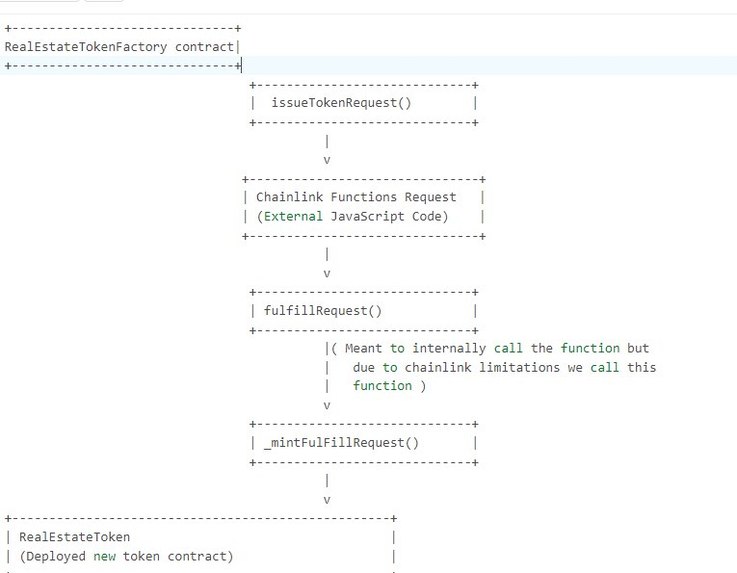
UML Diagram (TokenFactory)
-
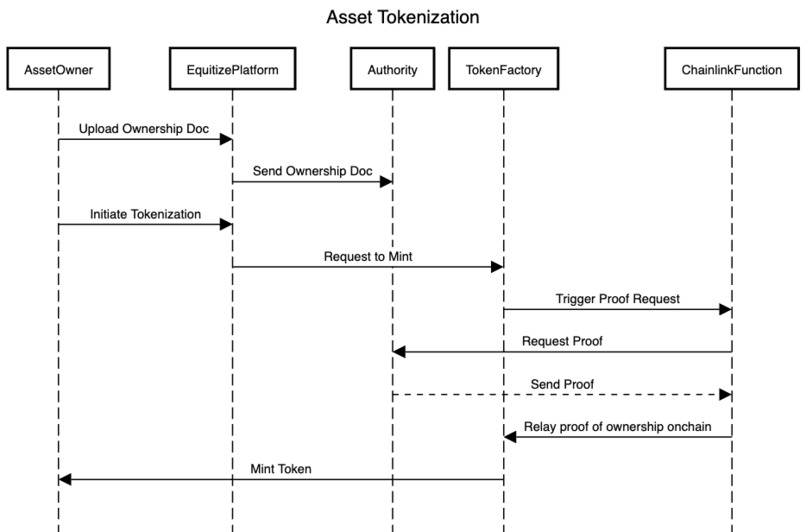
Sequence Diagram (Token Issuance)
-
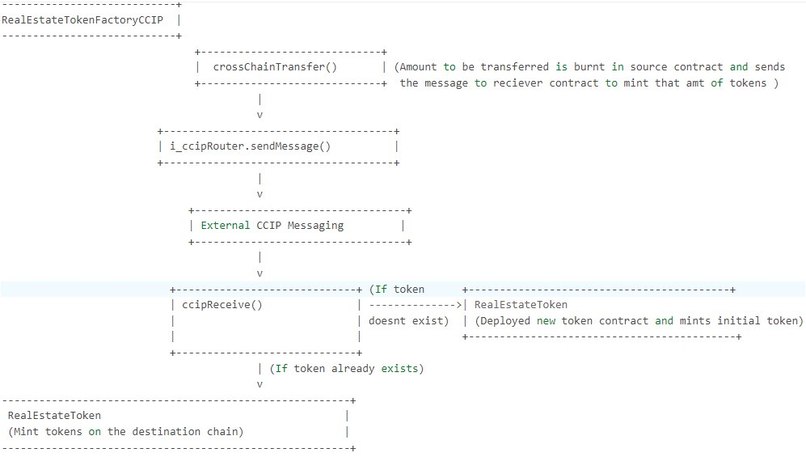
UML Diagram (CCIPTokenFactory)
-
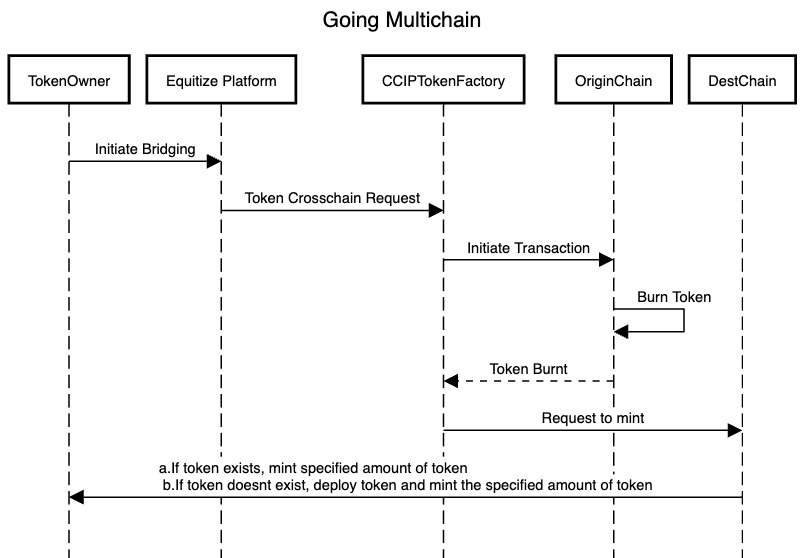
Sequence Diagram (Crosschain)


Inspiration
As a group of blockchain builders, we've personally encountered strong interest from tradfi companies wanting to leverage the benefits of adopting blockchain. This interest was accelerated by Blackrock's BUIDL fund launch.
We've discovered that $136 billion worth of stablecoins have been issued to date, but the opportunity seems much more immense still. While the most prominent category of assets has been tokenized, there's still much more to be done.
Through conversations with interested asset owners, we've identified four main areas of focus: 1. Proof and Compliance: Integrating with third-party provers to ensure that tokens minted are compliantly secured in line with the regulations of the relevant jurisdictions. 2. Access to Onchain Liquidity: Many asset owners see the benefit of tokenization in terms of accessibility, as traditional distribution channels are inaccessible to a huge number of buyers, thereby limiting demand. With a monopolistic market for RWA assets, there's no better way to enable distribution channels than by aggregating multiple marketplaces for issuers to list their assets. Interoperability is key to enabling this, with marketplaces anchoring on different blockchain networks. 3. Domain Expertise: Interested parties have no blockchain knowledge and do not know how to tokenize assets. 4. Simple Process: Currently, asset owners may require up to nine different types of touchpoints to tokenize their assets. This complexity, especially for users without blockchain knowledge, is a barrier. Asset owners also lack a platform to manage the entire asset lifecycle from issuance to payouts, transactions, and redemption.
This brings us to Equitize.
What it does
Equitize is a tokenization-as-a-service platform that enables asset owners to issue, distribute, and manage their tokenized assets securely and compliantly.
For this hackathon, we're primarily focusing on using Chainlink products to enable two of these areas: 1. Bringing offchain proof onchain as validation. -> Proof and Compliance 2. Using CCIP as the secured and efficient way of combining all the liquidities on-chain, removing network isolation. -> Access to Onchain Liquidity
How we built it
Token Issuance/Mint
Whenever there's a request to mint tokens, a third-party authority/notary public issues proof/declaration of ownership. This proof is then brought onchain through Chainlink functions. Owners can only mint tokens when proof is received. We are also using the ConfirmedOwner Contract to validate this.
Token Bridging
These tokens can also be bridged across networks using CCIP. While we've only completed the token bridging ERC-20 with CCIP during the hackathon, we plan to expand to ERC-3643 and ERC-721 going forward. Additionally, we're in conversations with marketplaces to enable listings as tokens become available under different custodians on various chains to be listed.
Challenges we ran into
There were two main challenges that we ran into:
1. Technical Challenge: As a team of developers new to Chainlink, we faced difficulties due to the maximum callback gas limit. Debugging revealed that it was because we were making requests to gas-extensive functions. We had to redesign our plans, which consumed significant time.
2. Coordination Challenge: With members from vastly different time zones and full-time jobs, coordinating our efforts was challenging, delaying our progress.
Accomplishments that we're proud of
We are proud of the product that we have built, which uses two different Chainlink solutions in a single and continuous use case. We
We are also proud of the collaboration that we had as a global team. Even though we took the first two weeks trying to finalize the scope, and due to coordination challenges, did not make any tangible progress. We had teammates who took great initiative to get things done, that inspired us to hack everything away.
What we learned
Through this hackathon, we have learned first hand on how Chainlink is the important puzzle piece that can bring greater blockchain adoption. And this is done through enabling interoperability not only between blockchain networks, but also with external networks. Going forward, we would love to continue to explore how to fully utilize Chainlink, in order to bring Asset Tokenization to asset owners.
What's next for Equitize
We're excited about the future! We aim to build a full tokenization platform MVP within the next 3 months, where asset owners can issue and manage their tokens with an intuitive and insightful management dashboard. Following this, we'll explore extending our platform to other token standards, specifically compliance-related standards such as ERC-3643.
In the meantime, we've begun discussions with potential clients, including PE funds and Real Asset Owners, who are keen to use our platform.


Log in or sign up for Devpost to join the conversation.