-
-
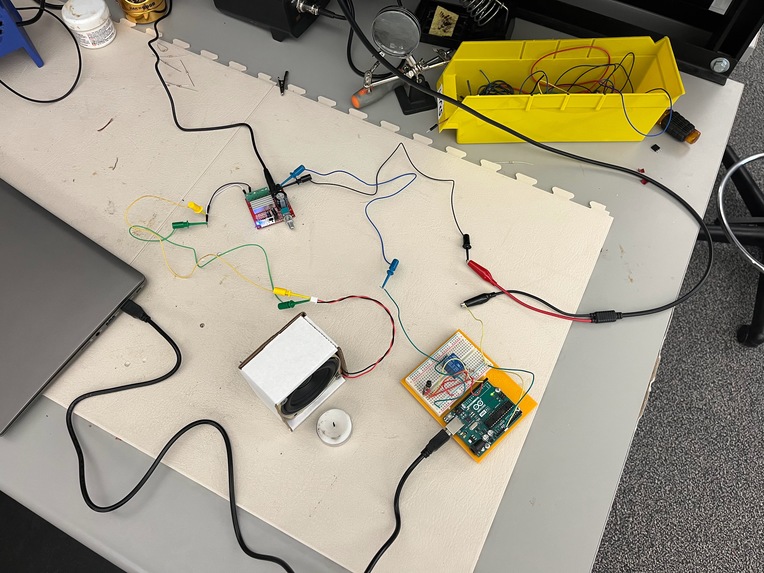
The overall circuit
-
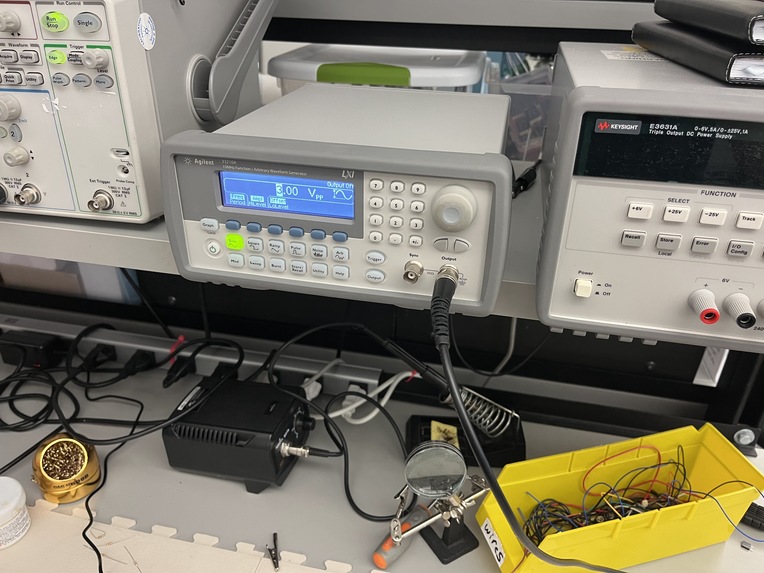
Function generator
-
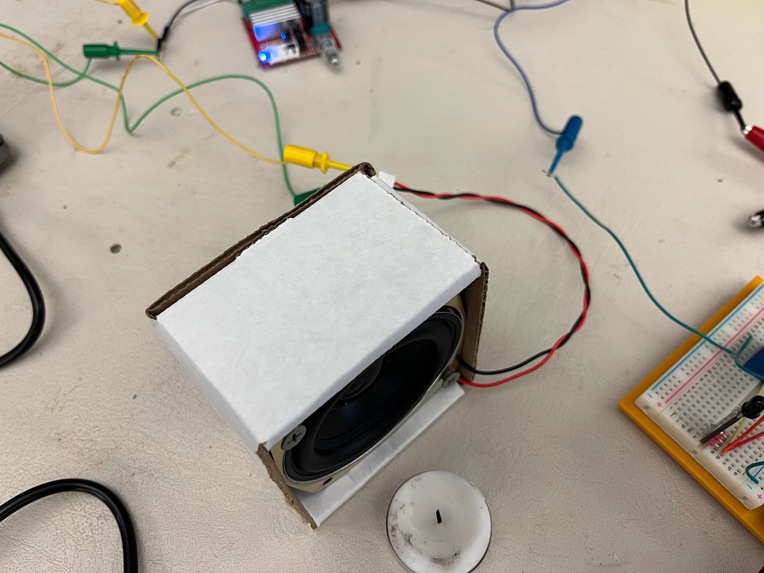
Speaker
-
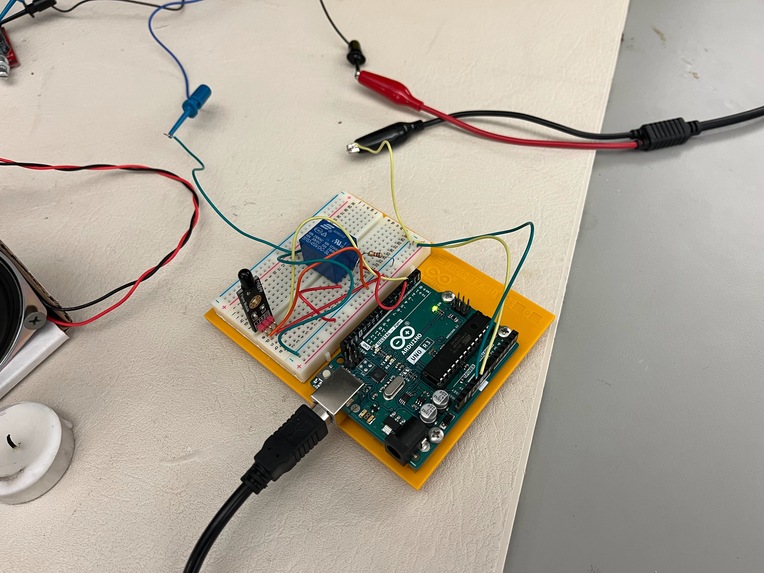
Arduino, Flame sensor, and Relay
-
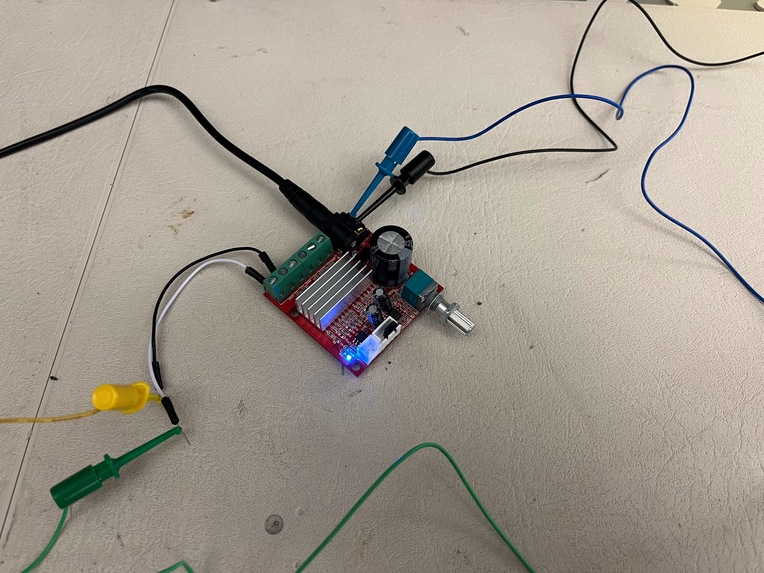
Audio amplifier


Inspiration
DARPA's Instant Flame Suppression (IFS) program demonstrated the potential for Acoustic flame suppression in 2012. Currently, sprinkler systems effectively result in one trading fire damage for water damage. Knowing these two things, upon seeing our sensor kit had a fire sensor, the idea for a passive acoustic flame suppression system became clear.
What it does
We created a scale working prototype of a passive acoustic flame suppression system which outputs specific frequencies from a speaker, which disrupt and extinguish flames.
How we built it
We used an Arduino as our microcontroller, which took the input from the flame sensor, and activated our relay in response to a flame. The relay then passed the signal from the function generator to the audio amplifier, whose resulting amplified signal was used to drive the speaker.
Challenges we ran into
We lacked critical hardware to create a prototype of greater scale, being unable to access any audio exciters or more powerful amplifiers and speakers. We initially attempted to leverage the amplifier and speakers of a boom box we got access to, but unfortunately were unsuccessful. The audio amplifier we used had a significant amount of noise, requiring us to influence our demo manually, so that the noise did not disrupt the flame prior to the sensor and relay activation.
Accomplishments that we're proud of
We put out fire with sound!
What we learned
We learned about the practical development differences when working with AC and DC circuits, including the use case for relays. We learned about how sound systems work both physically and practically, including the path from waveform, to voltage amplifier, to power amplifier, to the driving of a speaker.
What's next for Extinguishify
Our next iteration will leverage audio exciters, and with it we will be able to establish requisite exciter density and strength for varying flame intensities and distances. Further into development, we will analyze the degree of flame cooling as well, to measure the impact of our solution even in the event the system fails to completely extinguish the flame, extending on DARPA's IFS programs phase II research.


Log in or sign up for Devpost to join the conversation.