-
-
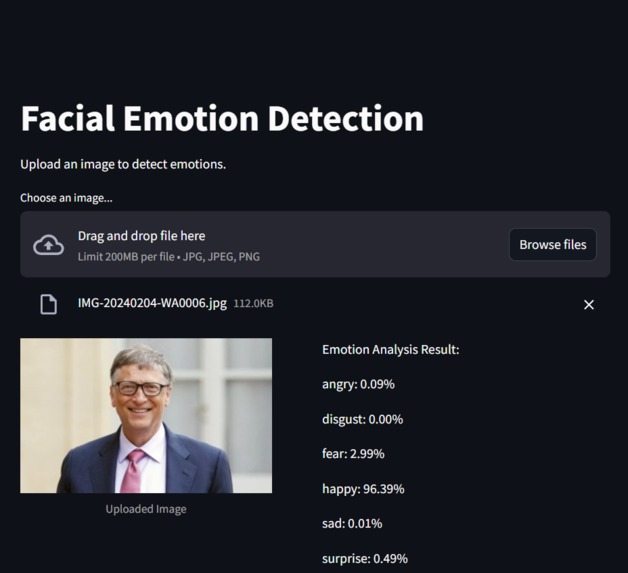
FaceEmo.png
-
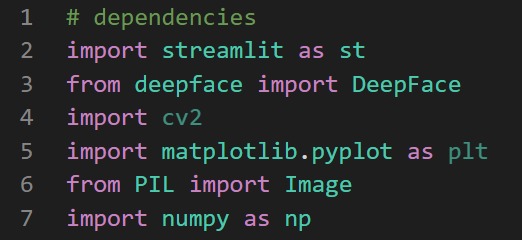
vscode screenshot
-
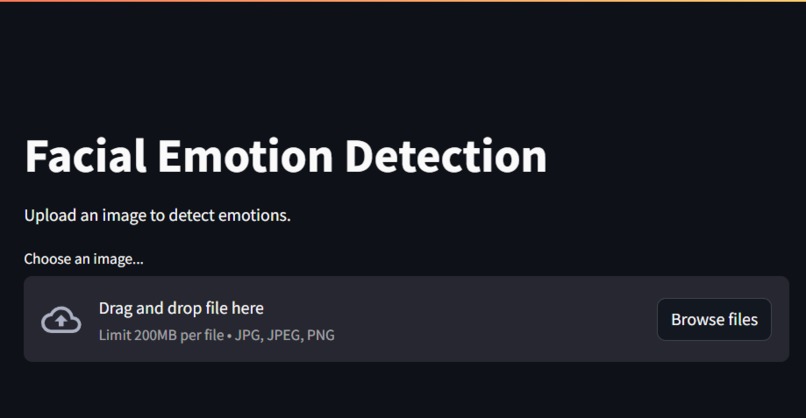
streamlit screenshot
-
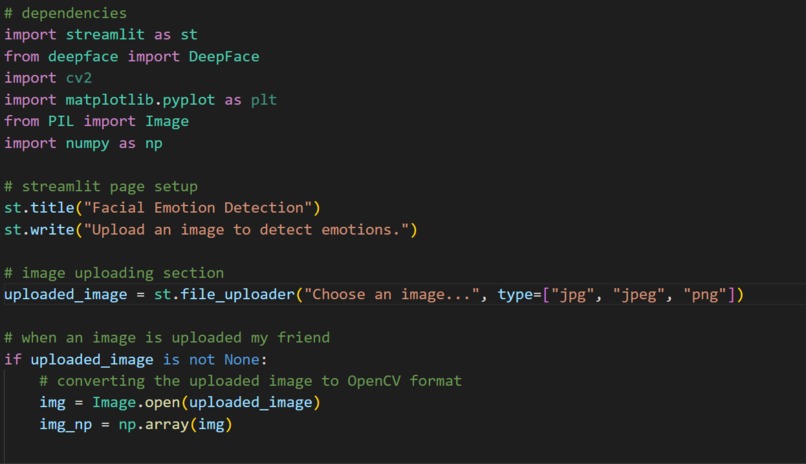
vscode screenshot
-
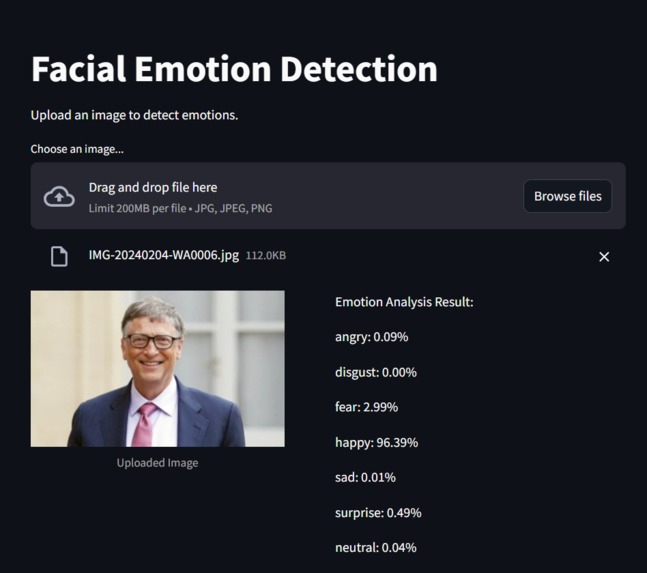
streamlit screenshot
-
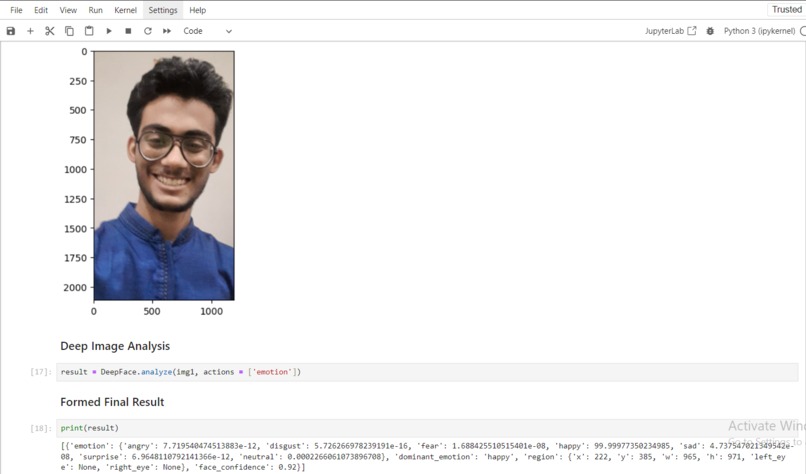
jupyter notebook file screenshot
-
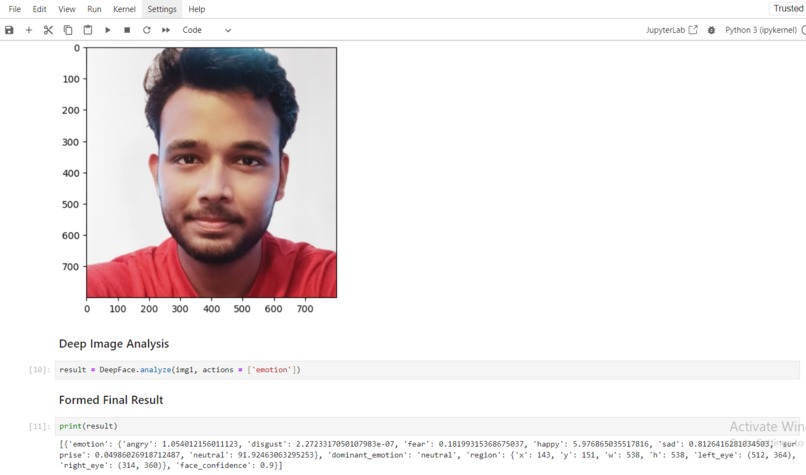
jupyter notebook file screenshot
-
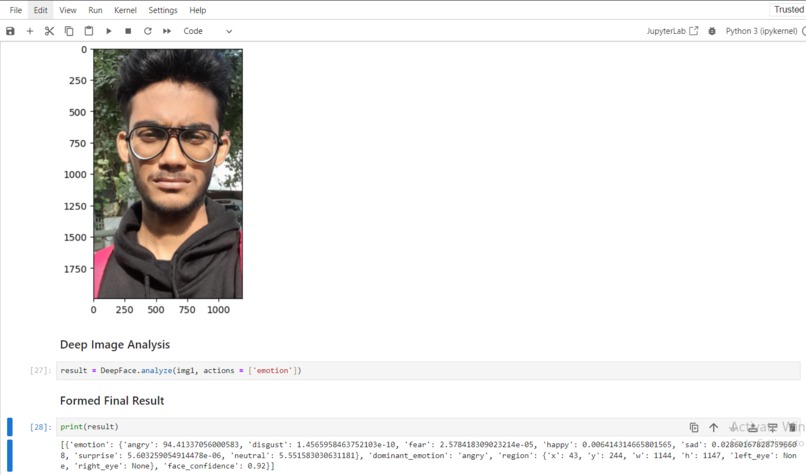
jupyter notebook file screenshot


FaceEmotion: Real-Time Facial Emotion Detection
Inspiration
The inspiration behind FaceEmotion stemmed from a desire to create a tool that leverages AI to understand human emotions from facial expressions. Emotional intelligence is a crucial part of human interaction, and with advances in AI, we saw an opportunity to bridge the gap between humans and machines in understanding these nuances. FaceEmotion was born out of this curiosity, aiming to provide real-time emotion detection and open new possibilities in human-computer interaction.
What it Does
FaceEmotion is a web application that allows users to upload an image of a person’s face, and it then detects and displays the emotions present in the facial expression. Using DeepFace’s emotion analysis capabilities, FaceEmotion identifies emotions like happiness, sadness, anger, surprise, and more, providing a breakdown of each detected emotion’s probability.
How We Built It
FaceEmotion was built using:
- Streamlit for an easy-to-use, interactive web interface.
- DeepFace for facial emotion recognition.
- OpenCV and Pillow for handling image uploads and preprocessing.
- Python as the primary language to integrate the libraries and build the application logic.
The app layout includes a streamlined interface for uploading images and viewing results in a side-by-side display.
Challenges We Ran Into
Some challenges we encountered included:
- Image Processing Issues: Handling various image formats and ensuring compatibility with DeepFace’s model required some troubleshooting.
- Real-time Performance: Emotion detection and rendering results without lag was essential, so optimizing response times was a priority.
- Web Layout Adjustments: Making the web layout user-friendly, with the image and results displayed side-by-side, required iterating on the design to achieve the best user experience.
Accomplishments That We're Proud Of
We’re proud of creating an app that simplifies emotion detection for users with no technical background. The integration of Streamlit and DeepFace enabled a smooth and interactive experience, allowing for real-time feedback on the uploaded images. Achieving this functionality in a user-friendly web interface felt like a rewarding milestone.
What We Learned
Through this project, we learned:
- The power of DeepFace in real-world applications for analyzing emotions.
- Streamlit’s capabilities in making AI models accessible via web interfaces.
- The importance of user experience design in AI applications to ensure seamless interaction.
What's Next for FaceEmotion
Future plans for FaceEmo include:
- Video Emotion Detection: Extending the app to support real-time emotion detection from live video feeds.
- Extended Emotion Analysis: Adding features for deeper analysis, like identifying mood trends over time.
- Cross-platform Accessibility: Deploying FaceEmotion as a mobile app or browser extension to make it more accessible.
FaceEmotion continues to explore the potential of AI in enhancing emotional intelligence, making interactions with technology more empathetic and understanding.


Log in or sign up for Devpost to join the conversation.