-
-
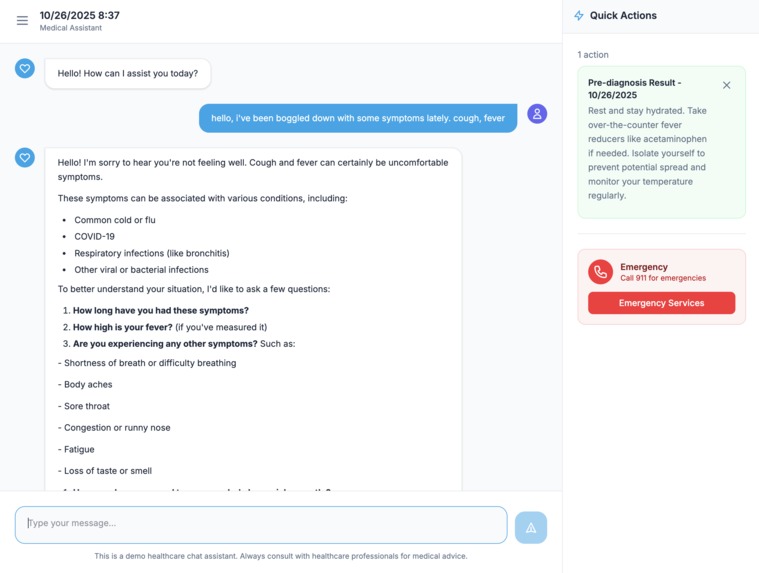
Chat with an llm doctor's assistant (we'll take care of finding remedies and courses of actions)
-
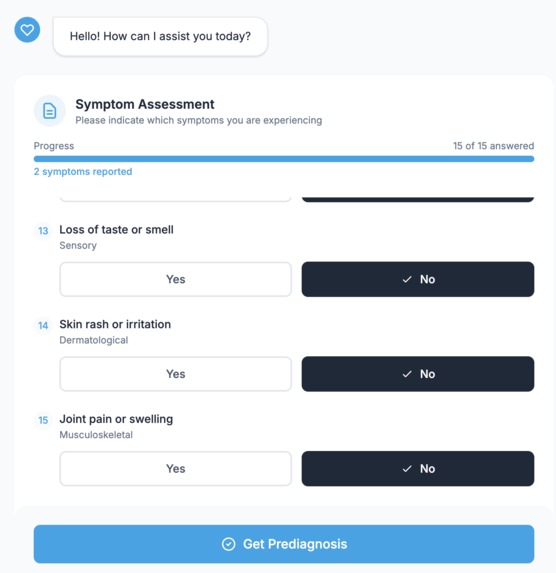
-
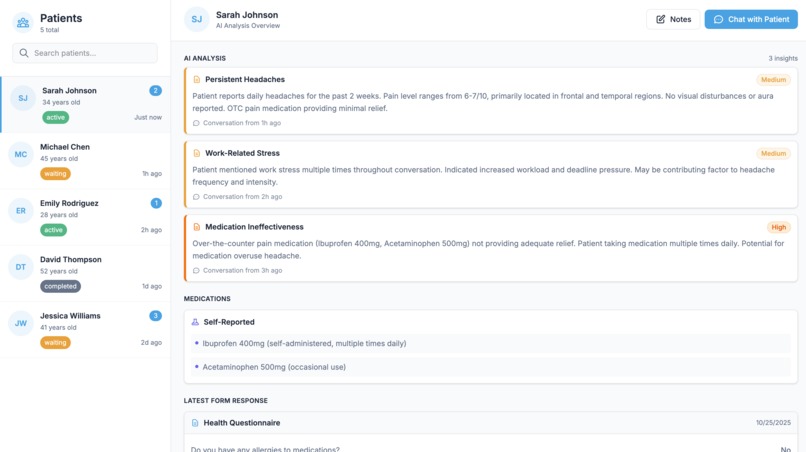
Keep chatting because your doctors will have insights on all conversations and issues in between appointments.


Inspiration
Healthcare workers are generally very stressed and the technology used in many hospitals and healthcare firms are very outdated. One of my friends told me about how in the hospital he works at, they still page doctors instead of just instantly messaging them, causing inefficient doctor transfers and slower communication. And many of these inefficiencies transfer over to the patients, who are usually anxious waiting for answers from the doctor. Fast Aid PI tackles a specific area: patient prediagnoses. We hope to relieve stress for the patient, give them a course of action before their doctor appointments, and speed up data transfer from patient to doctor.
What it does
Our app takes in medical data from the patient, prediagnoses them using a machine learning model (mocked by an LLM API call), gives them a recommended path of action, and transfers the data to the doctor to take notes for their upcoming appointments.
How we built it
For the planning phase, we consulted friends who worked in the medical space and asked for any large problems or concerns they experience. We built it using a node.js frontend and fastAPI backend server.
Challenges we ran into
We had various challenges while prototyping the idea for this app:
- How to stay within HIPAA guidelines for sharing information and data
- How to prevent users from getting overwhelmed by information online
- How to ensure users effectively document their well-being to the doctor
- How to make sure doctors can see and view information effectively As for technical challenges, the main challenge came via communicating clear goals and linking the client and server architectures.
Accomplishments that we're proud of
Following the structure of the challenges above, here is how we tackled each one of them:
- Via providing an easily scalable authentication framework with password encryption, preventing views from users and practitioners unless users give consent
- Providing a simple, easily followable structure given in the prediagnosis phase rather than listing out all possible medications. We want the actual diagnosis responsibility to be the doctor's.
- Providing an AI-powered chatbot to help ease potential stress induced on the user and clarify any questions before going to a practitioner
- Providing persistence of chats, forms, and prediagnoses on the user side
- Providing a summary view of user prediagnoses that doctors can take notes on
What we learned
We learned a lot about the problems in healthcare, prototyped various ideas, and decided to tackle prediagnosis and appointment stress. Through researching problems and communicating with people working and/or studying healthcare, we were able to determine the best course of action for each feature of our app.
What's next for Fast Aid PI
There are a lot of improvements that can be made! We have some stretch features that we were not able to get to and some bigger issues that we couldn't tackle:
- Doctors should be able to make edits and highlight certain parts of prediagnosis results sent from patients.
- Adding a system where doctors can easily share patient diagnoses and treatment with one another. This tackles the communication error so common when patients must deal with multiple specialists to treat their cause.
- Users registered as doctors can add a patient medical history to preprocess the AI-powered prediagnosis step to create a more accurate report.
- Enforcing stronger authentication and encryption guidelines to abide by HIPAA guidelines.
- Training an actual ML model based on real patient cases and doctor prescriptions to improve runtime and cost efficiencies. Constantly calling a powerful LLM is unnecessary for the prediagnosis of symptoms and potential diseases.
Built With
- anthropic
- eslint
- fastapi
- node.js
- python
- react
- requests
- sqlalchemy
- sqlite
- tailwind
- typescript


Log in or sign up for Devpost to join the conversation.