-
-
-
-
-
-
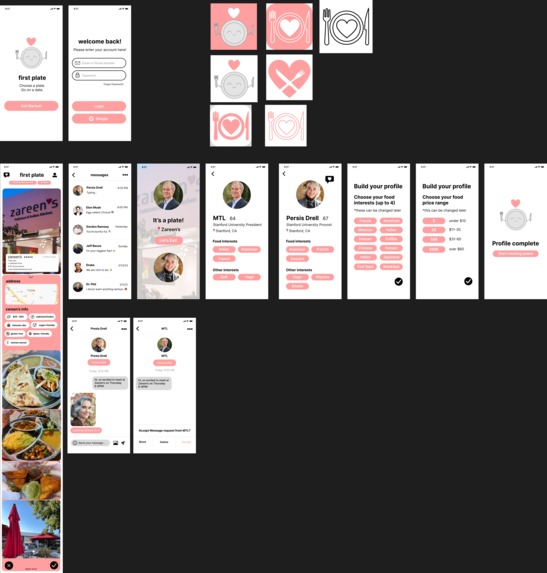
First Plate Figma Mockup
-
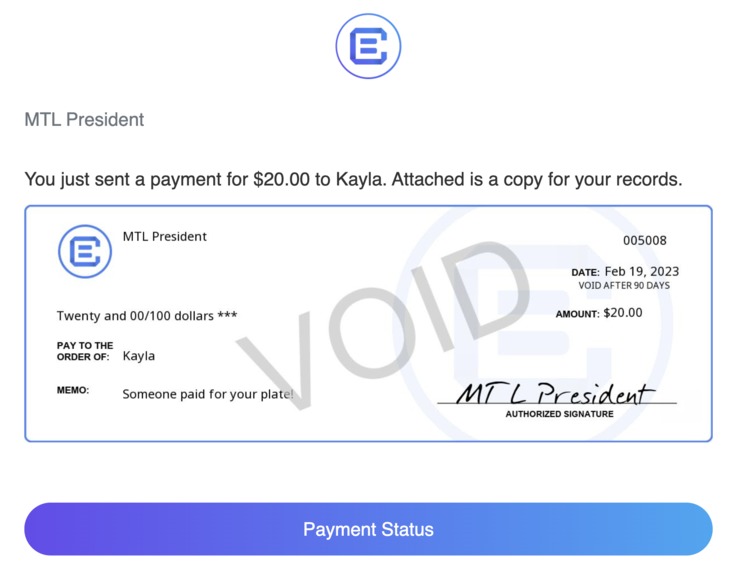
Checkbook API (Digital Check)
-
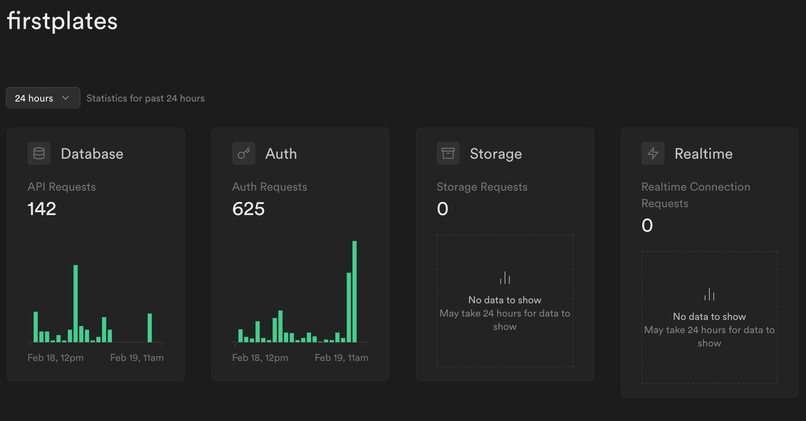
Supabase
-
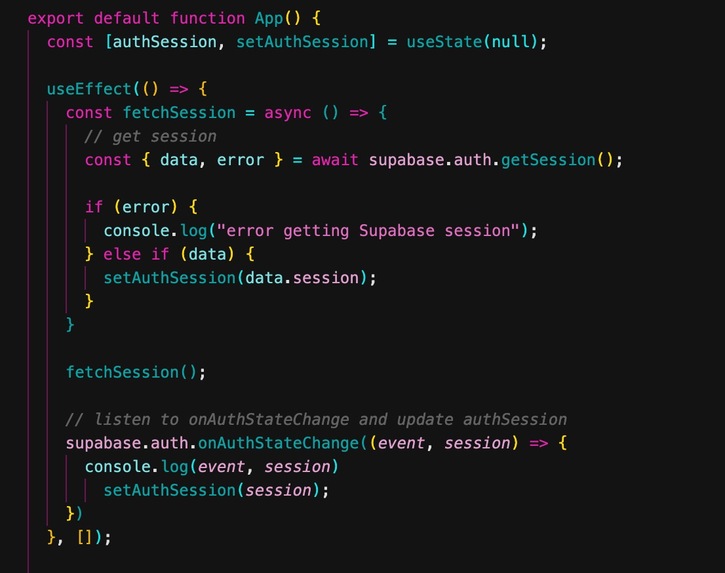
Implementation of Supabase


Meet Our Team :)
- Lucia Langaney, first-time React Native user, first in-person hackathon, messages magician, snack dealer
- Tracy Wei, first-time React Native user, first in-person hackathon, payments pro, puppy petter :)
- Jenny Duan, first in-person hackathon, sign-up specialist, honorary DJ
Inspiration
First Plate was inspired by the idea that food can bring people together. Many people struggle with finding the perfect restaurant for a first date, which can cause stress and anxiety. By matching users with restaurants, First Plate eliminates the guesswork and allows users to focus on connecting with their potential partner over a shared culinary experience. In addition, food is a topic that many people are passionate about, so a food-based dating app can help users form deeper connections and potentially find a long-lasting relationship. After all- the stomach is the way to the heart.
What it does
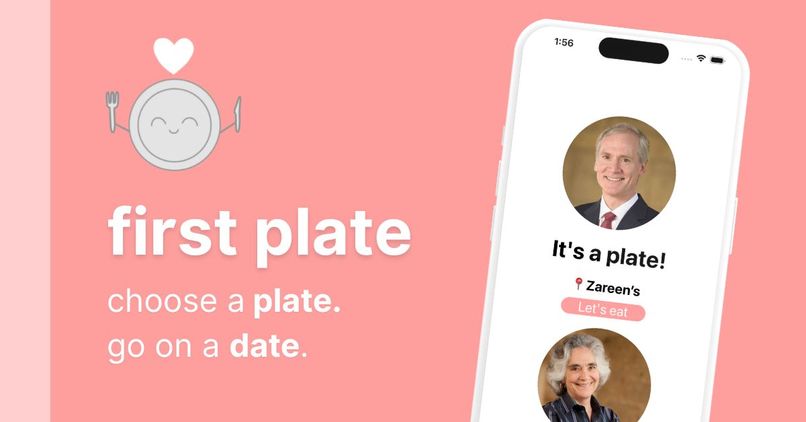
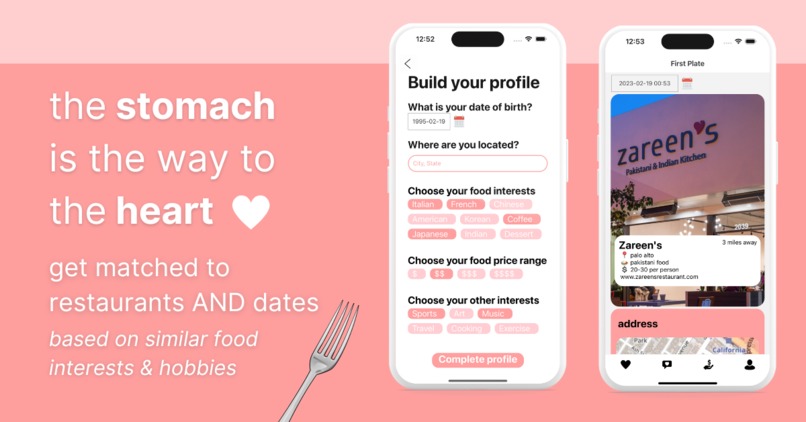
Introducing First Plate, a new dating app that will change the way you connect with potential partners - by matching you with restaurants! Our app takes into account your preferences for cuisine location, along with your dating preferences such as age, interests, and more.
With our app, you'll be able to swipe through restaurant options that align with your preferences and match with potential partners who share your taste in food and atmosphere. Imagine being able to impress your date with a reservation at a restaurant that you both love, or discovering new culinary experiences together.
Not only does our app provide a fun and innovative way to connect with people, but it also takes the stress out of planning a first date by automatically placing reservations at a compatible restaurant. No more agonizing over where to go or what to eat - our app does the work for you.
So if you're tired of the same old dating apps and want to spice things up, try our new dating app that matches people with restaurants. Who knows, you might just find your perfect match over a plate of delicious food!
How we built it
- Figma mockup
- Built React Native front-end
- Added Supabase back-end
- Implemented Checkbook API for pay-it-forward feature
- Connecting navigation screens & debugging
- Adding additional features
When developing a new app, it's important to have a clear plan and process in place to ensure its success. The first step we took was having a brainstorming session, where we defined the app's purpose, features, and goals. This helped everyone involved get on the same page and create a shared vision for the project. After that, we moved on to creating a Figma mockup, where we made visual prototypes of the app's user interface. This is a critical step in the development process as it allows the team to get a clear idea of how the app will look and feel. Once the mockup was completed, we commenced the React Native implementation. This step can be quite involved and requires careful planning and attention to detail. Finally, once we completed the app, we moved on to debugging and making final touches. This is a critical step in the process, as it ensures that the app is functioning as intended and any last-minute bugs or issues are resolved before submission. By following these steps, developers can create a successful app that meets the needs of its users and exceeds their expectations.
Challenges we ran into
The app development using React Native was extremely difficult, as it was our first time coding in this language. The initial learning curve was steep, and the vast amount of information required to build the app, coupled with the time constraint, made the process even more challenging. Debugging the code also posed a significant obstacle, as we often struggled to identify and rectify errors in the codebase. Despite these difficulties, we persisted and learned a great deal about the React Native framework, as well as how to debug code more efficiently. The experience taught us valuable skills that will be useful for future projects.
Accomplishments that we're proud of
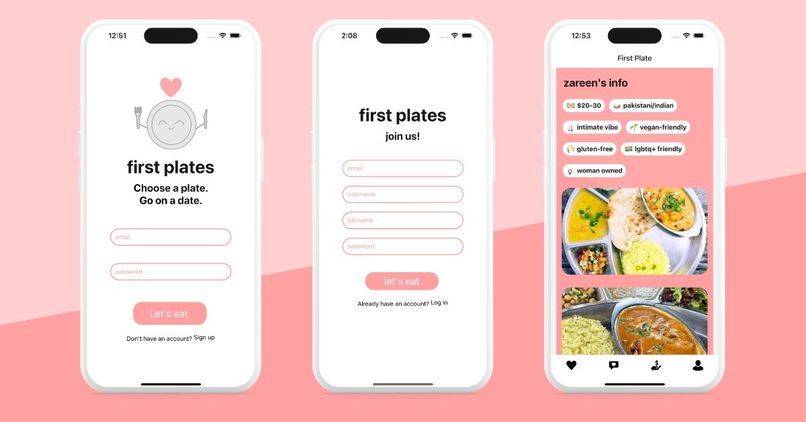
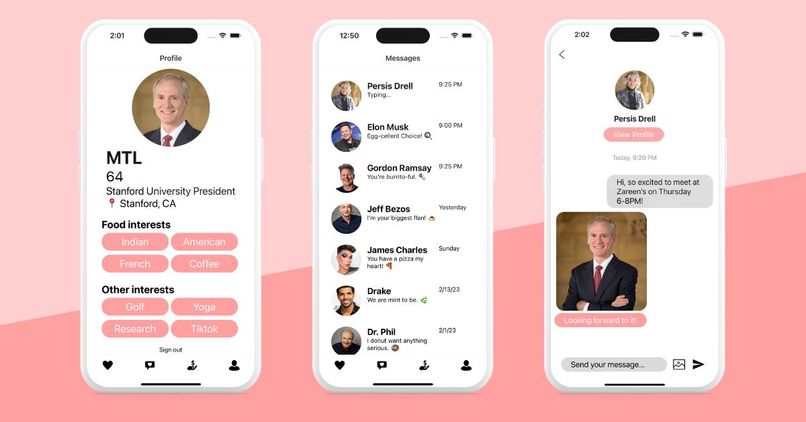
We feel extremely proud of having coded First Plate as React Native beginners. Building this app meant learning a new programming language, developing a deep understanding of software development principles, and having a clear understanding of what the app is intended to do. We were able to translate an initial Figma design into a React Native app, creating a user-friendly, colorful, and bright interface. Beyond the frontend design, we learned how to create a login and sign-up page, securely connected to the Supabase backend, and integrated the Checkbook API for the "pay it forward" feature. Both of these features were also new to our team. Along the way, we encountered many React Native bugs, which were challenging and time-consuming to debug as a beginner team. We implemented front-end design features such as scroll view, flexbox, tab and stack navigation, a unique animation transition, and linking pages using a navigator, to create a seamless and intuitive user experience in our app. We are proud of our teamwork, determination, and hard work that culminated in a successful project.
What we learned
In the course of developing First Plate, we learned many valuable lessons about app development. One of the most important things we learned was how to implement different views, and navigation bars, to create a seamless and intuitive user experience. These features are critical components of modern apps and can help to keep users engaged and increase their likelihood of returning to the app.
Another significant learning experience was our introduction to React Native, a powerful and versatile framework that allows developers to build high-quality cross-platform mobile apps. As previous Swift users, we had to learn the basics of this language, including how to use the terminal and Expo to write code efficiently and effectively.
In addition to learning how to code in React Native, we also gained valuable experience in backend development using Supabase, a platform that provides a range of powerful tools and features for building, scaling, and managing app infrastructure. We learned how to use Supabase to create a real-time database, manage authentication and authorization, and integrate with other popular services like Stripe, Slack, and GitHub.
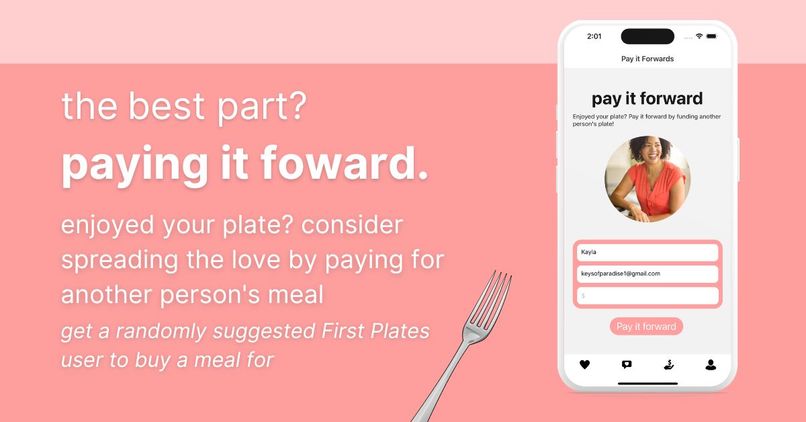
Finally, we used the Checkbook API to allow the user to create digital payments and send digital checks within the app using only another user's name, email, and the amount the user wants to send. By leveraging these powerful tools and frameworks, we were able to build an app that was not only robust and scalable but also met the needs of our users. Overall, the experience of building First Plate taught us many valuable lessons about app development, and we look forward to applying these skills to future projects.
What's next for First Plate
First Plate has exciting plans for the future, with the main focus being on fully implementing the front-end and back-end of the app. The aim is to create a seamless user experience that is efficient, secure, and easy to navigate. Along with this, our team is enthusiastic about implementing new features that will provide even more value to users. One such feature is expanding the "Pay It Forward" functionality to suggest who to send money to based on past matches, creating a streamlined and personalized experience for users. Another exciting feature is a feed where users can share their dining experiences and snaps of their dinner plates, or leave reviews on the restaurants they visited with their matches. These features will create a dynamic community where users can connect and share their love for food in new and exciting ways. In terms of security, our team is working on implementing end-to-end encryption on the app's chat feature to provide an extra layer of security for users' conversations. The app will also have a reporting feature that allows users to report any disrespectful or inappropriate behavior, ensuring that First Plate is a safe and respectful community for all. We believe that First Plate is a promising startup idea implementable on a larger scale.
Built With
- canva
- checkbook
- expo.io
- figma
- javascript
- react-native
- supabase
- vscode
- xcode







Log in or sign up for Devpost to join the conversation.