-
-

-

-

-

-

-

-

-
-

-
-
-

-
-
-
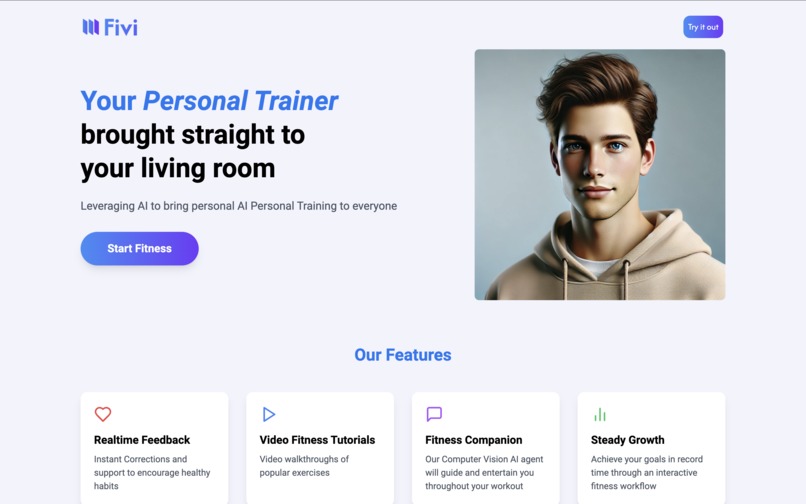
Landing Page
-
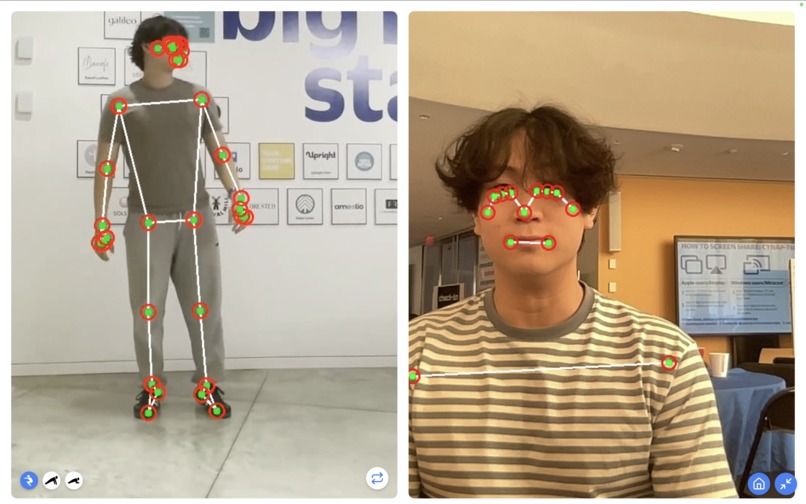
Video Guide + CV


Inspiration
We built an AI-powered physical trainer/therapist that provides real-time feedback and companionship as you exercise.
With the rise of digitization, people are spending more time indoors, leading to increasing trends of obesity and inactivity. We wanted to make it easier for people to get into health and fitness, ultimately improving lives by combating these the downsides of these trends. Our team built an AI-powered personal trainer that provides real-time feedback on exercise form using computer vision to analyze body movements. By leveraging state-of-the-art technologies, we aim to bring accessible and personalized fitness coaching to those who might feel isolated or have busy schedules, encouraging a more active lifestyle where it can otherwise be intimidating.
What it does
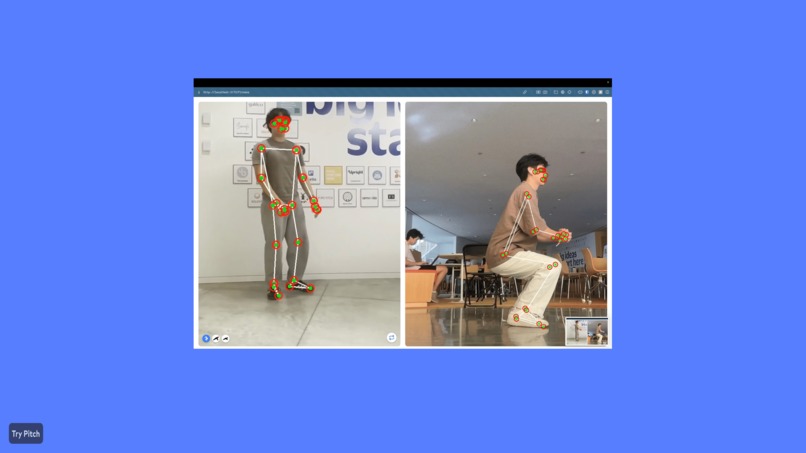
Our AI personal trainer is a web application compatible with laptops equipped with webcams, designed to lower the barriers to fitness. When a user performs an exercise, the AI analyzes their movements in real-time using a pre-trained deep learning model. It provides immediate feedback in both textual and visual formats, correcting form and offering tips for improvement. The system tracks progress over time, offering personalized workout recommendations and gradually increasing difficulty based on performance. With voice guidance included, users receive tailored fitness coaching from anywhere, empowering them to stay consistent in their journey and helping to combat inactivity and lower the barriers of entry to the great world of fitness.
How we built it
To create a solution that makes fitness more approachable, we focused on three main components:
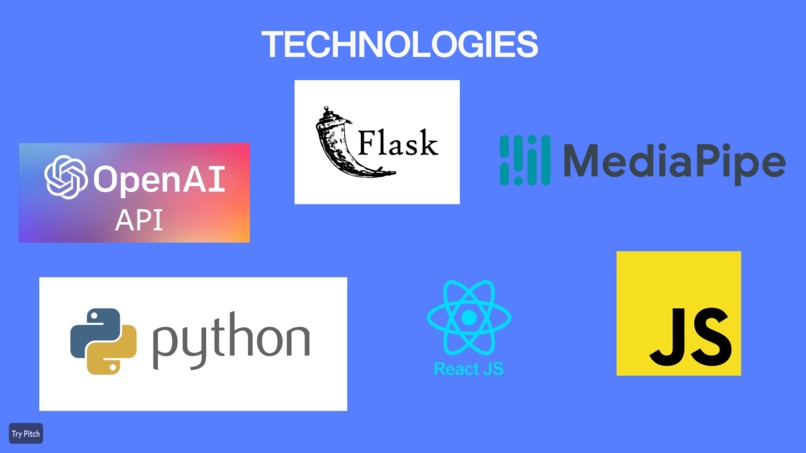
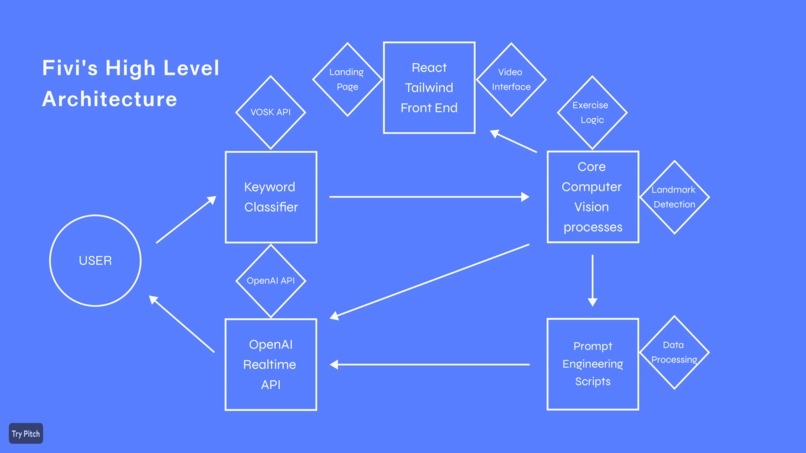
Computer Vision Model: We utilized MediaPipe and its Pose Landmarks to detect and analyze users' body movements during exercises. MediaPipe's lightweight framework allowed us to efficiently assess posture and angles in real-time, which is crucial for providing immediate form correction and ensuring effective workouts.
Audio Interface: We initially planned to integrate OpenAI’s real-time API for seamless text-to-speech and speech-to-text capabilities, enhancing user interaction. However, due to time constraints with the newly released documentation, we implemented a hybrid solution using the Vosk API for speech recognition. While this approach introduced slightly higher latency, it enabled us to provide real-time auditory feedback, making the experience more engaging and accessible.
User Interface: The front end was built using React with JavaScript for a responsive and intuitive design. The backend, developed in Flask with Python, manages communication between the AI model, audio interface, and user data. This setup allows the machine learning models to run efficiently, providing smooth real-time feedback without the need for powerful hardware.
On the user interface side, the front end was built using React with JavaScript for a responsive and intuitive design. The backend, developed in Flask with Python, handles the communication between the AI model, audio interface, and the user's data.
Challenges we ran into
One of the major challenges was integrating the real-time audio interface. We initially planned to use OpenAI’s real-time API, but due to the recent release of the documentation, we didn’t have enough time to fully implement it. This led us to use the Vosk API in conjunction with our system, which introduced increased codebase complexity in handling real-time feedback.
Accomplishments that we're proud of
We're proud to have developed a functional AI personal trainer that combines computer vision and audio feedback to lower the barriers to fitness. Despite technical hurdles, we created a platform that can help people improve their health by making professional fitness guidance more accessible. Our application runs smoothly on various devices, making it easier for people to incorporate exercise into their daily lives and address the challenges of obesity and inactivity.
What we learned
Through this project, we learned that sometimes you need to take a "back door" approach when the original plan doesn’t go as expected. Our experience with OpenAI’s real-time API taught us that even with exciting new technologies, there can be limitations or time constraints that require alternative solutions. In this case, we had to pivot to using the Vosk API alongside our real-time system, which, while not ideal, allowed us to continue forward. This experience reinforced the importance of flexibility and problem-solving when working on complex, innovative projects.
What's next for AI Personal Trainer
Looking ahead, we plan to push the limits of the OpenAI real-time API to enhance performance and reduce latency, further improving the user experience. We aim to expand our exercise library and refine our feedback mechanisms to cater to users of all fitness levels. Developing a mobile app is also on our roadmap, increasing accessibility and convenience. Ultimately, we hope to collaborate with fitness professionals to validate and enhance our AI personal trainer, making it a reliable tool that encourages more people to lead healthier, active lives.


Log in or sign up for Devpost to join the conversation.