-
-
zoom collaboration
-
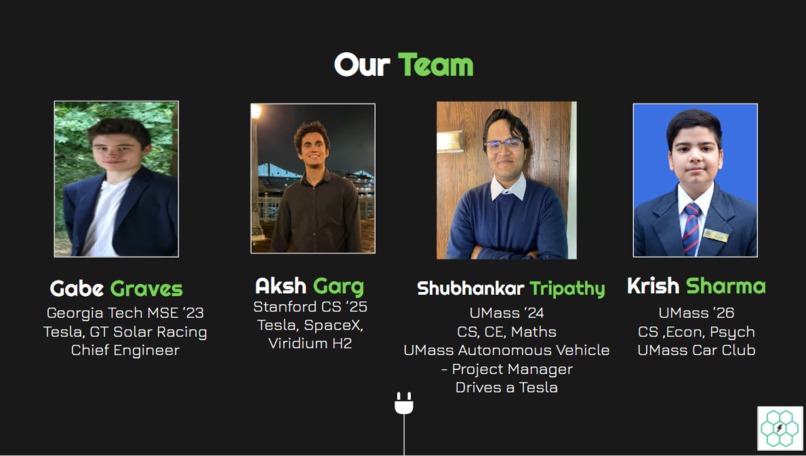
bio
-
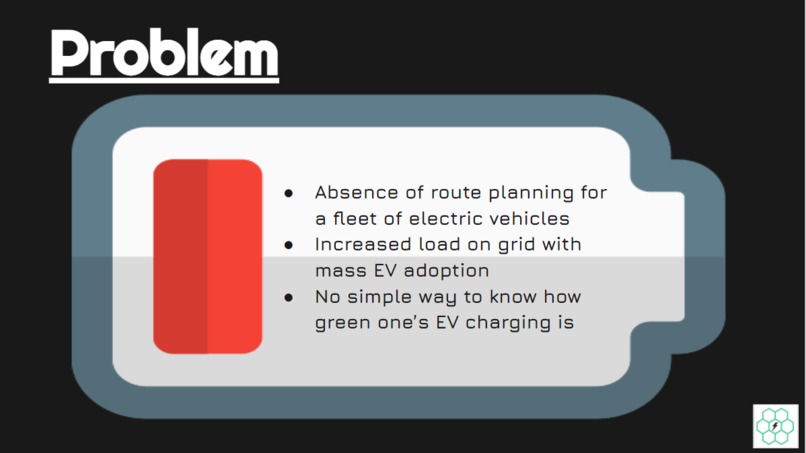
problem
-
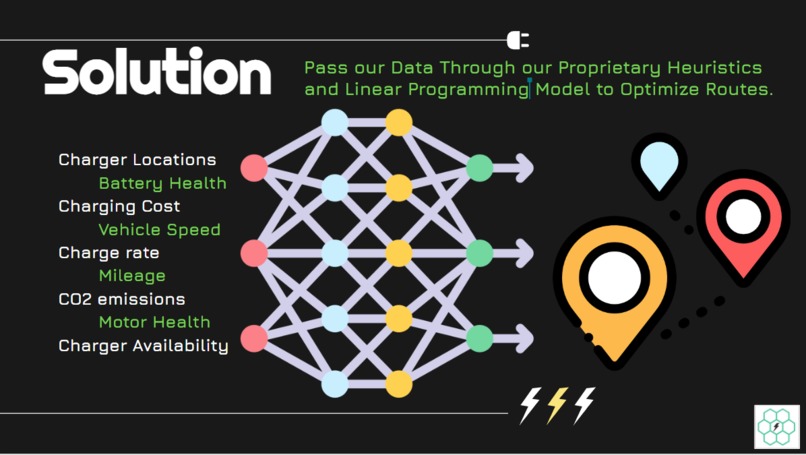
solution
-
title


Inspiration
This project was inspired by the growing popularity of electric vehicles (EVs) and the increasing need for mass adoption of sustainable transportation. As team members had experience in the EV industry and faced the challenges of charging an electric vehicle, they decided to tackle the challenge of route planning for a fleet of EVs with the goal of minimizing energy consumption, CO2 emissions, and travel time.
What it does
The project aims to develop a fleet management tool to optimize routes for multiple EVs, reducing the load on grids and optimizing the charging logistics of an EV fleet. The approach focuses on two main fronts: algorithm development and app development.
How we built it
The algorithm development focuses on solving the vehicle routing with battery constraint problem, using a mix of mixed integer linear programming and heuristics methods. On the app development front, the team attempted to gather data from a Swedish company's API but had to find alternative free sources of data for the app, such as the OpenChargeMap API and ElectricityMaps API. The app also uses Streamlit to display charging information for multiple EVs in a user-friendly interface.
Challenges we ran into
The team faced challenges with data/algorithm integration and user interface design. The challenge of gaining access to the Swedish company's API led to the need to find alternative data sources, and the team had to design a user-friendly interface to display charging information effectively.
Accomplishments that we're proud of
The team is proud of developing an efficient and effective optimization model that balances different objectives in a practical and realistic way. They also believe that the app has the potential to play a significant role in advancing the adoption of electric transportation and contributing to a more sustainable future.
What we learned
The project allowed the team to gain a deeper understanding of the complex challenges and potential solutions involved in optimizing routes for a fleet of electric vehicles. The team learned about the nuances of developing efficient and effective optimization models and the importance of balancing different objectives in a practical and realistic way.
What's next for Fleet EV
The next step for Fleet EV is to continue refining the algorithm and app, gathering more data and feedback to further improve its performance and usability. The team is also exploring potential collaborations with companies and organizations in the EV industry to help advance the adoption of sustainable transportation.


Log in or sign up for Devpost to join the conversation.