-
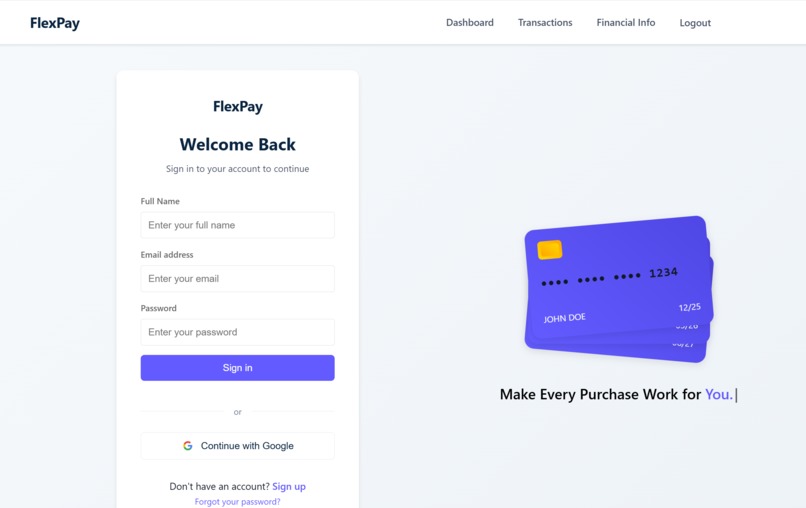
Home Page

Inspiration
We were inspired by the recent rise in the use of buy now pay later as a method of purchasing goods as we saw Doordash implement it in their payment methods.
What it does
FlexPay is revolutionizing the buy-now-pay-later model by eliminating the need for merchant partnerships. Unlike Klarna, which requires businesses to opt in, we pay merchants in full upfront—so consumers can shop anywhere and pay us back in installments. This means no restrictions, no waiting for businesses to integrate, and complete user spending flexibility. Whether it's a local boutique or an online store, FlexPay makes any purchase possible.
How we built it
We created our program using Node.js, HTML, CSS, and Knot's API. We also used Knot's API to add a card switch functionality to our website. After the user links their cards, they can choose to switch to whatever card they want to use to pay the installments. The front end was built entirely in Javascript, HTM, and CSS, and we used Node.js to handle all the communications with the APIs we use, like Knot.
Challenges we ran into
Our biggest obstacle was trying to implement the card switcher from Knot.
Accomplishments that we're proud of
We were able to make a pretty good-looking front-end website, and we were able to seamlessly use APIs to have user logins and connect their bank accounts.
What we learned
We learned how to use financial APIs like Plaid and Knot and the concept of using webhooks to retrieve different information we need.


Log in or sign up for Devpost to join the conversation.