-
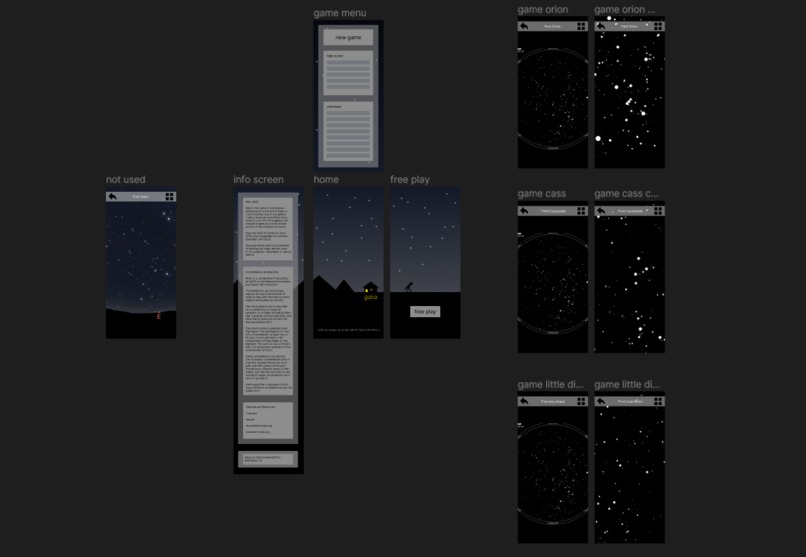
The figma layout of the page, you can see three versions of the game screen, for three different constellations
-
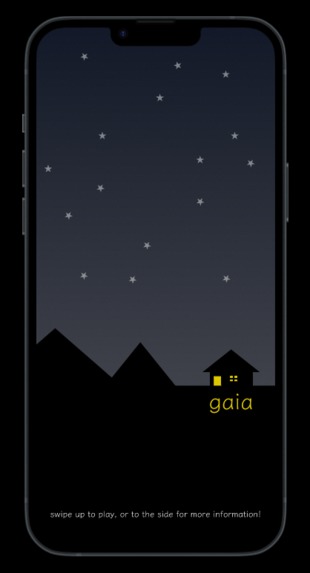
The home screen
-
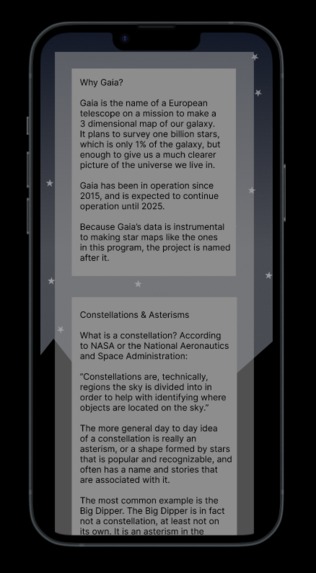
The main information screen
-
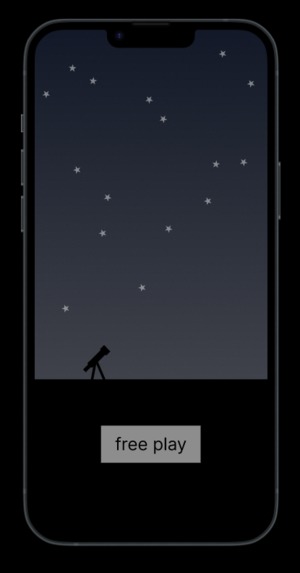
Free play mode screen
-
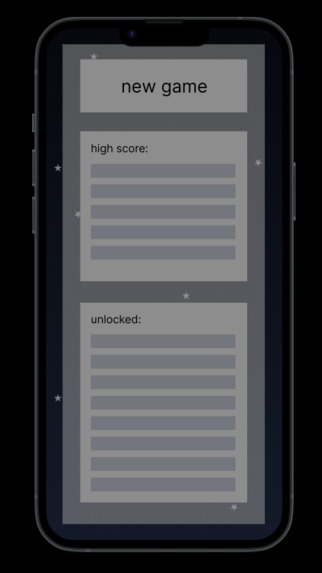
Normal game selection screen
-
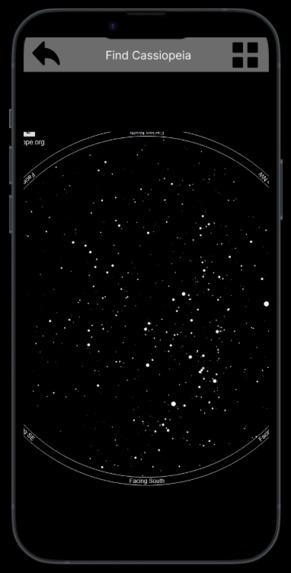
A sample game, trying to find Cassiopeia


Inspiration
I've loved space since I was very young, and puzzles since I was even younger. This was my first ever hackathon and I wanted to dip my toes in with a simple UI mockup in a program that I knew (Figma) with a topic I could talk about for hours. The biggest inspiration for this project was decorating my high school graduation cap. I found a website that lets you make a star map for a particular place at a particular time, and copied it. During that process, I tried finding and connecting the constellations in the map while I waited for paint to dry. It was a fun challenge, and I thought it would be cool to have a way to that more often, and digitally. For the name, Gaia is the name of one of the telescopes used to find stars. It has been in operation for 10 years with the mission of making a 3-d map of our galaxy using data from 1 billion stars (only about 1% but still an insane amount!). Both because the player is finding stars or at the very least patterns in them, and because the data from Gaia is a huge part of the stars that we can see and therefore very important to making the maps used in the game, I decided to name the project after it.
What it does
Right now the Figma wireframe doesn't do much, but if I work on this after the hackathon is done, it would allow a user to generate a map at a random location and time with the objective to find and connect constellations. There would likely be several game modes; a timed version where the goal is to find as many as you can, a mode where you just find a single constellation or asterism, and a casual mode where you can connect the stars however you like and make your own asterisms.
How we built it
The current project is a Figma design file, a vector based design program that is often used to prototype and wireframe apps and websites. A few reference screenshots were used, and a lot of trial and error.
Challenges we ran into
I was not able to put nearly enough time into the project during the hackathon time. Outside forces meant I only worked on this for about 6 hours total of the possible 24, which meant I didn't get very far into the project. In the time I was working, I struggled with transitions between screens and making sure that everything flowed visually the way I saw it in my head. There was also the challenge of deciding how the map would be displayed. Initially I was hoping to use a 3-d rotating map, likely using the open source code from Stellarium, then realized if I do ever hope to make this a real project I do not know how I would integrate the connect-the-dots style feature into that kind of map. So instead I returned to Sky & Telescope, generated a random map, inverted the colors, and used that as the main map for this mockup.
Accomplishments that we're proud of
Going into this event I really didn't know what I would be able to get done, so I'm proud of all of it really! I quite like the design I came up with, especially the movement on the homepage. It might not be the most intuitive currently, but with some animation and possibly a welcome screen I think it is a very unique way to set up the home screens.
What we learned
I learned that I need to bring a charger to the event, and that maybe I should've taken the day off of work. I also learned that while I can work well on my own, it is very possible that working with a group might've meant more of the project got done. I also got to learn even more about space and telescopes, which is always a huge plus for me!
What's next for Gaia - Constellation Mapping
After WiCHacks I hope to have this as a back burner or side project. I have links to a ton of resources and I've done some basic CSS and HTML before, so making a web version of this app is probably my next step, which will require learning JavaScript to make the interactions work, or whatever that entails, I'm not entirely sure if I'm being honest. Once that is passable, I'd like to try some mobile development as an app rather than a webpage, but for now that's further in the future than I can reasonably predict.
Built With
- figma
- sky&telecope
- stellarium


Log in or sign up for Devpost to join the conversation.