-
-
-
-
-
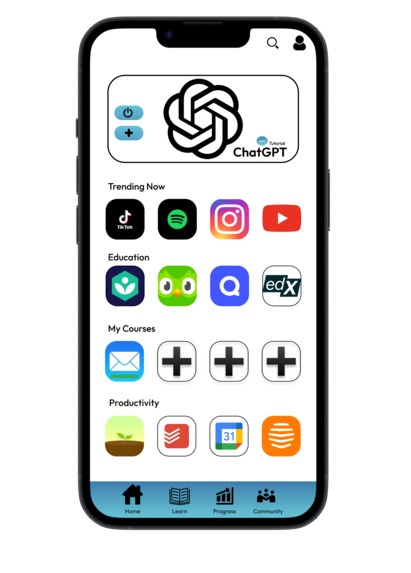
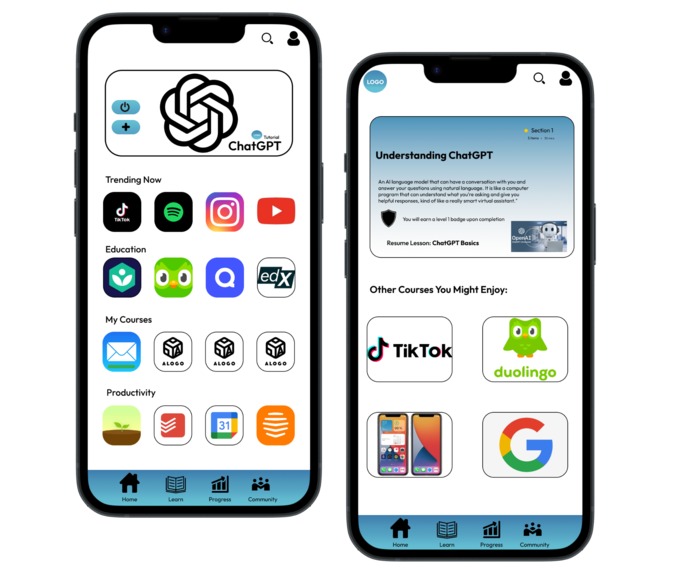
The updated homepage
-
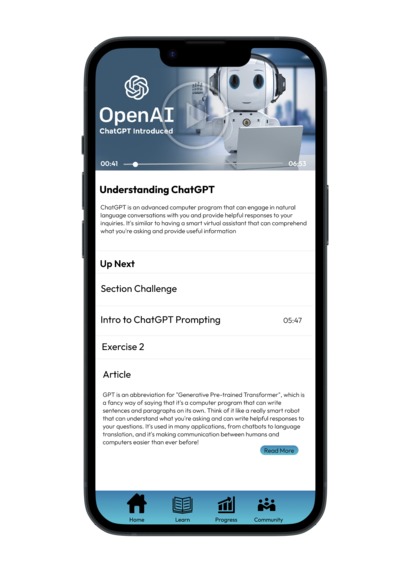
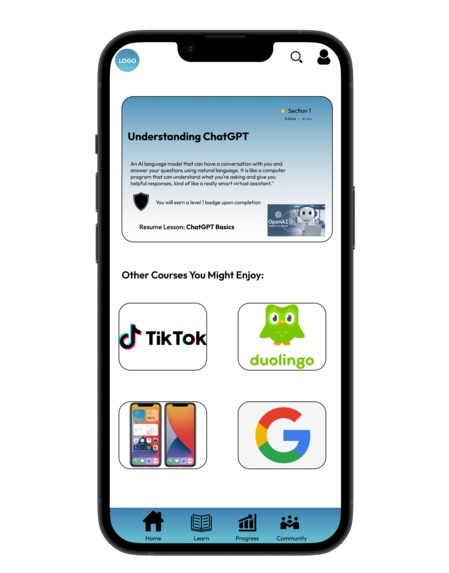
What a lesson page would look like


Inspiration
Technology is overwhelming for many people, causing technophobia in some, and it will only get more advanced. As a result, many people will be unable to reap the benefits of technology. In order to bridge the GAP between people and technology, the educational application GAP Tech was created.
What it does
GAP Tech aims to educate the technology-averse and technophobic individuals to achieve a more comprehensive understanding of different technologies and ways to integrate technology into one's life to be more productive and efficient.
How we built it
We built the app in dart and Figma. Initially utilized Flutter's UI toolkit (before the computer crashed. Leveraged Android Studio as an Integrated Development Environment (IDE) for the android version of the app. The app's prototype was built using Figma.
Challenges we ran into
Our team's developer's laptop unfortunately did not have the processing capability to run our application in Android Studio. For this reason, we were forced to rely on our slide-deck and Figma prototype to demo the app.
Accomplishments that we're proud of
Foremost, we are most proud of the completion of our project because we dedicated many hours of research to it, and we were able to see our hard work pay off in the form of a practical real-world project. We were all able to grow from the experience overall, becoming more skilled individuals.
We each divided our work into specific tasks: one person was in charge of research and the pitch-focused UI (a pleasing and informational slide deck), and two people were in charge of develop, one of which was in charge of developing the prototype in Figma, and the other developing the actual app, focusing mainly on the backend.
Additionally, the person in charge of research and pitch-focused UI was able to use chatGPT to help with fact checking, as well as form and structure.
Moreover, one person had a vision for the project and drew a base sketch which helped the person in charge of UX/UI have a clearer idea of where to start from.
We were very proud to have been able to develop app development skills in such little time, and although we were unable to showcase a working app, the UX/UI developer was able to build the Figma prototype which was what we ended up basing most of our showcase on during the pitch cycles. And even though the UI did not look as nice as we had initially hoped it would, it was first prototype which allowed us to visually pitch to judges.
What we learned
Within the project, we learned that technophobia affects a larger population. During the application process of the project, running the emulator challenged the laptop to the point of crashing. We also learned that clear communication is extremely important when working on a team, the importance of having a clearly and simply defined problem statement, solutions, and edge cases, and how important it is to have a specific target audience in mind and create a larger pool through remedying edge cases where the model might break.
What's next for GAP Tech
- Revenue/ monetization
- Developing the API (Google analytics upper cache) in order for the user not to be forced to make an account until they go through the first exercise and challenge which guides them through the process and completion of making their account.
- Using PHP and SQL to build the server side of the app creating permanent illustrations for the app
- Adding a feature for additional support - connecting the app to ChatGPT4 to offer additional support to users. This feature was suggested to one team member by a friend from a different project - EduLive - and would add incredible value to the app
Built With
- android-studio
- dart
- figma
- flutter


Log in or sign up for Devpost to join the conversation.