-
-
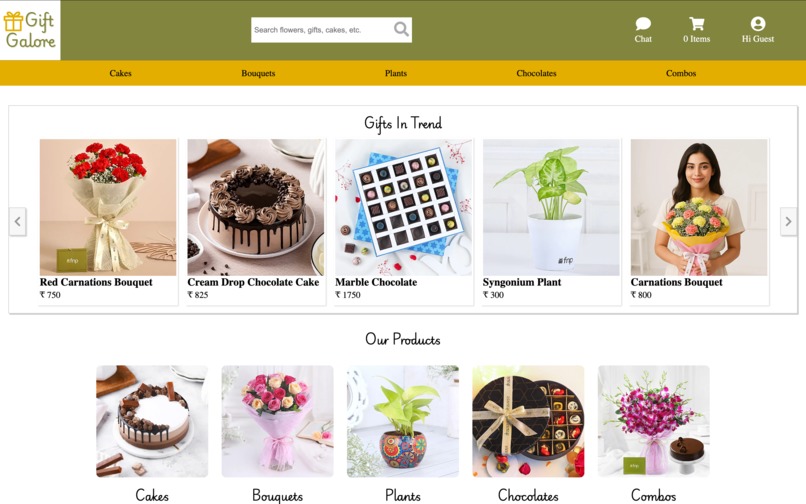
Home Page
-
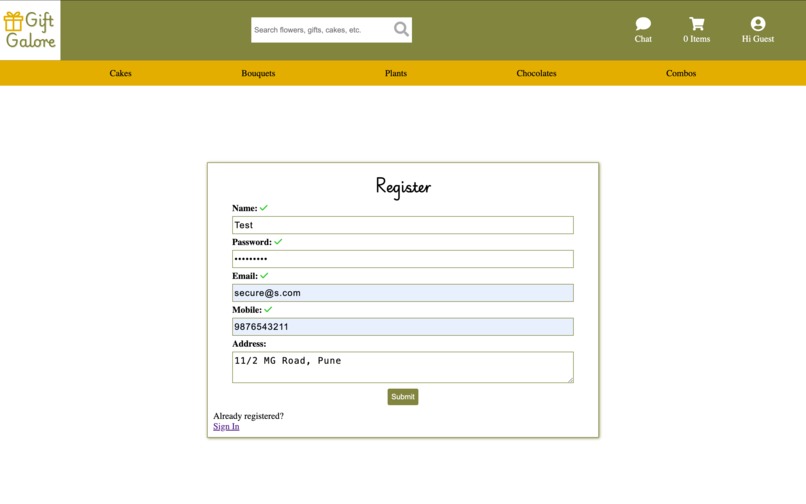
Register
-
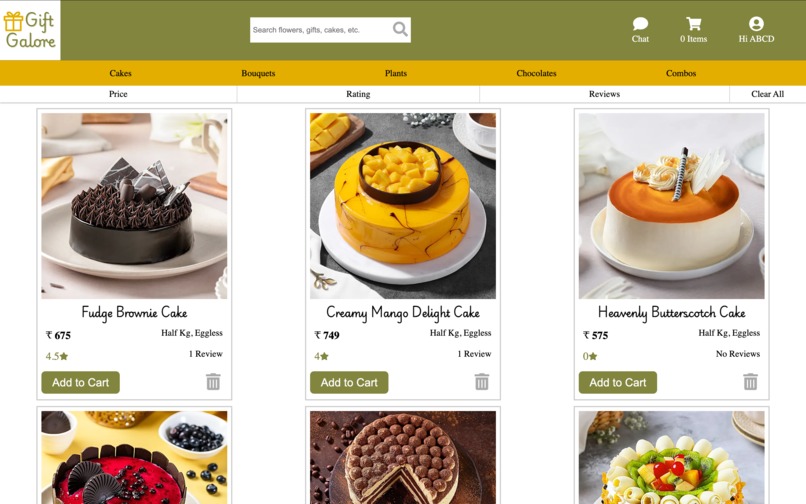
Browsing
-
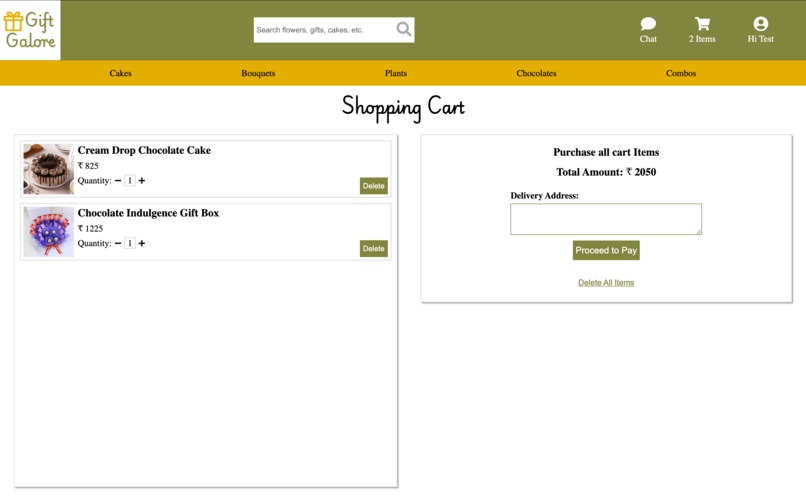
Cart
-
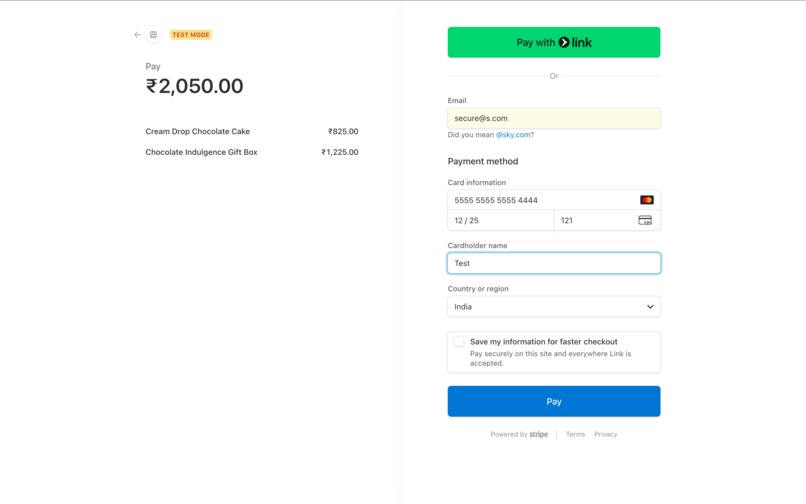
Payment
-
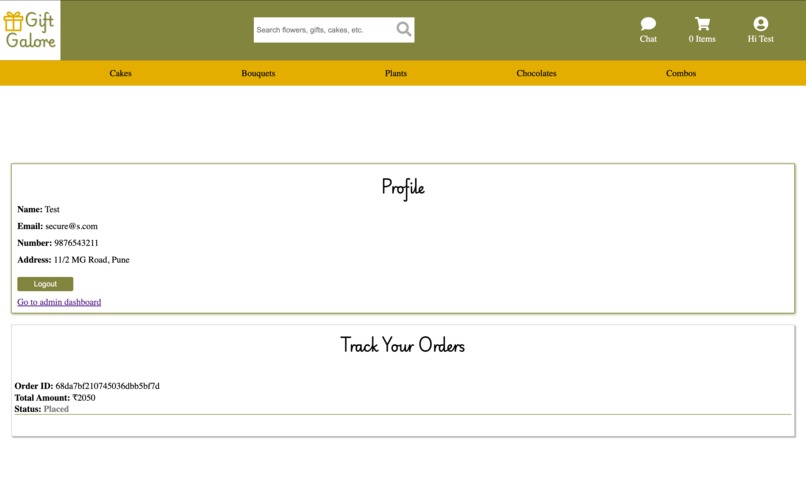
Profile
-
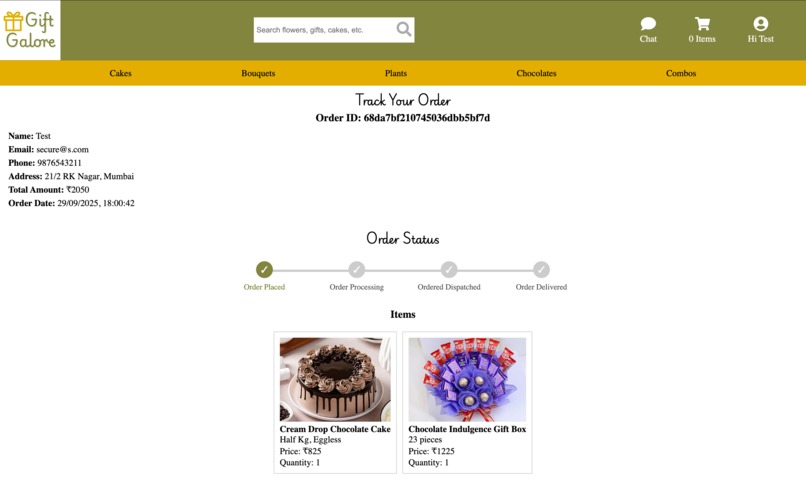
Order Tracking
-
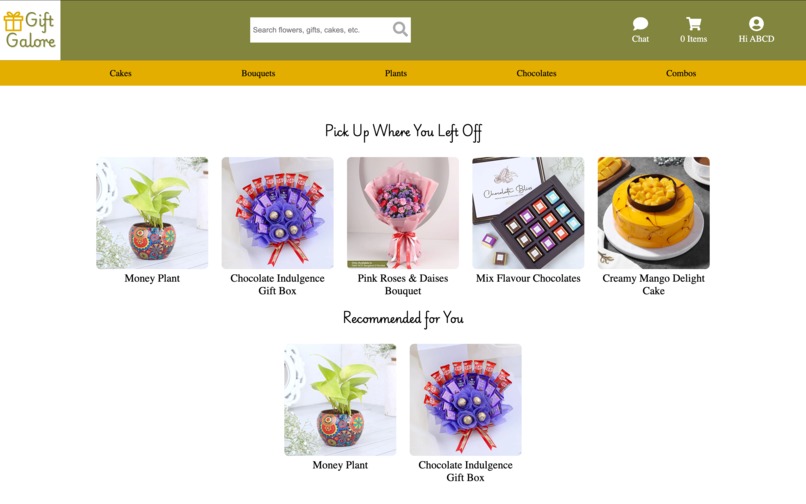
Personalized Recommendations
-
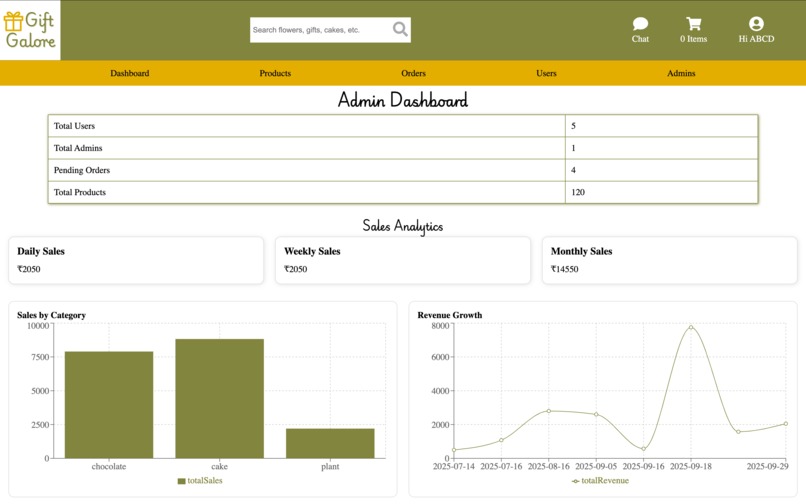
Admin Dashboard
-
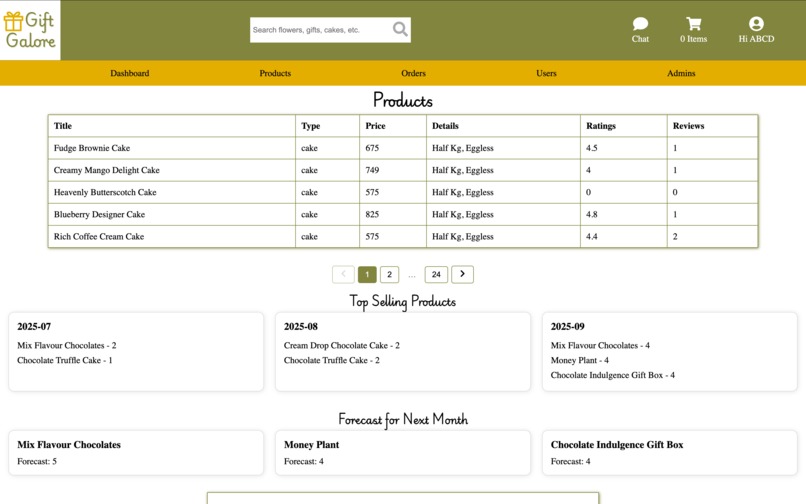
Product Analytics
-
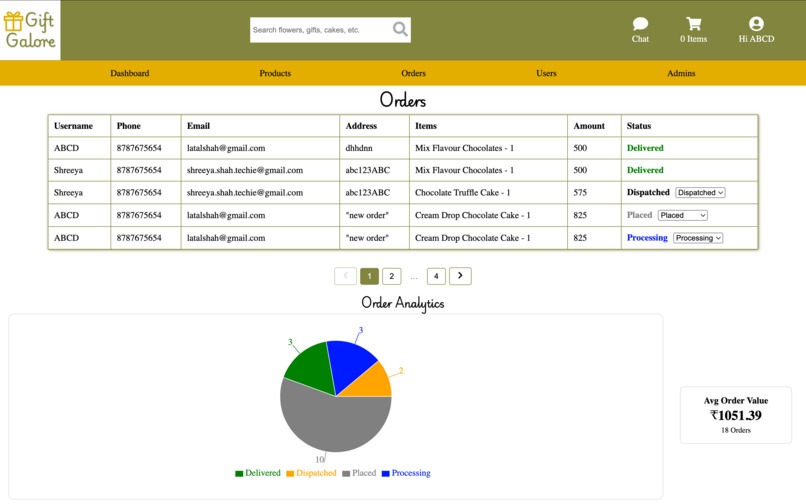
Order Analytics
-
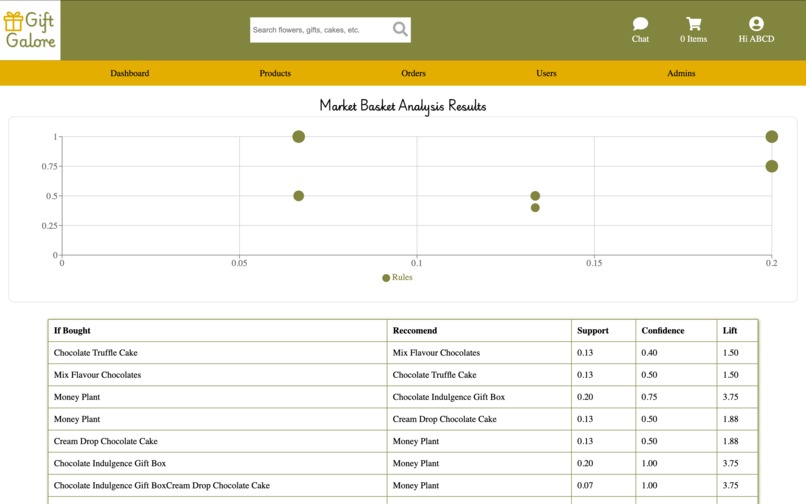
Market Basket Analysis
-
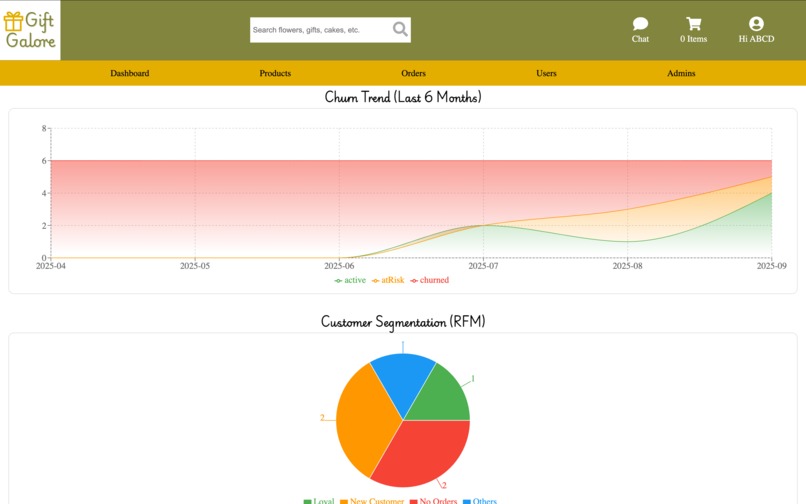
Churn Trend & RFM Segmentation
-
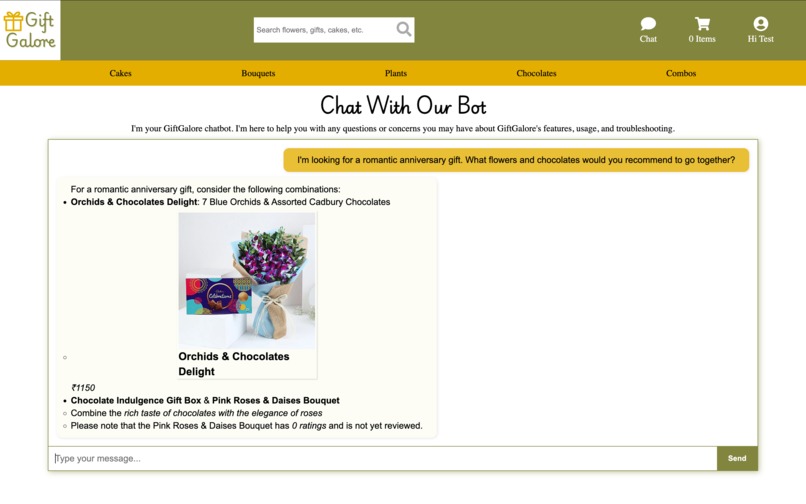
Chat Bot


Inspiration
We looked at the current market of online gifting platforms and saw a universal problem: static catalogs that fail to adapt to individual preferences. The experience felt impersonal and outdated. We were inspired to build something smarter — an interactive platform that truly understands its users, recommends gifts intelligently, and provides real-time AI assistance to make gift-finding a joy, not a chore.
Gift Galore leverages machine learning, RAG-powered chatbots, and full-stack development to deliver a seamless, data-driven gifting experience. It transforms a standard online store into an intelligent, user-focused marketplace, offering personalized recommendations, actionable insights, and a smoother, more enjoyable shopping journey.
What it does
Gift Galore is a MERN-based, ML-enhanced full-stack e-commerce platform with:
Core E-Commerce Features
- User Authentication & Authorization: Ensures secure login and role-based access, protecting user data and providing admins with full control over platform management.
- Product Catalog: Streamlines product discovery with intuitive browsing, searching, and filtering capabilities.
- Shopping Cart: Simplifies the checkout process with a persistent cart that lets users add, remove, and update items effortlessly.
- Order Management: Enables users to place, track, and manage orders in real-time, improving satisfaction.
- Payment Integration: Guarantees secure, seamless transactions via Stripe, ensuring user trust and convenience.
- Automated Email Notifications: Enhances user engagement with automated, timely updates on order status and promotions.
AI & ML Enhancements
- AI Chatbot (Groq’s LLaMA 3 + RAG): Provides instant, personalized gift suggestions and customer support, helping users find the perfect gift faster and more efficiently.
- Market Basket Analysis (Apriori): Boosts average order value and helps users discover complementary gifts effortlessly by intelligently recommending frequently bought-together items.
- Sentiment analysis: Summarizes product reviews, allowing users to quickly understand customer feedback and make confident purchase decisions.
- Collaborative Filtering: Suggests products purchased by similar users, delivering highly relevant recommendations and improving overall shopping satisfaction.
Analytics Dashboard
- Performance Tracking: Visualize sales trends (daily, monthly, yearly), revenue growth, and average order value helping admins make data-driven business decisions.
- Product Insights: Identify top products, analyze category-wise sales distribution, and get sales forecasts to optimize inventory.
- Customer Intelligence: Track and reduce customer churn, and perform advanced RFM analysis to segment users for targeted marketing.
- Operational Efficiency: Monitor order statuses with interactive charts to streamline fulfillment.
UI/UX
- Fully Responsive, mobile-first design.
- Clean, modern, and intuitive interface.
- Best-seller tags based on product performance metrics.
How we built it
- Frontend: React.js, CSS3, HTML5 for a dynamic, responsive, and modern user interface.
- Backend: Node.js, Express.js for a high-performance, scalable, and event-driven server.
- Database: MongoDB with Mongoose for flexible schema design and rapid development.
- Authentication: JSON Web Tokens (JWT) for stateless, secure, and verifiable user sessions.
- Payments: Stripe API for its robust security and developer-friendly payment processing.
- Media Storage: Cloudinary for optimized, cloud-based image and media management.
- Machine Learning: Python with Pandas for its powerful data science ecosystem.
- Chatbot: Groq’s LLaMA 3 for its fast inference speeds, integrated with Node backend
- Other Tools: Node-Cron for scheduled tasks
Challenges We Ran Into
Secure Payments
- Handling Stripe webhooks and keeping order statuses synchronized was complex.
- Solution: Implemented robust webhook handling and order state validation to ensure accurate, reliable payments.
AI + Web Integration
- Running Python ML pipelines alongside a Node.js API required careful orchestration.
- Solution: Exposed ML functionality as a microservice with REST endpoints, allowing seamless integration and scalability.
Chatbot Context Management
- Needed to balance generic LLM knowledge with app-specific FAQs for relevant responses.
- Solution: Built a custom domain documentation dataset, ensuring the chatbot provides accurate, context-aware suggestions.
UI/UX for Data-Heavy Features
- Making analytics dashboards intuitive and visually appealing was challenging.
- Solution: Designed clean, interactive visualizations that allow admins to quickly interpret insights and act on data.
Accomplishments We're Proud Of
- Engineered a fully functional AI-enhanced e-commerce platform from end-to-end, combining ML, RAG chatbots, and full-stack development.
- Successfully integrated machine learning models with the MERN stack, enabling real-time, intelligent recommendations.
- Deployed a sophisticated RAG-powered chatbot that delivers personalized, context-aware support, improving user engagement and satisfaction.
- Implemented two distinct recommendation systems to enhance discovery and sales:
- Apriori-based Market Basket Analysis for suggesting frequently bought-together items.
- Collaborative Filtering for personalized “Recommended for You” suggestions.
- Designed a comprehensive visual analytics dashboard that hat translates raw data into actionable business insights.
What We Learned
- Designing scalable MongoDB schemas to support real-world e-commerce applications.
- Building JWT-protected, role-based routes for secure user authentication and authorization.
- Integrating machine learning models with a MERN stack to provide real-time, intelligent features.
- Applying the Apriori Algorithm to transaction data for actionable recommendation systems.
- Implementing User-Based Collaborative Filtering using cosine similarity for personalized product suggestions.
- Using NLP techniques to summarize customer sentiment from product reviews, enhancing decision-making and user trust.
- Developing a RAG-powered chatbot for context-aware, personalized customer support.
A Glimpse of the Math Behind Recommendations
Apriori (Association Rules)
Used for Market Basket Analysis to recommend frequently bought-together items.
Support of an itemset X: $$ \text{Support}(X) = \frac{\text{Number of transactions containing } X}{\text{Total number of transactions}} $$
Confidence of a rule X → Y: $$ \text{Confidence}(X \to Y) = \frac{\text{Support}(X \cup Y)}{\text{Support}(X)} $$
Lift of a rule: $$ \text{Lift}(X \to Y) = \frac{\text{Confidence}(X \to Y)}{\text{Support}(Y)} $$
Impact: Helps users discover complementary gifts, boosting sales and enhancing shopping experience.
Collaborative Filtering (Cosine Similarity)
Generates personalized product recommendations based on similar users’ purchase history.
- Compute cosine similarity between users (u) and (v): $$ \text{Similarity}(u , v) = \frac{\text{u . v}}{\text{||u|| x ||v||}} $$
- (u . v) = dot product of overlapping purchases
- (||u||) and (||v||) = vector magnitudes
Impact: Suggests items the target user hasn’t bought but are popular among similar users, improving engagement and conversions.
Retrieval-Augmented Generation (RAG) Workflow
Powering the context-aware AI chatbot:
- Load & Chunk: Split app documentation and FAQs into ~500-char chunks.
- Embed: Each chunk is converted into a vector embedding using
@xenova/transformersand stored. - Query Embedding: Convert user messages into embeddings.
- Retrieve: Selectthe top 3 most relevant chunks using cosine similarity.
- Construct Prompt: Merge chunks with instructions for concise Markdown answers.
- Generate Response: Use Groq LLM (
llama-3.1-8b-instant) to provide context-aware, personalized responses.
Impact: This transforms a generic LLM into a specialist expert on our platform, ensuring the chatbot gives accurate, app-specific advice, improving user satisfaction and reducing support workload.
RFM Segmentation Workflow
Used for customer segmentation and targeted recommendations:
- Aggregate Orders: Compute each user’s last purchase date, total orders, and total spending.
- Score RFM: Assign 1–3 scores for:
- Recency: More recent purchases → higher score
- Frequency: Higher number of orders → higher score
- Monetary: Higher spending → higher score
- Recency: More recent purchases → higher score
- Assign Segments: Classify users into:
- VIP, Loyal, Churned, Bargain Hunter, New Customer, No Orders
- VIP, Loyal, Churned, Bargain Hunter, New Customer, No Orders
Impact: Allows hyper-personalized marketing and targeted promotions, improving retention, revenue, and user engagement.
What's Next for Gift Galore
- Voice-Enabled Chatbot: Implement a voice-enabled chatbot to pioneer conversational commerce, making gift discovery faster and more accessible.
- Deep Learning-Based Recommendations: Transition from traditional ML to Deep Learning models for even more nuanced and accurate personalization.
- AR/VR Previews: Allow users to visualize gifts in their own space before purchase, enhancing purchase confidence and reducing returns.
Built With
- bcrypt
- cloudinary
- collaborative-filtering
- css
- ejs
- express.js
- groq
- html5
- javascript
- jwt
- market-basket-analysis
- mern
- mongodb
- mongoose
- node-cron
- node.js
- nodemailer
- python
- rag
- react
- recharts
- rfm-segmentation
- sentiment
- stripe


Log in or sign up for Devpost to join the conversation.