-
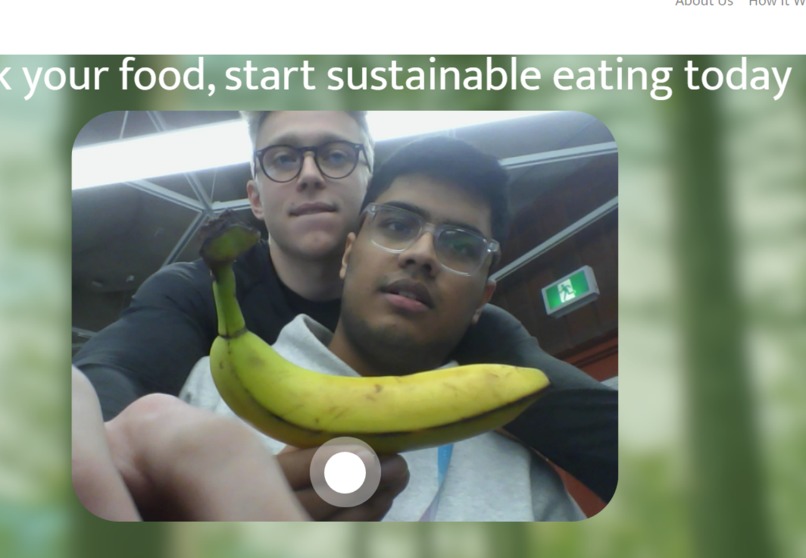
Fun with friends!

Inspiration
The idea for Green Eats started after we recognized the growing crisis regarding greenhouse gas emissions globally, and through some quick research discovered that food production alone (including farming, transportation, packaging, etc.) was responsible for over one quarter of these emissions. Armed with this information, we felt strongly that we could meaningfully address these concerning metrics by incentivizing individuals around the world to make small changes in their food-purchasing habits in favour of foods that require fewer emissions to produce.
What it does
Green Eats is a web-based tool that analyzes an image of a particular item of food, classifies it into the corresponding product category in the database, and returns quantitative information describing the environmental resources that are consumed or expended during the production of that product category. From this data, the user can make more informed decisions about which products to purchase by comparing metrics between different foods. To incentivize low-emission food purchases, points will be awarded on a per-item basis and will accumulate over time towards reaching long-term sustainability goals.
How we built it
We built a React frontend with dynamic scripting. This was linked to a Node Express server backend, which handles business logic and interfaces with the Google Cloud Vision API to identify objects in images and perform analytics on the environmental impact of the identified objects.
Challenges we ran into
One of the challenges we faced was trying to work with, and draw correct implications from, the vast amounts of data pertaining to resource consumption and expenditure during various stages of the supply chain of food production. Although we were fortunate to have had access to high-quality data to inform our product design process, it was still difficult to understand how it was all organized.
Accomplishments that we're proud of
We're most proud of building a full-stack prototype that is actually functional, because it is ten times more satisfying when it works than if we hard-coded the whole thing.
What we learned
We learned how to overcome the difficulties of passing images through restful APIs and of optimizing HTML for mobile users.
What's next for Green Eats
We would like to continue to enhance our mobile user experience, and expand the database of emissions metrics.


Log in or sign up for Devpost to join the conversation.