-
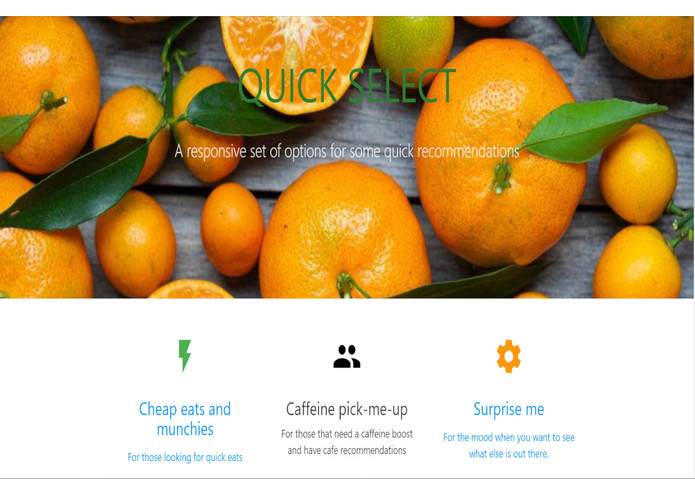
Front page of Foodr web application which. Includes 3 quick food suggestion sections.
-
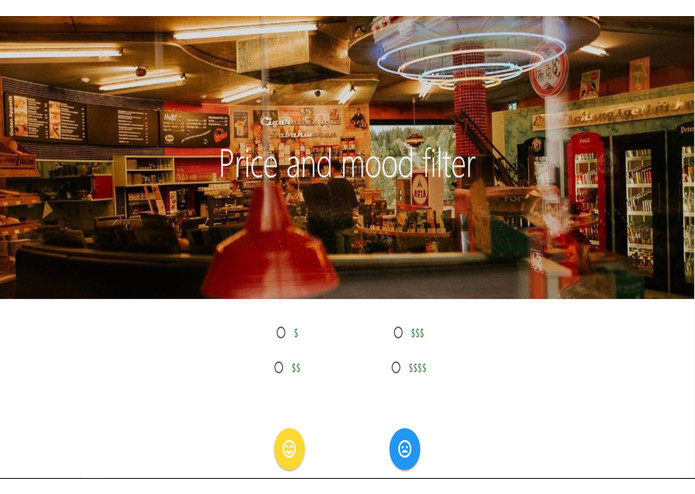
Bottom half of the Foodr front page that suggests food based on user input.
-
Cheap eat suggestion page and top banner.
-
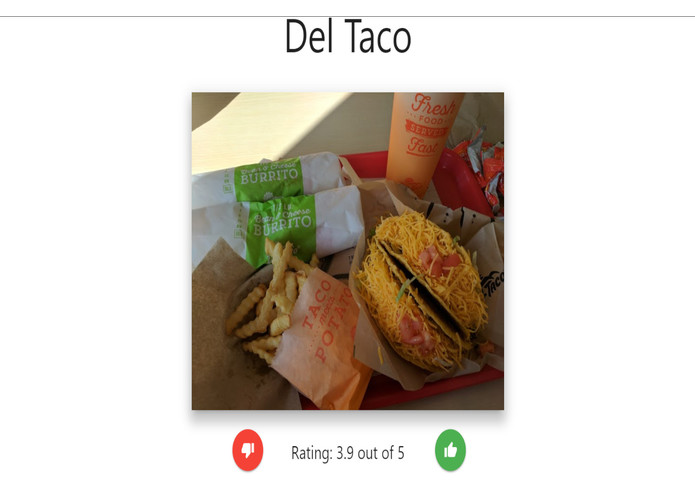
Cheap eat suggestion implementation that provides users with Google Maps API generated food suggestions that users may then vote upon.
-
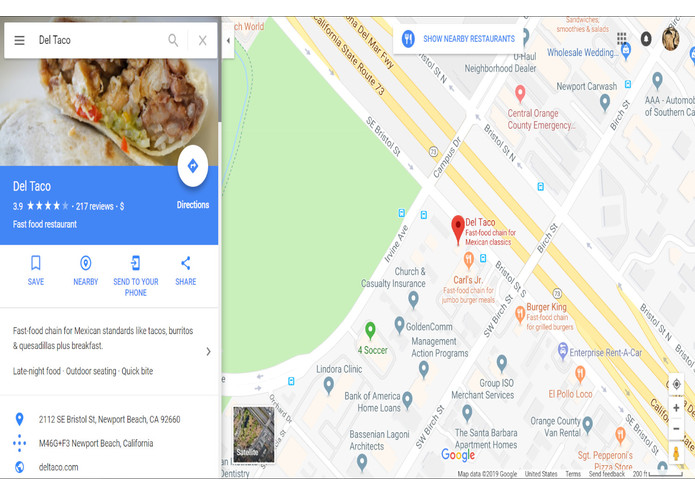
Foodr application takes users to Google URL for food suggestions they give a thumbs up to.


Inspiration
The Foodr development team has had individual trouble in picking food spots to eat during any given time of the day. There's always a "why don't we eat at _____", and a second thought of "Nah, I don't feel like eating there". This web app however, helps with the issue using machine learning.
What it does
Foodr recommends food places for users either through one of our 3 quick search buttons, or through a machine learning algorithm that recommends you food based on your mood, time of day, and other factors. Every time one "thumbs up" a restaurant to learn more about it, a decision tree classifier makes a better prediction for a restaurant the user may like.
How we built it
We started with building a foundation of front end development and slowly integrated Flask, Google Maps API, and machine learning algorithms. We had to take into account correlation of data points, parse through dynamic restaurant data, and location of the user.
Challenges we ran into
Coming up with the model for our web application took a substantial amount of time the first night at Hack. For the machine learning part, choosing the best parameters/data point to best suit a restaurant application was definitely a conceptual challenge. Selecting the decision tree classifier algorithm over a different supervised learning algorithm such as linear regression took time to compare on which algorithm was the best. At first, the decision tree classifier correct prediction percentage was a 35%, which it was stuck on, but after correcting assumptions about how decision trees work, we trained it to a 95+% correct prediction. Lastly, the continuous bugs our team ran into when trying to merge the ML aspect with the Flask application was very difficult.
Accomplishments that we're proud of
The ability to integrate machine learning in a real life situation. Effectively using Google Map API's to parse through restaurant information and displaying information useful to the user. Team communication was persistent through the event, tasks were delegated appropriately and every group member was contributing to the project on a consistent basis.
What we learned
Team members learned more about decision tree classifiers, json parsing, front and back end web development with flask, along with practicing our version control skills with GitHub.
What's next for Foodr
Dynamic distance calculations was the next consideration for the application, possibly the inclusion of more data for our machine learning food suggestion section was another idea that came to mind.


Log in or sign up for Devpost to join the conversation.