-
-
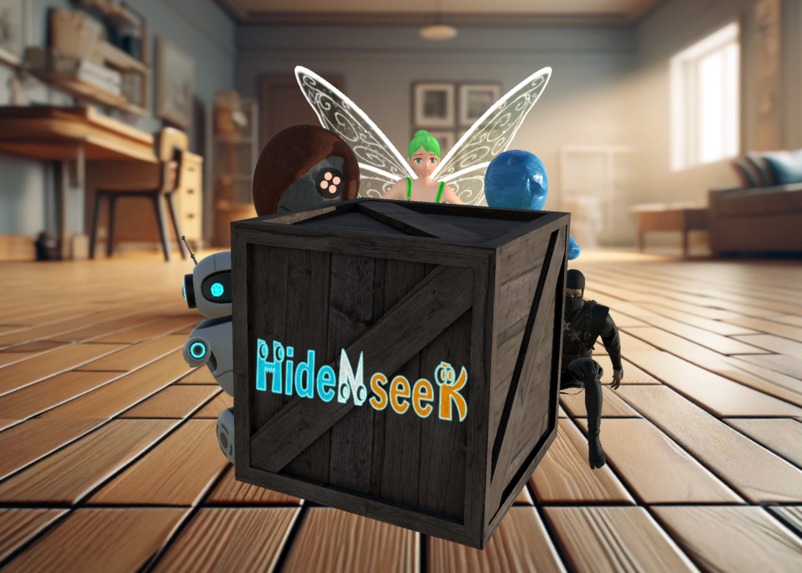
Cover
-
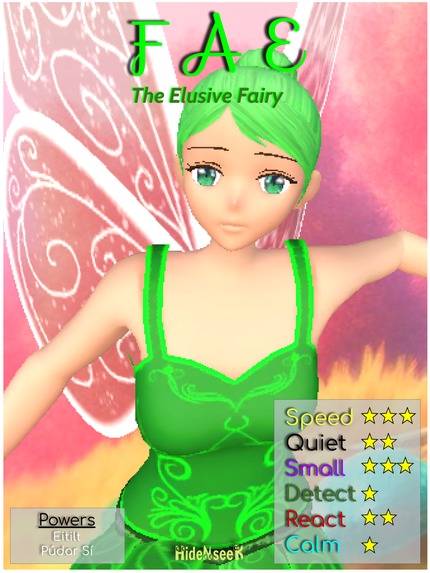
Fae
-
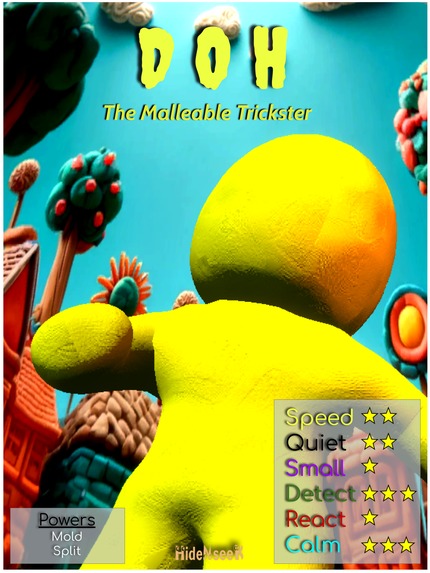
Doh
-
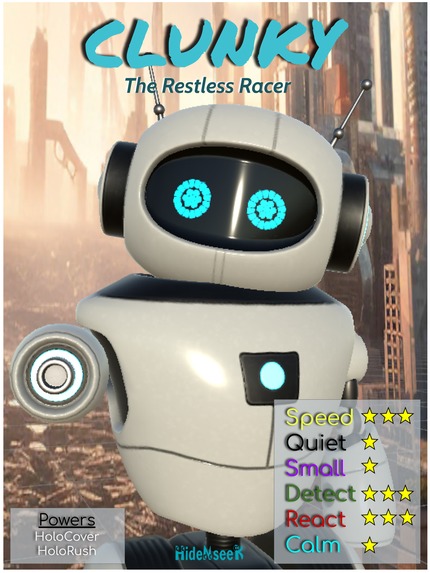
Clunky
-
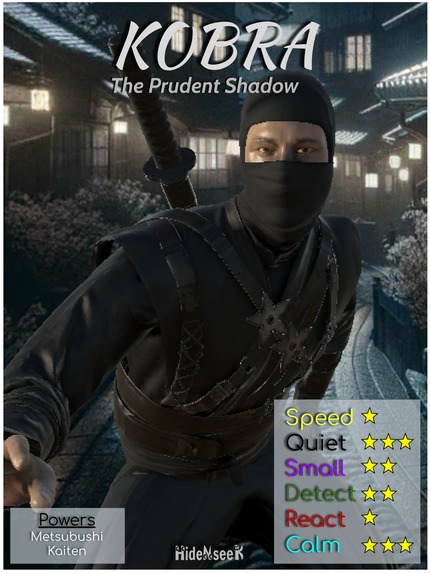
Kobra
-
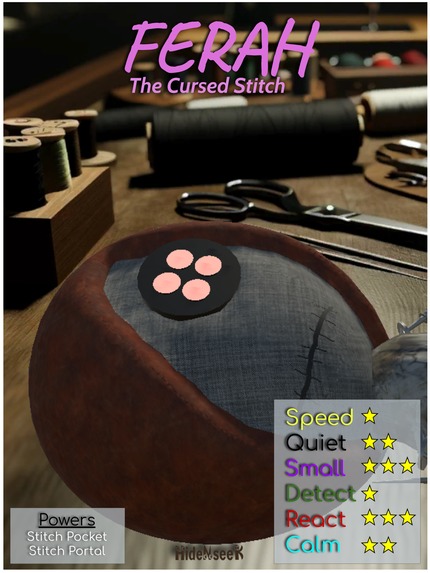
Ferah


Inspiration
My vision is for mixed reality to embrace and enhance what is already beautiful in our reality. Hide and Seek was my favorite childhood game and I still play it with my kids at home. I was inspired by providing a fun and enchanted H&S experience for people that may not have anyone around to play it with, so that they can play with the fun AI companions in the game.
What it does
In HideNseeK, you are the seeker! You will play with sociable toy companion characters who will hide behind the real furniture in your home and also into virtual portals on your walls while you count down on the Tag Wall. Once the counting is over, you will go around and try to find them! However, your companions are clever, and will look for opportunities to get out of their hiding spot to rush to the Tag Wall to score a point. You need to tag them with your Tag Ray and then place your hand on the Tag Wall before them to deny them points and win the game.
How we built it
We started with the environment in mind. The main goal in creating HideNseeK was to produce a extremely responsive and adaptive mixed reality experience. To that end, I first started with creating the algorithm for hiding and spent about a week fine-tuning issues such as how to find a point behind a virtual cover on navmesh. Then I had to tackle issues such as how to simulate realistic hiding behavior by making sure that the navmesh is a real time representation of a real room's explorable area for the NPCs to traverse.
I made great use of MRUK both in making sure all virtual objects were perfectly anchored in the passthrough environment, but also to rigorously query the environment for object placement. WallManager and FloorManager scrutinize the entire physical space for suitable gaps for accurate and at-home object placements. Given that the success of the game depends on the relative positions of the player, hiders, cover, and the control panel, these technical foundations have paid off very generously.
Challenges we ran into
Designing a notoriously challenging game concept for a physical environment that you can only guess is a profoundly daunting challenge. Having 5 NPCs simulate a realistic hide and seek experience in a tight space such as your living or bed room was head scratcher. The greatest challenge was to query virtual and physical objects to accurately find their hiding eligible rear side and helping NPC maintain a cover there, but not too perfectly so the player has a real shot at catching them.
Another challenge was to start with MRUKRoom's anchors and calculate the potential gaps on the walls and keep track of what virtual objects were placed and how much horizontal space was left. Then, transferring this knowledge to the placement of floor objects was also challenging, as the positions that the NPCs need to move throughout the game rounds are dependent on where the control panel and safe zone are.
Finally, it was definitely mind boggling to sustain dozens of interconnected systems to "imagine" what your room looks like and make the gameplay there look easy is the actual magical trick.
Accomplishments that we're proud of
1) I gained immense knowledge of MRUK and the wonders it can work. 2) Built a robust system to first analyze the room using WallAnalyzer, then place objects on them using WallManager, and then run FloorManager to decide where to place objects on the floor. 3) Maximum adherence to and respect for your physical space: I used analog buttons and tangible UI elements to keep the player anchored in their living room. Wherever possible I avoided things appearing out of the blue, such as the menu items changing with a transition Iris door close/open effect 4) Character development: It is important to allow the player to like the companions in the game beyond just playing hide and seek with them. Each companion has a unique personality, voice and traits. Most of their powers and skills will be implemented at later stages, but the NPC posters on the walls and their individuality leaves a mark on the game's direction. 5) UI: I am very proud of both the aesthetics and the functionality of the UI system. Player concerns are very clearly defined and place where they will be facing at any given time. The control panel contains tons of information but those are nicely chunked into large panels with buttons easy to manipulate. Even accessibility elements such as left/right hand use, height, control panel wall placement are considered. Control panel contains only the elements you need while you are facing the wall. The score panel and the clock contains what you need when you turn your face to the hiders to play. 6) Adjustability: Even at this early prototype stage you can choose to scale both the NPCs and the covers to match the size of the play environment so you can play with tiny toys in a tight bedroom, or you can challenge giant NPCs in a large conference room. The difficulty settings and the ability to shuffle between the real and virtual covers provides a great adaptability. If you have an empty room you can still play the game with a full experience, but if you take the time to scan clever hiding spots in your environment the gameplay experience will pay off with the nicely designed static depth occlusion system.
What we learned
The greatest lesson learned from this project was the sequence of priorities and how to keep my ducks in a row in an MR project. Unlike my previous MR/VR projects, I had the patience to avoid putting on my headset for the first month to focus on the algorithms for the core game play that mostly consisted of navmesh and cover calculations. When I moved into MR elements and dived into MRUK, having a solid architecture to integrate it into was the greatest win of this project.
What's next for HideNseeK
I have not even scratched the surface of this tremendous concept. Hide and Seek is a very simple looking but extremely in-depth game. The whole effort for this project was to build the tech foundation and a sandbox experience to make a state-of-the-art classic that has a tasty storyline. I already have a full arc for the story which will allow each NPC to be introduced to the game in a meaningful way, and the hideNseek experience will serve to push the story further. The main challenge will be to design actually compelling levels in a mixed reality environment where the player can suggest their own covers. I am thrilled to work on the unique powers of the players such as portals through the walls, pocket universes, covers with doors that they can hide into, flight ability for my little Fairy, the Doh man to be able to mold into the shape of the Play-Doh figures and the player trying to distinguish which one of the models is the clay man, the Ninja's smoke bomb skill, etc. Instead of throwing all of those to the player, I want to meaningfully turn each skill and the NPCs strength and weaknesses stemming from their trait points into design decisions that will keep the player on their toes, while moving around the room, burning calories and staying healthy.
Finally, I want to see this become a staple Quest store title and be one of the pivotal games defining what it means to make a hardware defining game for Mixed Reality.




Log in or sign up for Devpost to join the conversation.