-
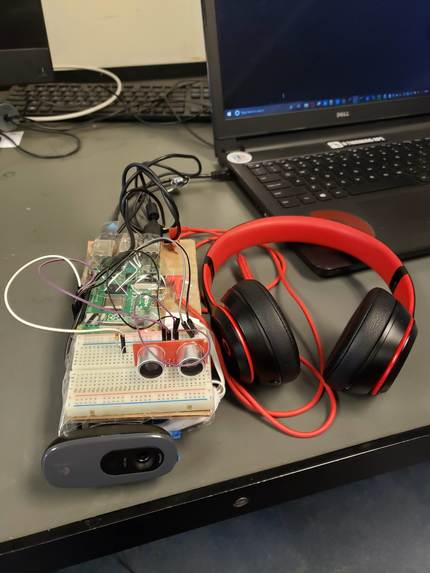
Final Module
-
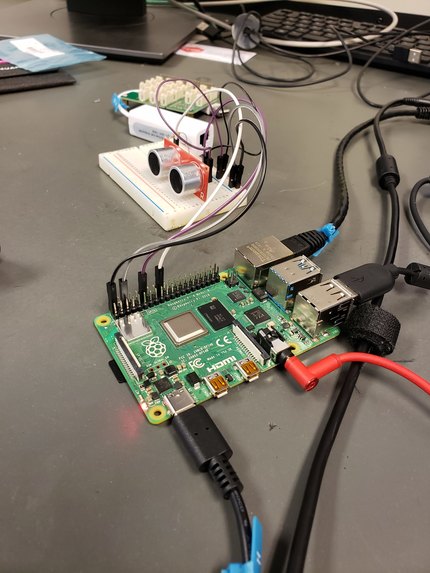
All components connected
-
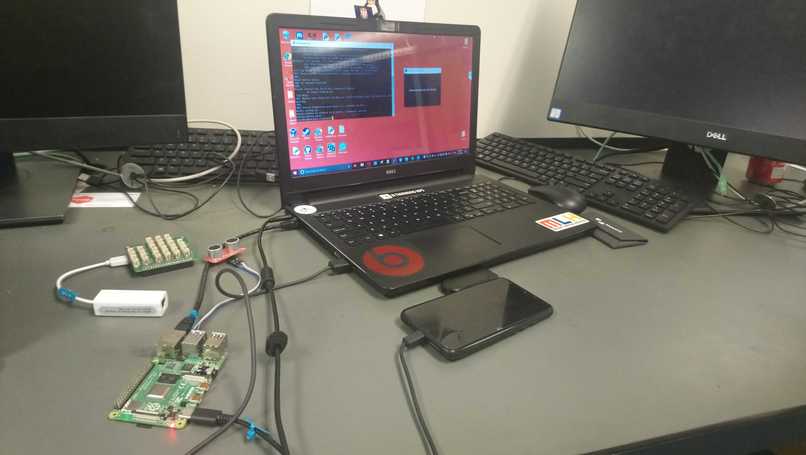
Initial set up


Inspiration
We realized how visually-impaired people find it difficult to perceive the objects coming near to them, or when they are either out on road, or when they are inside a building. They encounter potholes and stairs and things get really hard for them. We decided to tackle the issue of accessibility to support the Government of Canada's initiative to make work and public places completely accessible!
What it does
This is an IoT device which is designed to be something wearable or that can be attached to any visual aid being used. What it does is that it uses depth perception to perform obstacle detection, as well as integrates Google Assistant for outdoor navigation and all the other "smart activities" that the assistant can do. The assistant will provide voice directions (which can be geared towards using bluetooth devices easily) and the sensors will help in avoiding obstacles which helps in increasing self-awareness. Another beta-feature was to identify moving obstacles and play sounds so the person can recognize those moving objects (eg. barking sounds for a dog etc.)
How we built it
Its a raspberry-pi based device and we integrated Google Cloud SDK to be able to use the vision API and the Assistant and all the other features offered by GCP. We have sensors for depth perception and buzzers to play alert sounds as well as camera and microphone.
Challenges we ran into
It was hard for us to set up raspberry-pi, having had no background with it. We had to learn how to integrate cloud platforms with embedded systems and understand how micro controllers work, especially not being from the engineering background and 2 members being high school students. Also, multi-threading was a challenge for us in embedded architecture
Accomplishments that we're proud of
After hours of grinding, we were able to get the raspberry-pi working, as well as implementing depth perception and location tracking using Google Assistant, as well as object recognition.
What we learned
Working with hardware is tough, even though you could see what is happening, it was hard to interface software and hardware.
What's next for i4Noi
We want to explore more ways where i4Noi can help make things more accessible for blind people. Since we already have Google Cloud integration, we could integrate our another feature where we play sounds of living obstacles so special care can be done, for example when a dog comes in front, we produce barking sounds to alert the person. We would also like to implement multi-threading for our two processes and make this device as wearable as possible, so it can make a difference to the lives of the people.


Log in or sign up for Devpost to join the conversation.