-
-
-
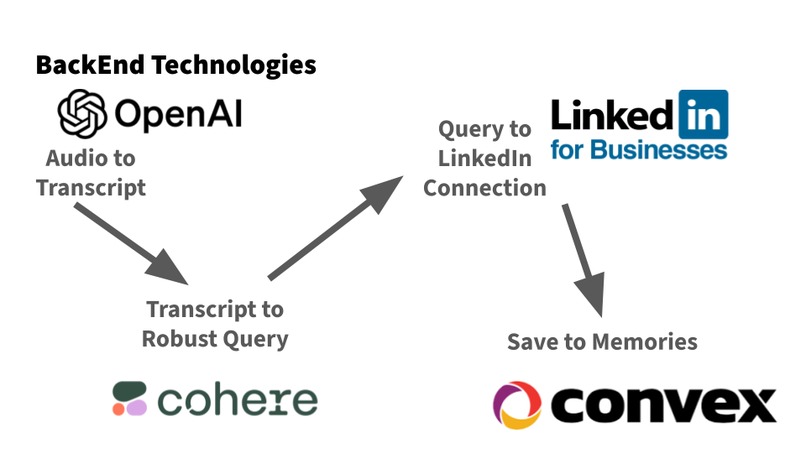
put together with some flask, some nextjs with typescript, and some react-native for the memories
-
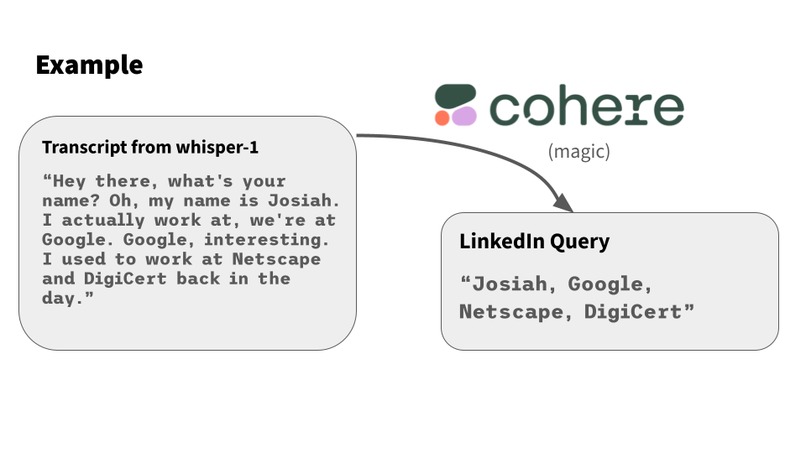
it's literally magic


Inspiration
While waiting for the Hack the North bus after flying in from California, we ended up talking to ~10 other contestants. But during our bus ride, we realized that we'd forgotten almost everybody's name, and since we hadn't gotten their LinkedIns, we effectively had no way to stay in touch. Realizing that the next three days were going to involve meeting hundreds of new people, we decided to make the InPin to have an easy way to connect with all of them.
What it does
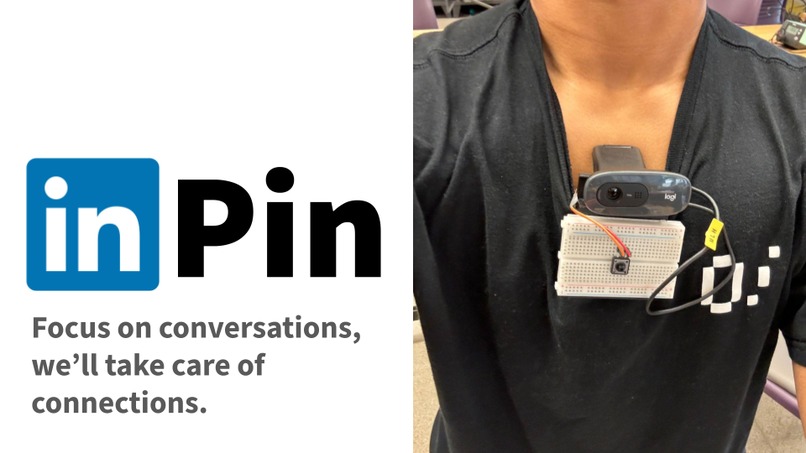
Hang the InPin on your shirt and hit a button before you talk to somebody. The InPin focuses on key details like name, location, and place of work, while allowing you to focus on real conversation. As you walk away, hit the button again to stop listening and a fully automated and personalized connection request is sent straight to the person you just talked to. Look back at all the cool people you've connected with on the InPin Memories app. (and for those of you concerned with security, we promise we never save audio or video)
How we built it
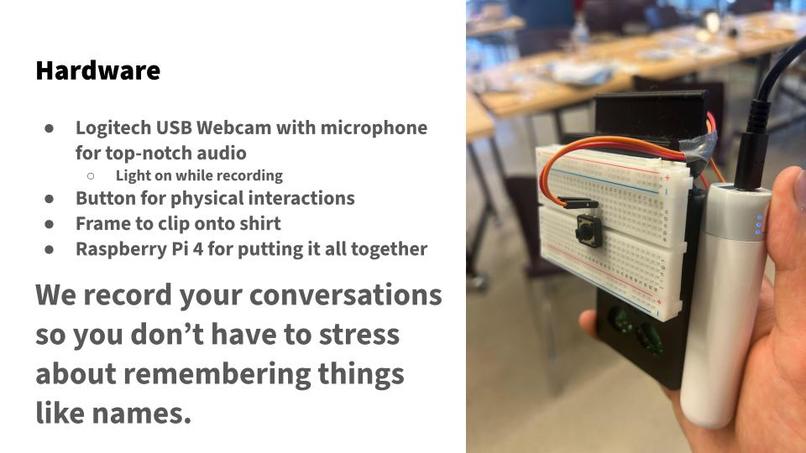
Hardware: Raspberry Pi 4, Custom 3D Printed Casing, Breadboard, Button, Jumper Wires, DRW Sponsor Battery Pack (Rechargeable Power Source), some Superglue and Duct Tape
Software: OpenAI, Cohere (robust query generation), Convex (InPin Memories app), Python, Flask, NextJS
Challenges we ran into
This was our first time building a hardware hack and we had no shortage of issues with everything from formatting our MicroSD card to wiring our breadboard. Most notably, from around 8 am on Saturday to 4 am on Sunday we spent almost all of our time trying to trying to SSH into our Raspberry Pi.
Accomplishments that we're proud of
As first time hardware hackers, holding our physical product in our hands is really a crazy feeling. We're proud that we stuck with the InPin through hours of failures and most importantly, we're proud of the fact that we definitely made the trip up from Cali worth it.
What we learned
Try new things! InPin wouldn't have been a thing if we didn't decide to take the chance and build some hardware. We had our ups and downs but this experience definitely taught us to be adventurous and step out of our comfort zone.
What's next for InPin
Make Memories searchable (for example you'd be able to look up something like "who was that super interesting guy from Cali working on an automated connection wearable?"). Lip reading to make audio processing more robust in noisy environments. Make the InPin smaller, cheaper, and more polished. The prototype we have right now is more of a proof of concept than anything, but we'd love to see this taken to a point where people can, for example, be handed out InPins at the start of a conference or networking event.


Log in or sign up for Devpost to join the conversation.