-
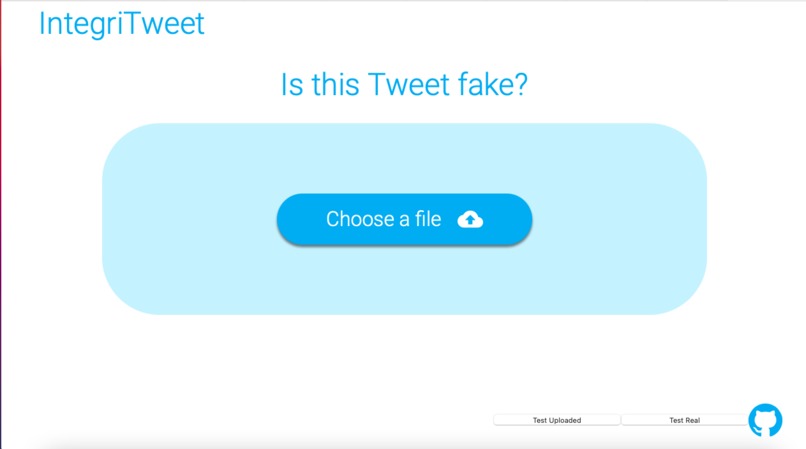
Before image is uploaded
-
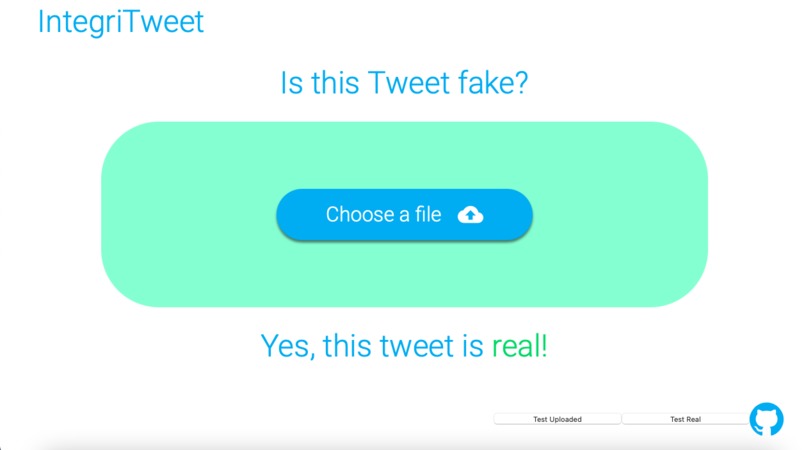
If the tweet is real
-
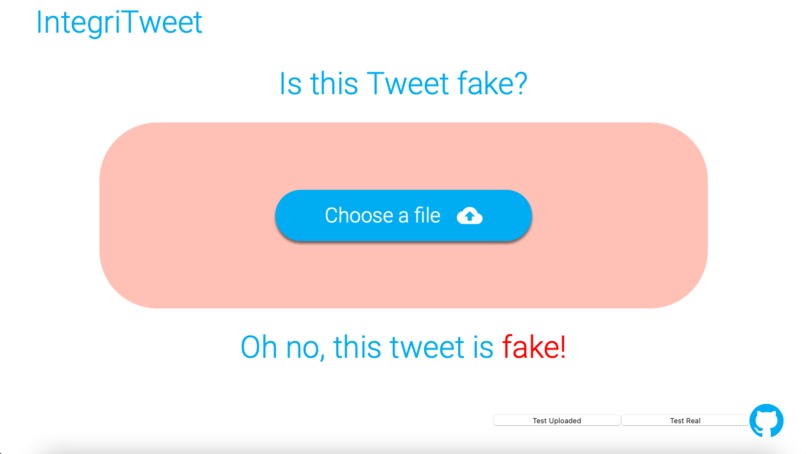
If the tweet is fake


Inspiration
The inspiration for this project comes from the rapid increase of misinformation in mainstream media, specifically twitter. What provoked us to create this application was the recent controversial clashes between two diametrically opposed political commentators on twitter and the misinformation that was spawned as a result.
Political commentator, Ben Shapiro, and congresswoman AOC were both victims of a smear campaign (Ok maybe that is an exaggeration). Ben was accused of stealing AOCs shoes during the cold days of DC January. Both parties were left to clarify that this in fact was not true.
If only there was an application to check the authenticity of a tweet. Now there is!
What it does
This web app allows a user to upload an image of a tweet that they suspect might be fake. The website then responds whether it is a real tweet or a fake one.
How we built it
We built this web app using React and Node. To extract text data from the image that the user uploads we used Google's Cloud Vision API. From the text received, we get all the tweets from the specific user in the image using the Twitter API.
Challenges we ran into
Unfortunately we were not able to complete this project. The biggest challenge we faced was interacting with new technologies that was unfamiliar to us. We have never used API requests such as Google Cloud Vision and TwitterAPI so getting these to work took a very big chunk of time.
We are also fairly new to web programming so we found it challenging to get meaningful progress done. When we faced roadblocks, it was a long and tedious process of figuring out what part of the code was breaking and we would oftentimes never find a solution to the problem.
Accomplishments that we're proud of
We are proud that we were able to get the individual working components of our project working. We have the Cloud Vision API working and also the TwitterAPI working. We also have the frontend design implemented. The only remaining component was uploading image files and storing it in a server which we were unable to complete. All of our other components were ready to combine and we are surprised that we were able to get even this far.
What we learned
Node.js and the troubles that come with it was a very huge learning experience. We also learnt how API calls works. We learnt the use of Figma for making frontend development easier.
What's next for IntegriTweet
Aside from configuring the backend, functionalities that IntegriTweet could have in the future include statistics tracking, like the most uploaded fake tweets as well as the total number of real and fake tweets
Built With
- css
- framer-motion
- google-cloud-vision-api
- html
- javascript
- react


Log in or sign up for Devpost to join the conversation.