-
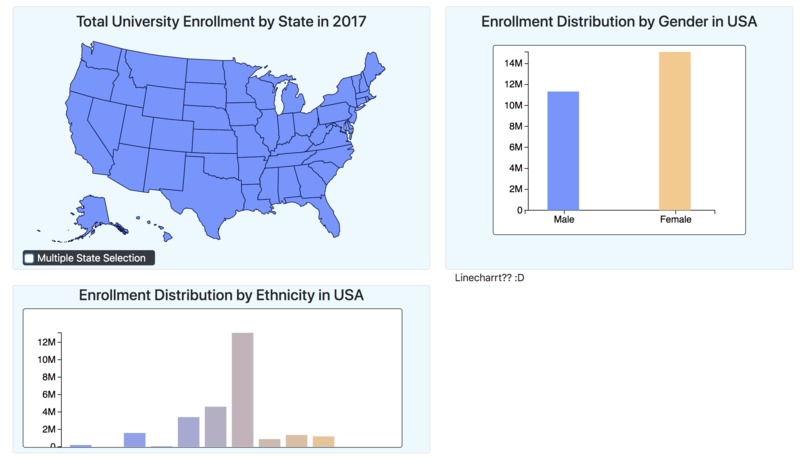
USA data
-
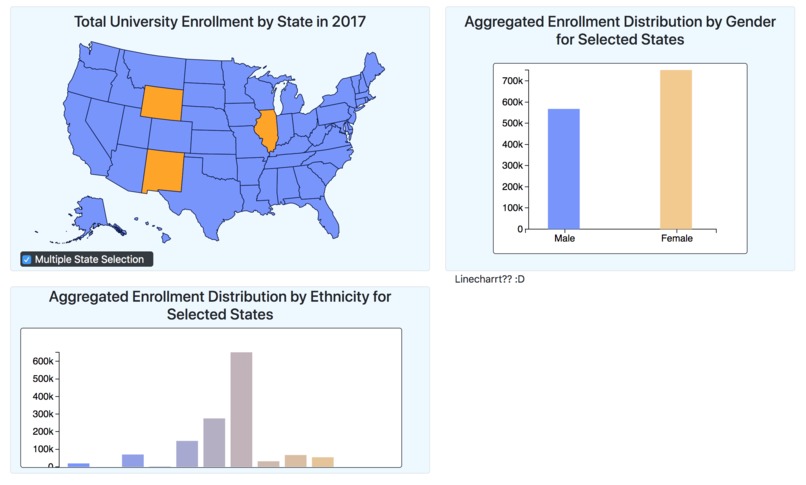
multiple selected states
-
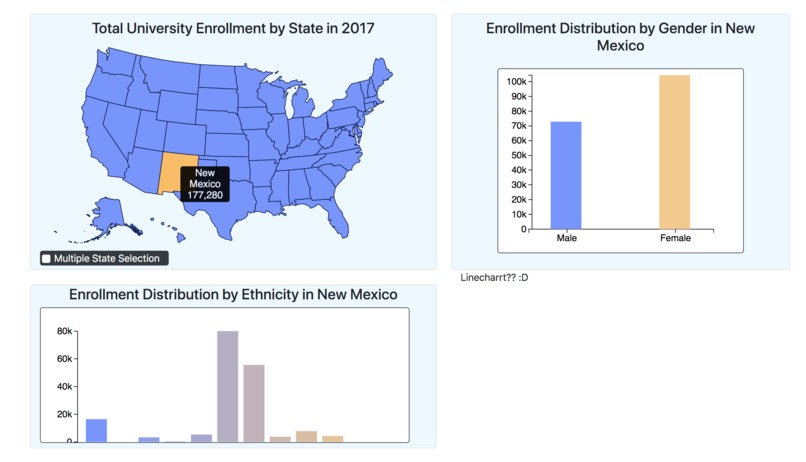
selected state


Inspiration
In the modern world, data is everywhere, but many times its collected in a way that is not easily digested by people. This project is an initiative to visualize public data sets, with the first of many being from the Integrated Postsecondary Education Data System (IPEDS) from the National Center for Education Statistics.
What it does
Our project gathers multiple data sets from IPEDS and links them so that users can see state-based and aggregate enrollment data by clicking on states on the US map. Ethnicity and gender distribution charts for the selected state(s) are displayed accordingly.
How we built it
We built it using d3.js and bootstrap.js. We downloaded multiple tables from the IPEDS website and cleaned the data for processing and added them to our repositories as CSV files.
Challenges we ran into
Some technical challenges we ran into were related to scaling our graphs so that all bars were proportionally within the div. This was solved once we realized our numbers on the CSV files were actually being read as strings. Other challenges were related to user experience, answering questions such as: "How should we allow users to select multiple states?" "How should we label charts and tooltips?"...
Accomplishments that we're proud of
We're proud that our interactive map is fully-functional. You can click and state or combination of states and see the enrollment data by gender and race ethnicity.
What we learned
We learned how to use D3!
What's next for Interactive Data Map
In addition to being able to show aggregate data, in the future we will also support showing comparison data. In comparison mode, the multiple states selected will show up as stacked bar charts for the gender and ethnicity data so that it is easy to see differences. The bottom right div will be some type of chart over time. That chart will also be interactive such that you can click a vertical line over the chart which indicates a specific year and then all the other charts will update to show data from that specific year. Currently the data presented is the most recent data from IPEDS which is from the 2017-2018 year.


Log in or sign up for Devpost to join the conversation.