-
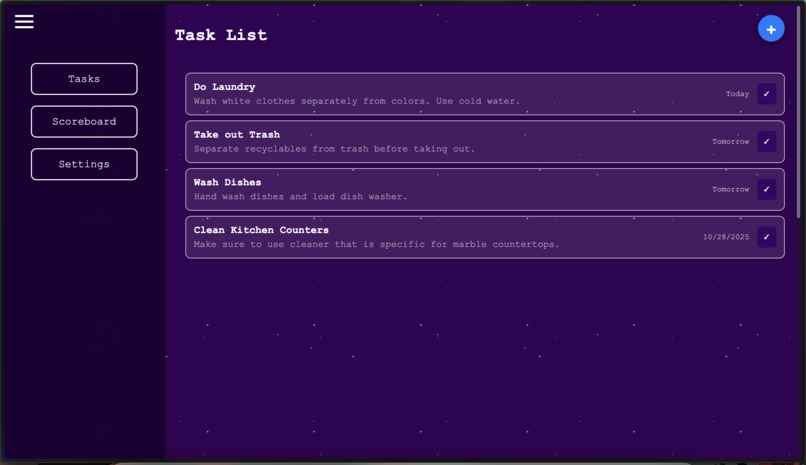
See a list of available tasks!
-
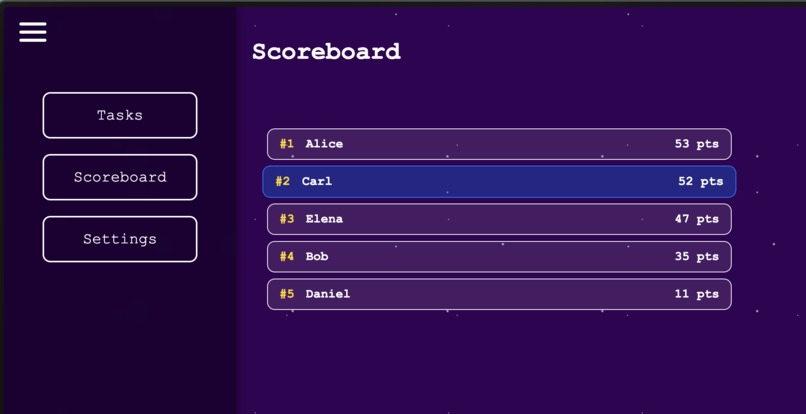
Earn points by completeing tasks. Compare against friends/family!
-
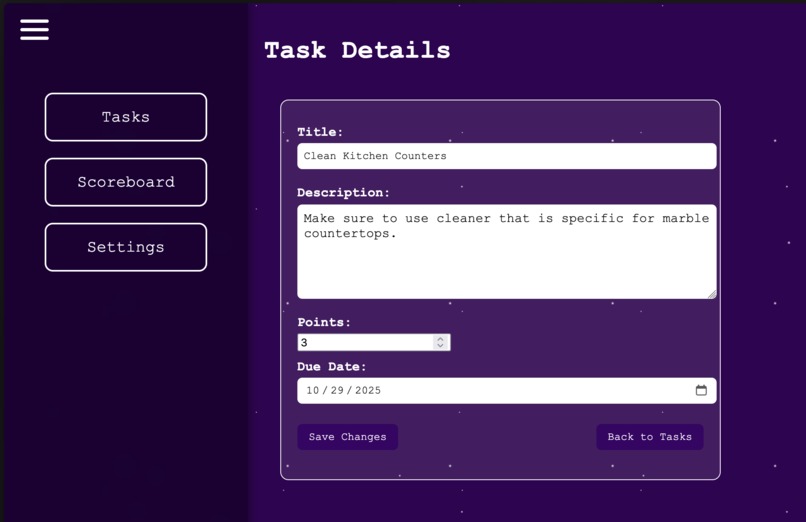
Many task details can be altered/edited freely.


Inspiration
Many task scheduling systems are locked behind a paywall, or simply do not meet the expectations of a good, smart scheduling system. Simply put, we wanted to solve all of those problems with a simple, open source, powerful scheduling system.
How we built it
This is a full stack application built using Go for the backend/API, SQLITE for advanced database wrappers, and HTML/JS/CSS to tie the look together.
Challenges we ran into
Creating a full stack application from the ground up can be really difficult. Making the API, frontend, and backend all work together in a short amount of time is not easy, especially when each group member is working on a different part of the stack.
Accomplishments that we're proud of
When we finally saw it all start to connect after hours of development, it was an amazing feeling. We'd definitely say getting it to work the way we did in only 24 hours was a big accomplishment.
What we learned
Going into this project, we hadn't worked on a full stack development project like this before. It was very insightful to see the amount of collaboration and coordination needed, as well as constant feedback loops about what we are doing and what we plan to implement. To pull something like this off, we learned it will take a lot more than just good programming skills.
What's next for Kempt
Coming up, we want to clean up the code base (a lot!), and make Kempt into an application that can be deployed on any system using Docker. To do something like this though, its imperative to implement better security features, as well as adding many more ways to interact with tasks, as our main goal is for it to be convenient, powerful, and motivating.


Log in or sign up for Devpost to join the conversation.