-
-
KeyCanvas Logo
-
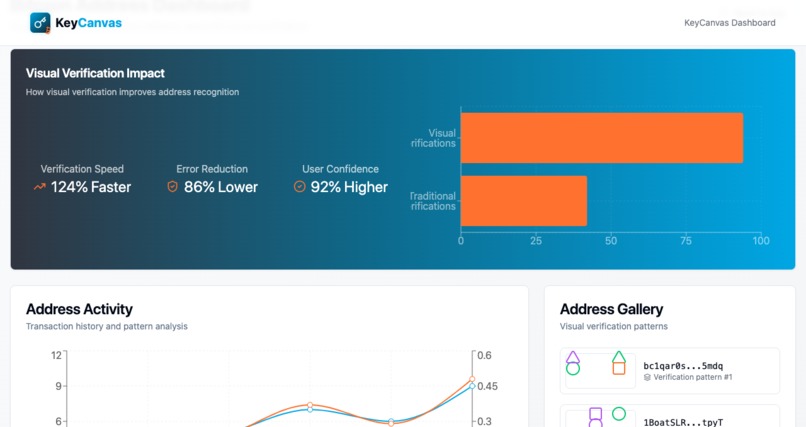
Dashboard stats
-
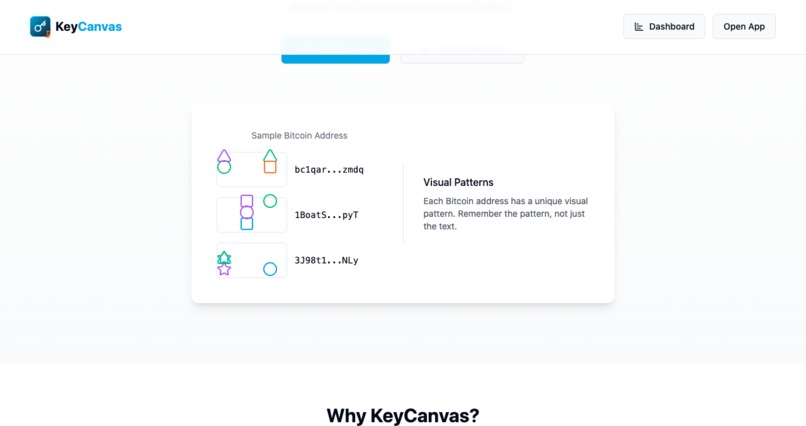
Dashboard start page Bitcoin address pattern description


KeyCanvas Project Details Inspiration Our inspiration stems from the core challenge of Bitcoin adoption: making complex, technical interactions accessible and trustworthy for everyday users. We observed the anxiety and potential for error when new users handle long Bitcoin addresses. The desire to create a more intuitive, human-friendly verification method, akin to how we visually recognize faces or patterns, led us to the concept of KeyCanvas. The principles advocated by the Bitcoin Design Foundation heavily influenced our commitment to a clean, accessible, and user-centric approach.
What it does KeyCanvas provides a web-based prototype that:
Generates a mock Bitcoin address.
Creates a unique, consistent, and visually appealing "KeyCanvas" (a simple SVG pattern or icon combination) that serves as a visual mnemonic for that address.
Offers a streamlined, confidence-building sharing experience, including one-click copy and QR code display, with the KeyCanvas visual always present for easy verification. In essence, it transforms a daunting string of characters into a recognizable and shareable visual identity, enhancing user confidence and reducing potential errors.
How we built it KeyCanvas was built using a lean, frontend-focused approach to maximize design polish within the hackathon timeframe:
HTML5 for the foundational structure of the application.
CSS3 (with Flexbox and Grid for layout) to craft a minimalist, responsive, and visually appealing user interface, prioritizing clean lines, ample whitespace, and accessible color contrasts.
Vanilla JavaScript to handle the dynamic generation of mock Bitcoin addresses, the logic for creating the unique SVG-based KeyCanvas visual for each address, and the interactive elements like copy-to-clipboard functionality and modal management.
SVG was chosen for the visual mnemonics due to its scalability, lightweight nature, and ease of dynamic generation via JavaScript.
Challenges we ran into The primary challenge was balancing the ambition of a truly innovative design solution with the extremely tight hackathon deadline. Specifically:
Time Constraint: Developing a polished UI/UX and a compelling visual mnemonic generation logic in a matter of hours required aggressive scoping and rapid iteration.
Visual Mnemonic Algorithm: Designing a simple yet effective algorithm to generate unique and aesthetically pleasing SVG patterns from a mock address string, ensuring consistency and visual appeal without cryptographic complexity.
Focusing on Design: Resisting the urge to delve into complex backend Bitcoin integrations (which were beyond the scope for this design-focused hackathon) and maintaining a strict focus on the user experience and visual presentation.
Accomplishments that we're proud of We are most proud of:
The "KeyCanvas" Concept: Successfully translating the abstract idea of a visual mnemonic for Bitcoin addresses into a tangible and intuitive prototype.
Exceptional UI/UX: Delivering a truly clean, smooth, and accessible user interface that stands out in the often technically-dense crypto space, embodying the "wish all apps were built this way" sentiment.
Problem-Solving Focus: Directly addressing a significant user pain point in Bitcoin adoption with a creative and user-centric design solution.
Rapid Prototyping: Demonstrating the ability to execute a high-quality design vision under extreme time pressure.
What we learned This hackathon reinforced the immense value of user-centric design in the blockchain space. We learned that:
Even small design innovations can have a disproportionately large impact on user confidence and adoption.
Simplifying complex technical concepts through intuitive visuals is key to broader appeal.
A strong focus on core UX principles (feedback, clarity, accessibility) is paramount, especially in financial applications.
The power of rapid prototyping to validate design ideas quickly.
What's next for KeyCanvas The future for KeyCanvas is exciting:
Integration with Real Wallets: Our immediate next step is to explore integrating KeyCanvas with actual Bitcoin address generation and transaction signing functionalities, potentially via existing wallet APIs or libraries.
Advanced Visual Algorithms: Developing more sophisticated and cryptographically robust methods for generating the visual mnemonics, potentially incorporating more complex patterns or user customization.
Cross-Platform Development: Expanding KeyCanvas into native mobile applications to provide a seamless experience on iOS and Android.
Community Feedback & Iteration: Gathering feedback from the Bitcoin design community and users to continuously refine and improve the KeyCanvas experience.
Built With
- lovable
- react
- shadcn
- vite



Log in or sign up for Devpost to join the conversation.