-
-
Keysafe is the missing layer between Web2 and Web3 that connects users' Web2 and Web3 accounts in a verifiable and private way.

Inspiration
Managing Web3 accounts could be cumbersome, unfriendly to users, and vulnerable to hacking. Based on research by ChainAnalysis, the number of lost bitcoins due to account loss reached 3.79 million($150 billion).
To use Web2 social login "OAuth" is user-friendly, but it is trust needed and is vulnerable to Web2 identity exposure.
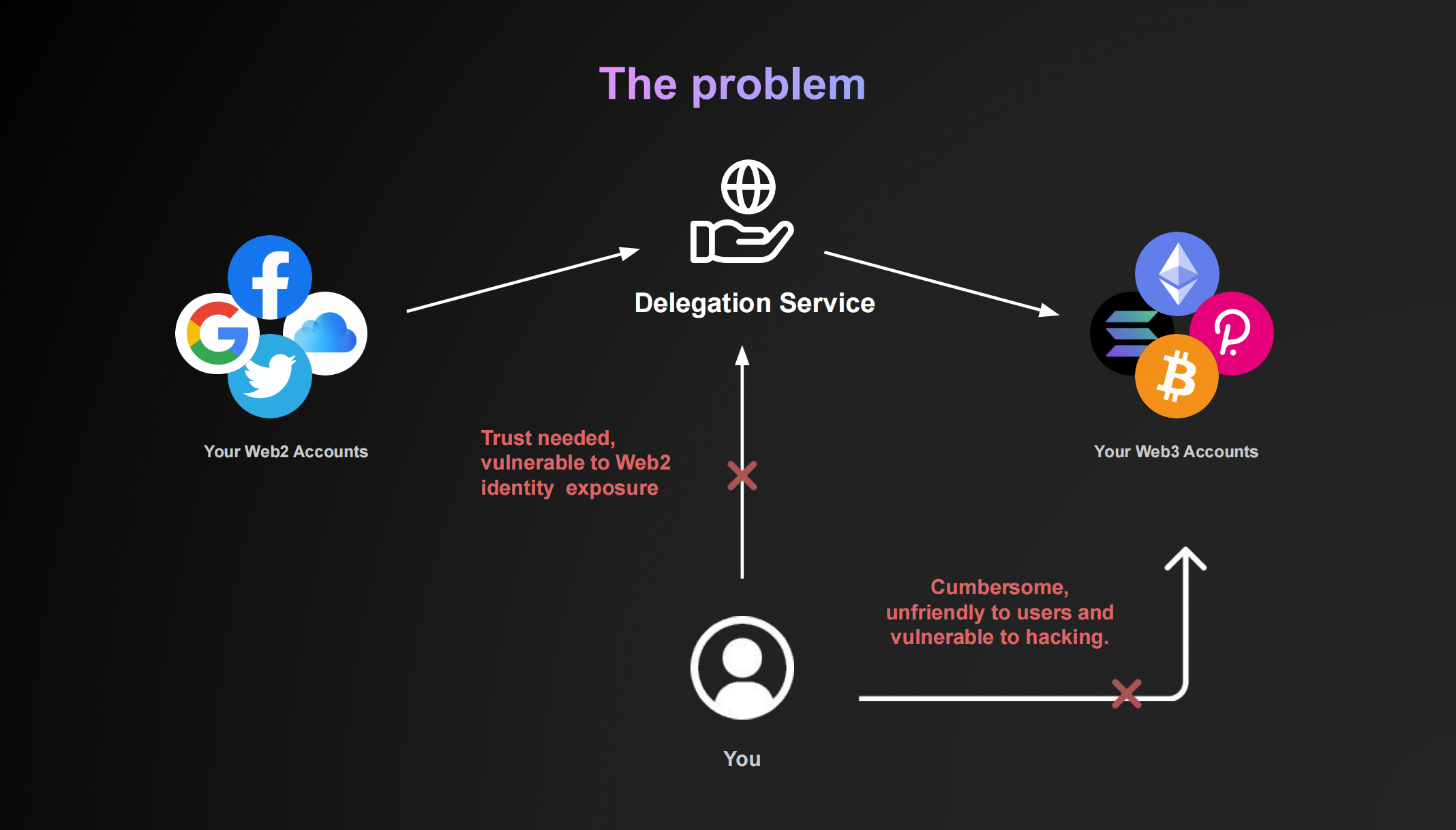
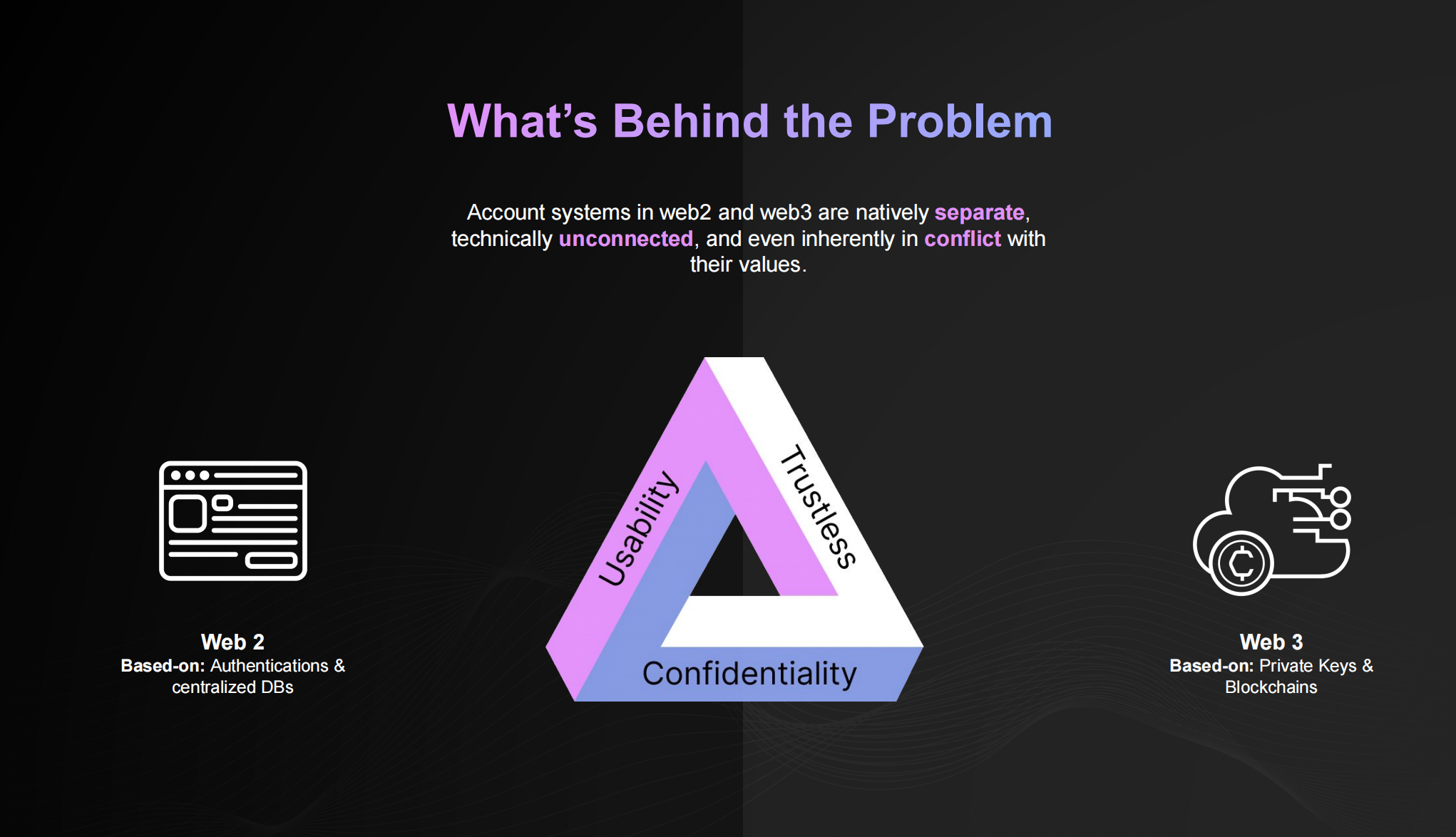
The key problem: account systems in web2 and web3 are natively separate, technically unconnected, and even inherently in conflict with their value.
What it does
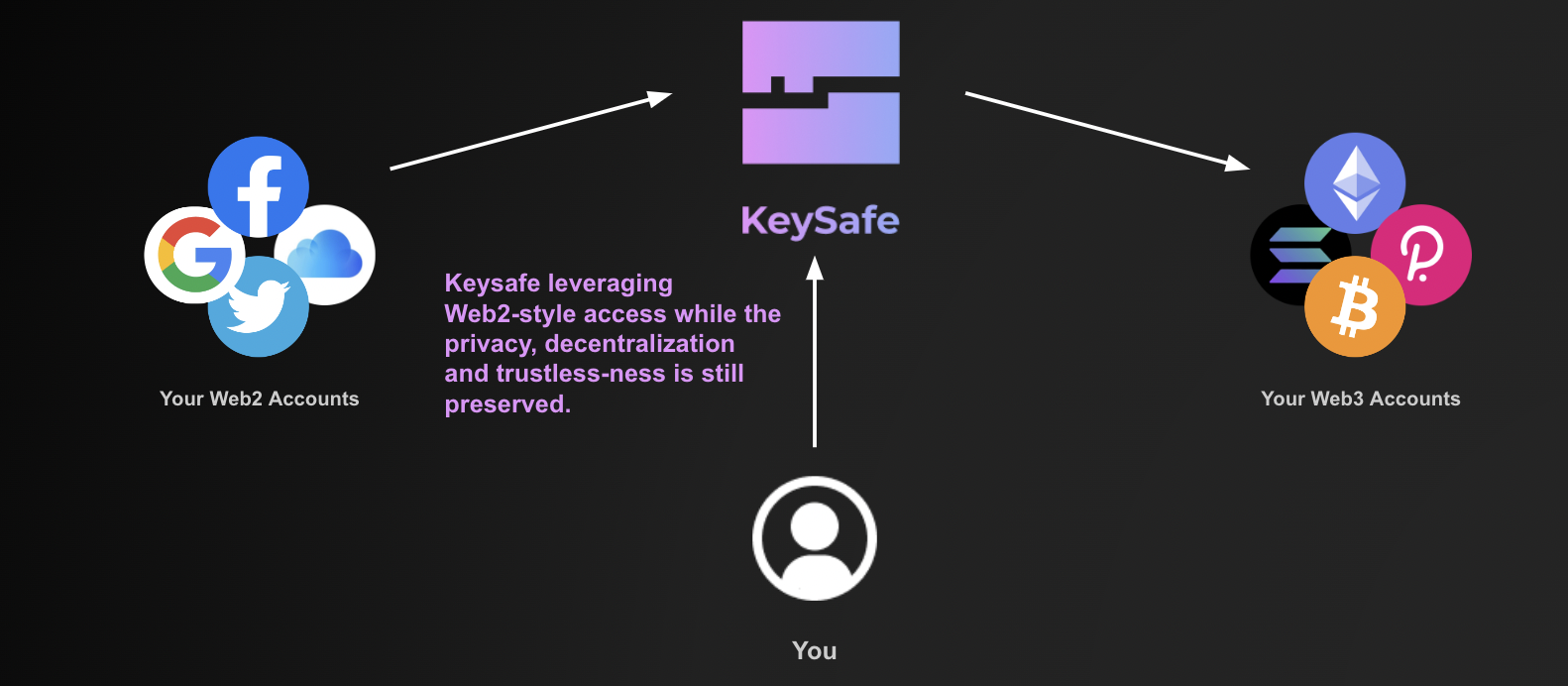
Keysafe Protocol is the missing layer between Web2 and Web3 that connects users' Web2 and Web3 accounts in a decentralized, verifiable, and private way. With the connection, users can access their Web3 assets and Dapps through Web2 verification such as Google OAuth and Email verification. (It's a kind of Account Abstraction)
How we built it
On-chain
- Contract: Keysafe deployed a smart contract on Near Network. The contract provides the registration function of the Keysafe node that allows users to verify the environment of the service node and the service result.
- TEE's Public Key: Users could set up a private channel with Node's TEE by using TEE's public key that is registered on-chain.
- The verifiable service result: The node's TEE environments and each service result can be verified on the contract. If the node has any misconduct, the contract will also deduct the node pledge accordingly.
Off-chain
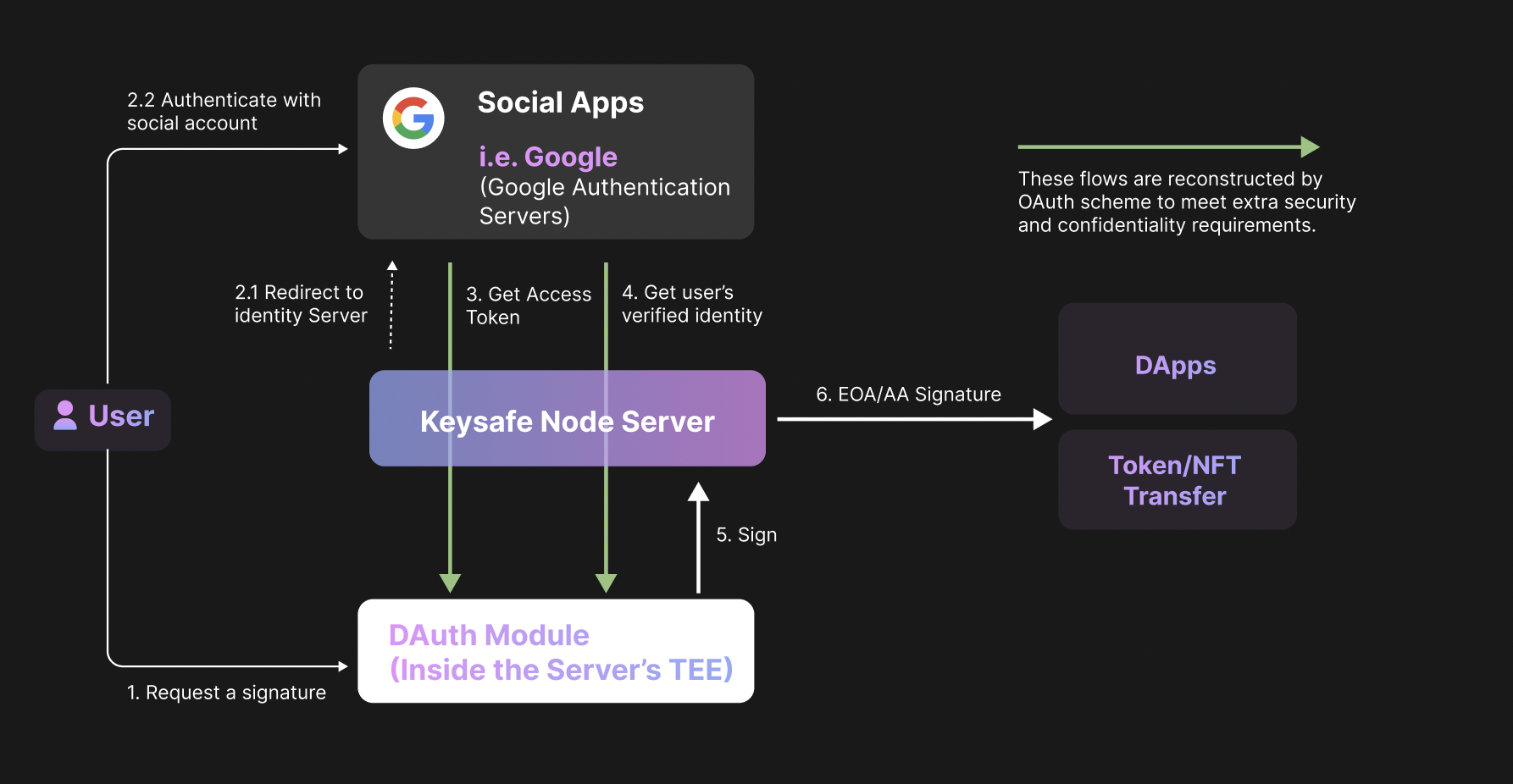
- TEE: Keysafe protocol uses Trusted Execution Environment (TEE) technology to manage user private keys.
- MPC and BLS algorithms: Keysafe uses Secure Multi-party Computation (MPC) and Threshold BLS Signatures to decentralize and distribute user accounts to multiple nodes' TEE to get enhanced security.
- DAuth: The most crucial and creative module of Kesyafe is DAuth. DAuth allows owners to access the Web3 world with a customized combination of Web2 third-party authentication services including SMS, email, Google, and even Web3 address.
GitHub: https://github.com/keysafe-protocol/keysafe-app
Challenges we ran into
- To let more Web3 projects adopt and integrate Keysafe to form an ecosystem and hence gain a huge user base gradually;
- To become a standard of Account Abstraction that remains decentralization, privacy and trustless;
Accomplishments that we're proud of
- We are successfully applied for Web3 Foundation Grants
- We got a 3-rd prize in Web3 Hackathon
- We have won the 1st Prize in the Boba Network x DoraHacks hackathon.
What we learned
A better user experience is a necessary condition for the next Web3 growth point. To be a successful Account Abstraction solution, Keysafe needs to balance security, usability, and user privacy.
What's next for Keysafe Protocol
- We will deliver a SaaS that provides social login for Dapps;
- design and implement an on-chain tokenomics system to incentivize necessary parties in the protocol.
- Support more TEE implementations, such as Trusted Zone of ARM, and SEV of AMD to level up the security;
- We will provide a "Paymaster" service that allows users to make transactions without gas tokens. This enhancement will make Kesyafe an EIP 4337 fully compatible protocol.


Log in or sign up for Devpost to join the conversation.