-
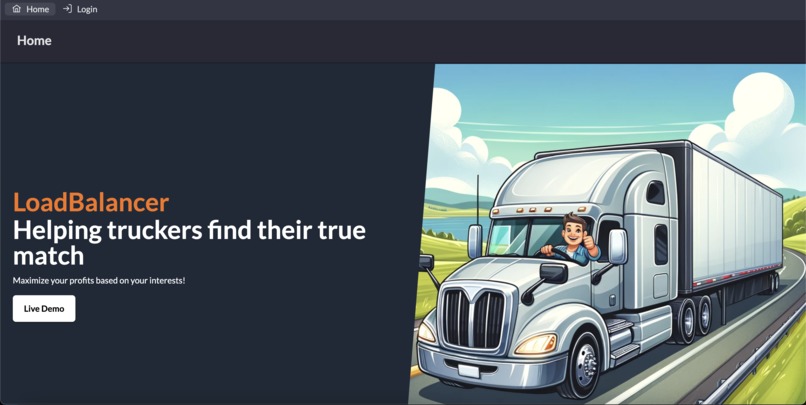
Home Page
-
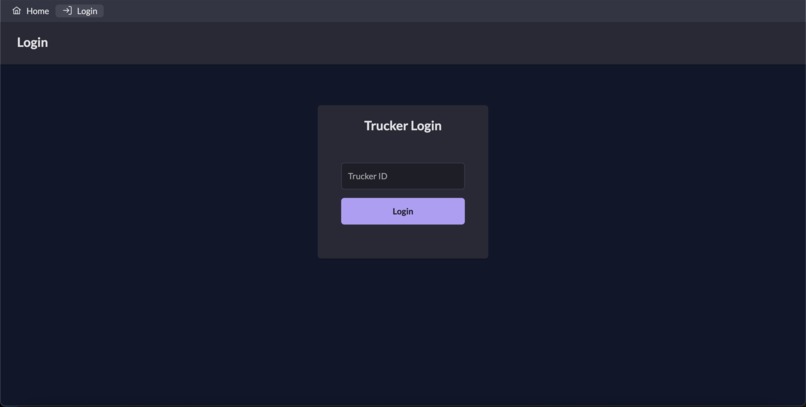
Login Page
-
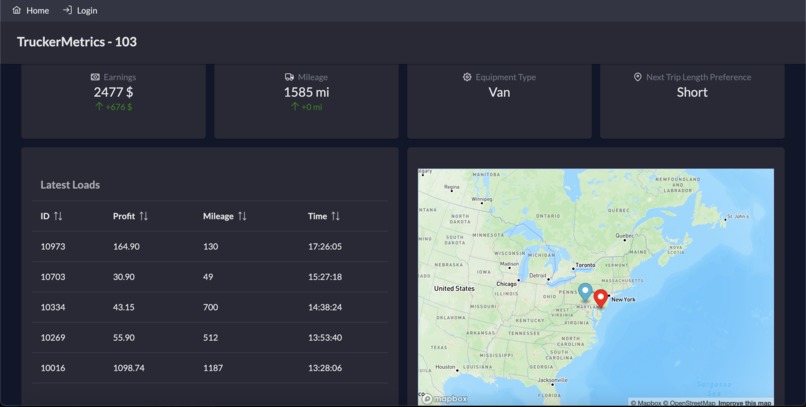
Dashboard Page
-
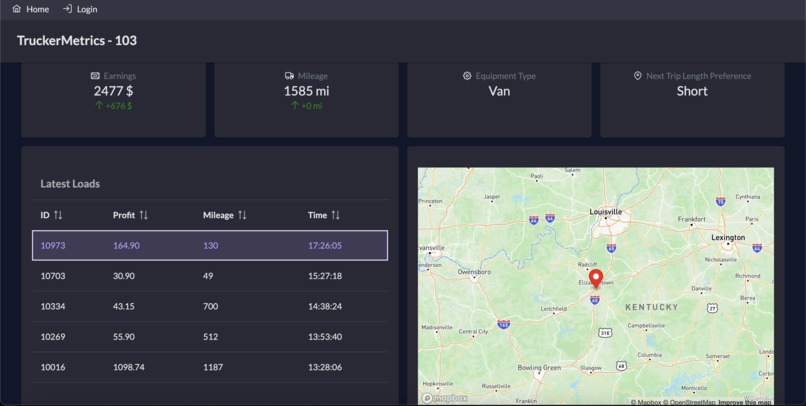
Map Feature


Problem Statement
How can we optimize load boards like 123Loadboard to more effectively match truckers with loads that align with their specific needs and preferences, reducing irrelevant options and enhancing the load-matching process?
In the trucking industry, time is a critical factor. Truckers often find themselves sifting through a plethora of load options, seeking that one ideal haul that aligns with their route, timeline, and load preferences. This process can be tedious and inefficient, with truckers having to navigate through loads that are not relevant to their specific needs, leading to a loss of valuable time and potential income.
Current methods like generic load recommendations or basic search filters are insufficient, as they do not fully account for the dynamic and specific needs of individual truckers. These methods often result in a flood of options, many of which are irrelevant, creating a “noise” that truckers have to wade through. The challenge lies in the fact that each trucker’s requirement is unique and changes over time – a load that is ideal today may not be suitable tomorrow.
The existing separation between the load board interface and truckers’ personal preferences creates a gap in effectively matching the right load with the right trucker. The goal is to come up with a more intelligent and responsive platform that not only understands but anticipates the truckers’ needs, leveraging advanced algorithms and user data to provide tailored load suggestions.
Our Solution
Introducing LoadBalancer, our approach to enhancing the functionality of load boards like 123Loadboard, employing advanced technologies and user-centric features to streamline the load-matching process for truckers. This solution involves the development of a full-stack web application, designed to intelligently match truckers with loads that precisely fit their preferences and requirements.
Intelligent Load Matching
The core of our solution is a sophisticated weighted heuristic score calculation, tailored to analyze each trucker's profile, preferences, and historical data through a combination of advanced heuristic algorithms and Machine Learning. This system evaluates truckers for specific loads by considering diverse factors including profitability, trucker idle time, preferred trip lengths, and proximity to load clusters. It calculates a weighted heuristic score for each trucker, enabling the selection of the most suitable truckers to receive notifications about particular loads. The higher the score, the more suitable the trucker is for a particular load. This personalized approach ensures that truckers receive notifications and recommendations for loads that are most relevant to them, significantly reducing the time spent sifting through irrelevant options.
Dynamic User Interface
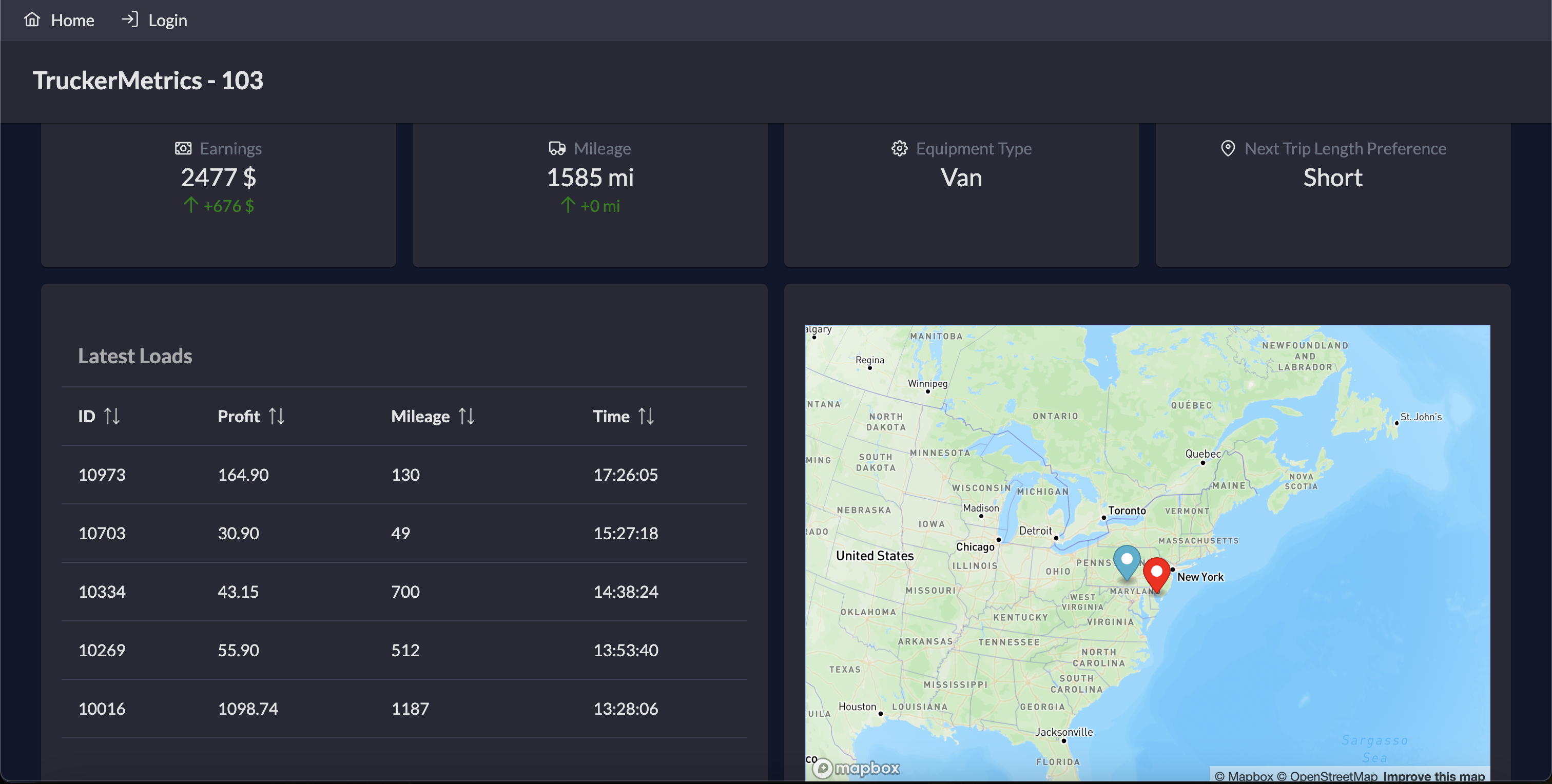
The web application features a user-friendly interface, offering truckers a streamlined and intuitive experience. Truckers can have access to a dashboard displaying all of their recommended loads in a clear, organized manner, allowing truckers to quickly assess and select the most suitable options. This interface will also include an interactive map that will display the trucker's location, as well as the location of any of the recommended loads they select.
Real-Time Notifications and Server-Side Events
Utilizing server-side events, the system will provide real-time notifications to truckers when a load matching their criteria becomes available. This feature ensures that truckers are immediately informed of potential opportunities, allowing them to respond swiftly and secure loads efficiently.
Technological Stack
Frontend: Vue.js, TailwindCSS, Mapbox GL
The frontend of our application is developed using Vue.js, offering a dynamic and responsive user interface. We also utilized TailwindCSS for its responsive design features and ease of customization, enhancing the visual appeal and user interface. Finally, we integrated Mapbox GL for advanced mapping functionalities, aiding truckers in route visualization and planning.
Backend: FastAPI, Redis, Scikit-Learn
We opted for FastAPI due to its high performance and easy-to-use features, enhancing backend efficiency. Redis was used for managing live data and enabling real-time notifications, ensuring quick and responsive communication with truckers. We also utilized Scikit-Learn to use Machine Learning algorithms for our heuristic score calculations.
Built With
- css
- fastapi
- html
- javascript
- mapboxgl
- python
- redis
- scikit-learn
- vue


Log in or sign up for Devpost to join the conversation.