-
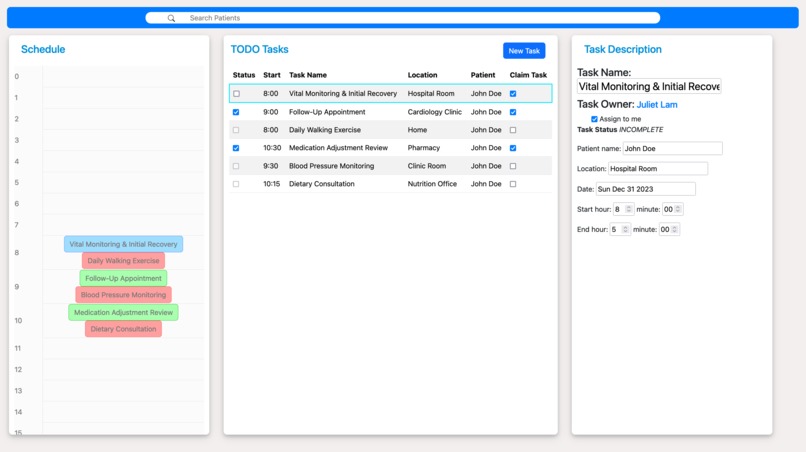
The Practitioner Dashboard, used for scheduling tasks

Inspiration
Reading about issues with patient safety was... not exactly inspiring, but eye-opening. Issues that were only a matter of human error (understaffed or forgetfulness or etc) like bed sores seemed like things that could easily be kept track of to at least make sure patients could get a heightened quality of life. So we decided to make an app that tracked patient wellness and needs, not necessarily just concrete items, but all the necessary follow-up items from them as well. We understand that schedulers for more concrete events like appointments already exist, but something that can remind providers to check up on patients in 3 days to see if they have had any side effects to their new prescription or any other task would be helpful.
What it does
The Med-O-Matic keeps track of patient needs and when they're needed, and sets those needs up in a calendar and matching to-do list for a team of healthcare providers in a hospital to take care of. Providers can claim tasks that they will get to, and can mark them down as they go throughout their day. This essentially serves as a scheduled task-list for providers.
How we built it
To build the frontend, we used Vue.js. We have a database holding all the tasks on AWS DynamoDB.
Challenges we ran into
Getting started was a bit difficult and we weren't really sure which direction we should take for Med-O-Matic. There were a lot of uncertainties about what exactly would be best for our application, so we had to delve in a bit deeper by thinking about what the current process is like at hospitals and clinics, and finding areas for improvement. This has led us to addressing a process issue in task assignment to reduce the number of errors associated with inattentiveness.
Accomplishments that we're proud of
What makes our application different than others is that you can sequence tasks and use these sequences as a template. For example, a procedure like heart-surgery always has required follow up steps. You can create a heart-surgery template, that will be used to set all the required follow-up steps. After the template is created, we can easily reapply that template however many times we want!
What we learned
We learned how to deploy using DeFang, and also how to connect our frontend with DynamoDB. And we learned more about the domain of our project, which is patient safety.
What's next for Med-O-Matic
More automation would be next. We've already got some bit for making sequences of tasks, but features like a send-a-text feature for example to make the following-up-on process easier would be next- in other words, we'd add features that help do the tasks as well, instead of simply reminding providers of what they need to do. We would also connect it to some medical scheduler like EPIC's API, like EPIC. This would allow us to really get the task sequencing working seamlessly with a real workflow, as something like a surgery can be scheduled in epic, happen, and then trigger the Med-O-Matic to create all the necessary follow-up tasks from that.




Log in or sign up for Devpost to join the conversation.