-
-
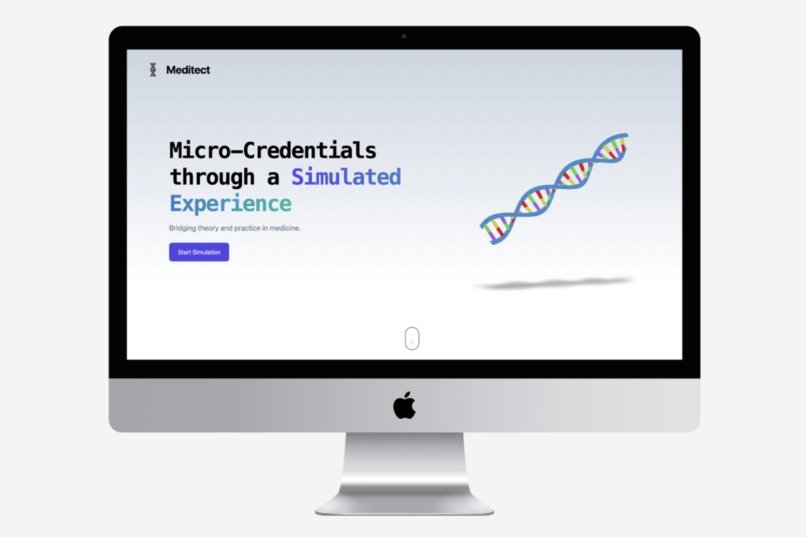
Home Page UI Mockup
-
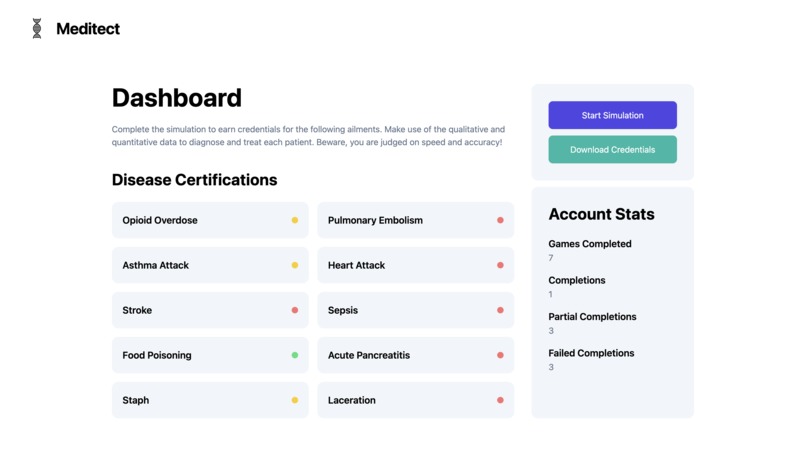
Dashboard Page
-
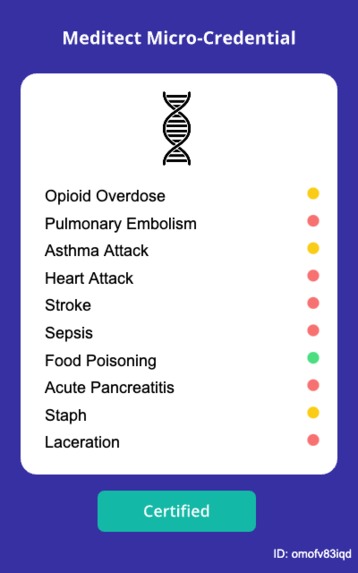
Issued Micro Credential
-
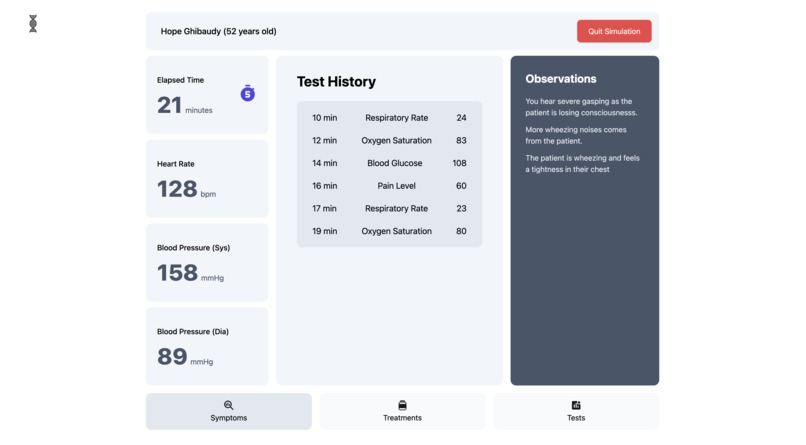
Symptoms Page
-
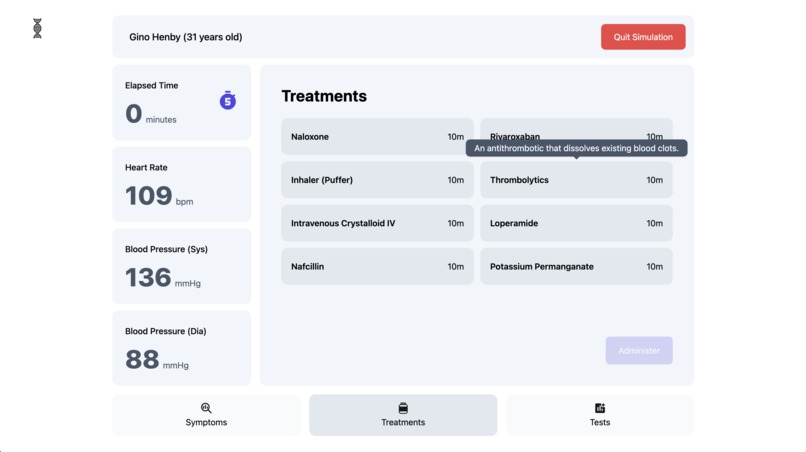
Treatments Page
-
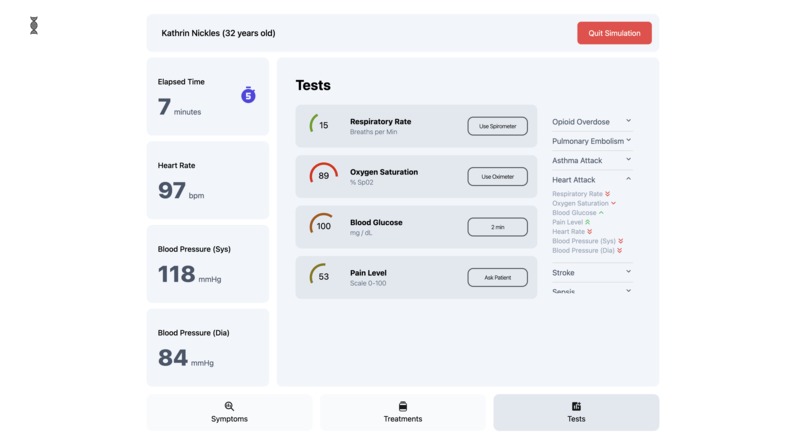
Administer Tests Page
-
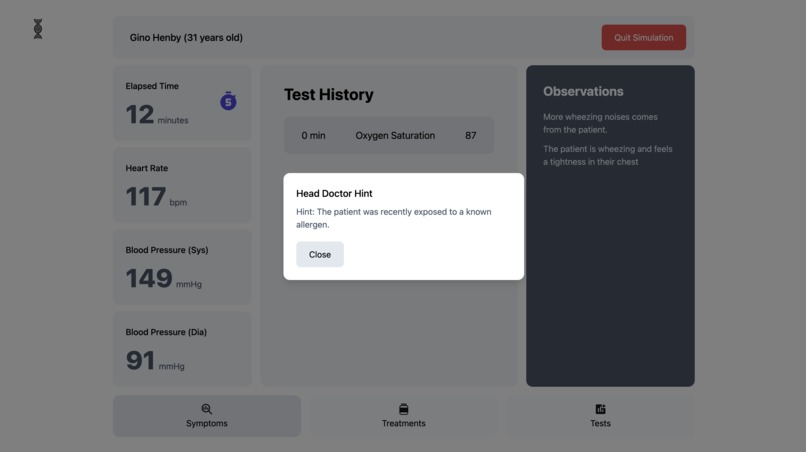
Doctor Hints
-
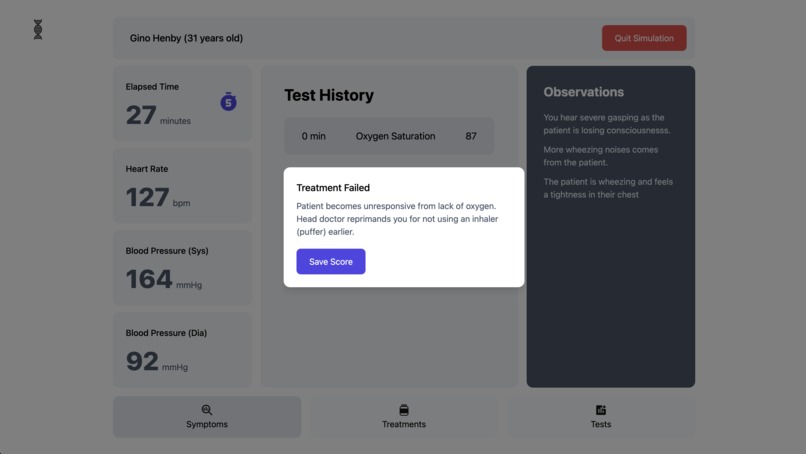
End Screen
-
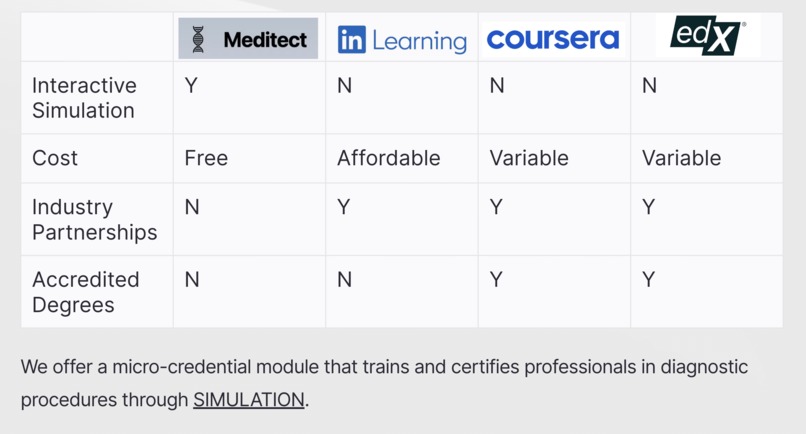
Product Positioning


Inspiration
Mainstream micro-credentials modules usually follow a generic teaching template that cannot test or develop niche industry skills such as clinical diagnosis. Clinical diagnosis demands the ability to process large amounts of qualitative and quantitative data under time constraints. However, real-life simulative training is tedious and expensive. This unaddressed need inspired the creation of Meditect.
What it does
Meditect taps into this unserved market segment by offering a convenient simulation-based micro-credential module that evaluates clinical decision-making based on time and accuracy, mirroring real-life scenarios.
How we built it
We built our website using Sveltekit, a framework for building performant web applications. To streamline our development process we used Typescript, a language which adds data typing to Javascript. For styling we used TailwindCSS, a utility-first CSS framework which quickens development speed by reducing the need for CSS files and class names. We also used various other libraries like Three.js, GSAP and Melt UI.
Challenges we ran into
We took a long time crafting the design for the simulation ranging from how it looks to the game loop (whether it should be turn-based or a continuous timeline). The process of compiling a spreadsheet of accurate data used for the medicines, health indicators, and diseases was also difficult and tedious.
Accomplishments that we're proud of
We are very proud that we were able to complete a project of this scale and quality in such a limited time by leveraging APIs and tools like Sveltekit and Tailwind CSS (and coffee).
What we learned
We learned to work efficiently as a team, delegating tasks, and using tools that support efficient teamwork such as GitHub and VSCode Liveshare.
What's next for Meditect
We hope to add more components and data to the simulation, add more treatments, and get professionals to help the program provide accredited degrees upon completion.
Built With
- gsap
- sveltekit
- tailwind
- three.js
- typescript


Log in or sign up for Devpost to join the conversation.