-
-
App Prototype
-
App Prototype
-
App Prototype
-
App Prototype
-
App Prototype
-
App Prototype
-
App Prototype
-
App Prototype
-
App Prototype
-
App Prototype
-
App Prototype


Inspiration
MentaLink was inspired by a common aim to revolutionize mental health assistance by making it more accessible, personalized, and linked. Seeing the rising need for creative solutions in the field of mental health, we banded together with the goal of empowering people on their well-being journeys. MentaLink is inspired by the transformational power of technology in enhancing mental health outcomes, while simultaneously emphasizing the value of privacy, accessibility, and a feeling of community. It strives to break down barriers, provide personalized care, and develop a connected environment that enables people to prioritize and improve their mental health.
What it does
MentaLink is a safe and confidential mental health app that offers personalized help and information to those dealing with mental health issues. The app's fundamental function is to provide users with a complete platform via which they can access evidence-based mental health resources, receive personalized advice and coping methods, track their progress, interact with mental health specialists, and join a supportive community.
Key Features
Secure and Private Platform: MentaLink prioritizes user data privacy and security by providing powerful encryption techniques, secure authentication systems, and rigorous compliance with global health privacy legislation (the General Data Protection Regulation). To maintain complete confidentiality, the app will reduce the quantity of data and upload none of it to the cloud. All of this is done to ensure that users' information is secure and confidential.
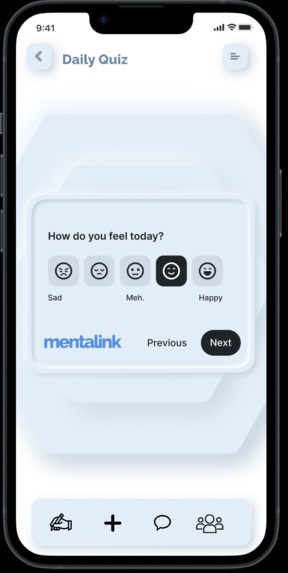
Personalized Mental Health Services: Using interactive assessments, the algorithm will be able to learn more about the person and provide personalized recommendations, self-help tools, and coping strategies for a variety of mental health conditions, including anxiety, depression, and stress management (more on this in the program's implementation). MentaLink's interactive evaluations may contain questionnaires or surveys aimed to examine mental health symptoms, well-being, stress levels, or particular illnesses like anxiety or depression. Rating scales, multiple-choice questions, or open-ended prompts may be used in these examinations to gather information and comprehend the user's present mental health condition.
Remote Monitoring and Progress Tracking: MentaLink allows mental health providers to remotely monitor the progress and well-being of their patients. Patients can update their mental health status on a regular basis, observe mood trends, and keep a journal. The programme analyzes this data using machine learning algorithms to produce insights that help therapists provide more focused therapies.
MentaLink is created with accessibility in mind, ensuring that it can be readily utilized by persons from varied backgrounds and communities experiencing healthcare inequities. To maximize accessibility for all users, the programme provides multilingual support, a user-friendly interface, and interoperability with numerous devices (including smartphones and tablets).
Interoperability with Healthcare Systems: To increase the efficiency of mental health care, MentaLink will interact with several patient information systems and healthcare provider networks. This might include information systems like the Canadian EMR, which would facilitate the transmission of pertinent patient data such as medical history and treatment plans while adhering to interoperability requirements.
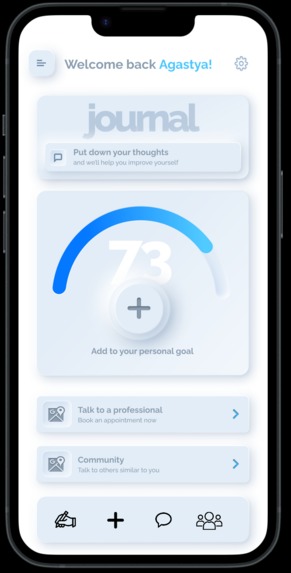
Personalized Progress monitoring: Our platform offers detailed progress monitoring and analytics. Users may see their cognitive progress over time, set goals, and receive personalized insights. Users may track their progress, establish objectives, and celebrate their accomplishments using this data-driven method.
Gamified Rewards and Incentives: Our software combines gamified rewards and incentives to improve motivation and engagement. Users accumulate points, unlock achievements, and receive virtual prizes for their efforts. These gaming features instill a sense of success, delight, and motivation in users, increasing their dedication to the brain training process.
Proposed Implementation User Interface: Create an intuitive and user-friendly interface that allows people to access MentaLink's features and services. To properly engage users, the interface should enable fluid navigation, clear information display, and interactive aspects.
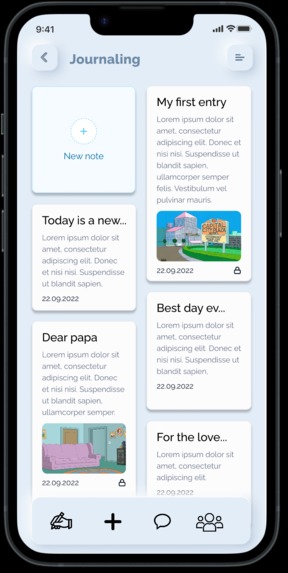
Personalization and Assessment: Create a diary in which users may record information about their mental health issues, objectives, and preferences. Make use of AI algorithms and machine learning approaches to adjust the MentaLink experience to individual needs, delivering personalized assistance and suggestions. MentaLink may give personalized advice for relaxation methods, breathing exercises, and mindfulness practices to assist control anxiety symptoms for a user suffering anxiety. It might also provide self-help options, such as guided meditation sessions or a diary function, to allow users to express and reflect on their worried thoughts and emotions.
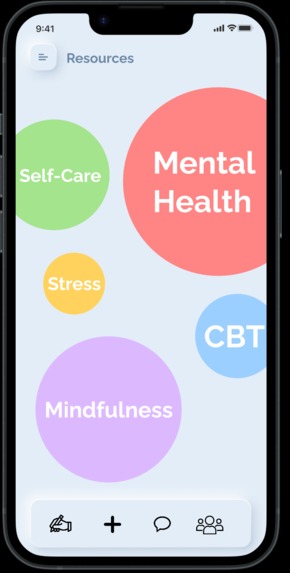
Mental Health Resources: Create a rich archive of evidence-based materials spanning a wide range of mental health issues, such as articles, videos, and guided activities. These resources should be freely available and searchable, delivering useful information and self-help tools to users.
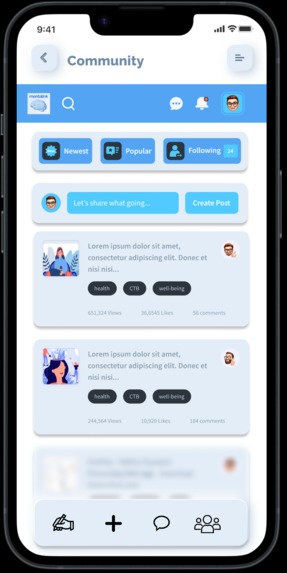
Peer Support and Community: Create a community platform inside MentaLink that allows users to connect with others who are going through similar experiences. Allow for discussion forums, group chats, and direct messaging to build a helpful and sympathetic environment in which people can share their stories, seek advice, and provide encouragement.
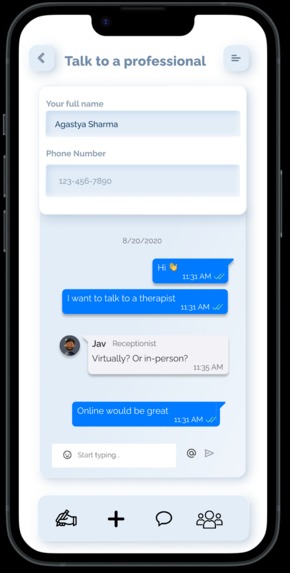
Teletherapy and Remote Counseling: provide users with the ability to arrange and access teletherapy or remote counseling sessions through MentaLink. Use secure video conferencing and texting to conduct virtual treatment sessions while maintaining privacy and confidentiality.
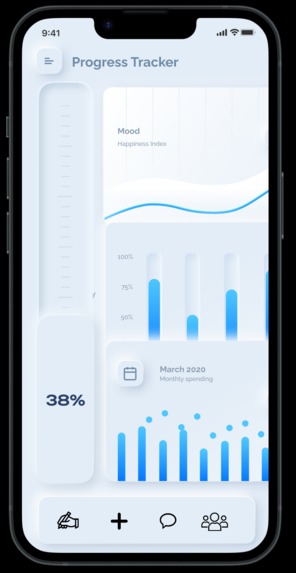
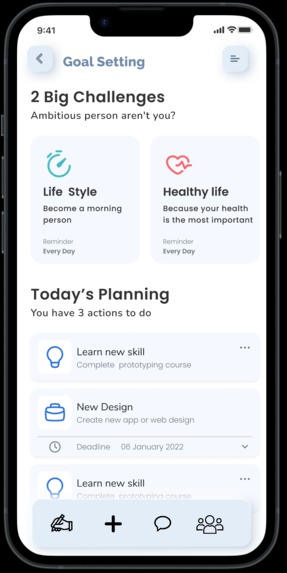
Progress Tracking and Analytics: Implement tools that allow users to track their mental health development over time, such as progress tracking and analytics. This might incorporate things like mood tracking, goal planning, and personalized insights based on data. Use data analytics to present users with visualizations and relevant feedback on their road to well-being.
Privacy and Security: Make strong privacy and security measures a top priority. To secure user data, the app will employ AES-256 encryption (a practically impenetrable symmetric encryption technology that uses a 256-bit key to turn plain text or data into a cipher). Furthermore, it will have explicit regulations stating that user data would only be shared with official clinics and hospitals, as well as their family doctor (optional). Furthermore, it will follow global health privacy rules (as previously stated) to safeguard user security.
Partnerships with Healthcare Providers: Work with healthcare providers to connect MentaLink into their systems, allowing for the smooth transfer of pertinent patient information. This interoperability guarantees a comprehensive approach to healthcare and allows for a coordinated effort to address mental health issues.
Continuous Improvement and Updates: Gather user input on a regular basis, analyze data, and execute iterative improvements to improve user experience, increase functionality, and incorporate emerging technology. Keep up to speed on the latest research and breakthroughs in mental health in order to further refine and improve MentaLink's products.
What's Next For MentaLink → Future Places It Can Be Taken To
Advanced AI Capabilities: MentaLink will continue to harness breakthroughs in artificial intelligence to improve its personalized support. MentaLink will improve its capacity to recognise and respond to individuals' particular requirements using deep learning algorithms and natural language processing, delivering even more personalized and sympathetic help.
Virtual Reality Expansion: MentaLink will look into the integration of virtual reality (VR) technologies on a larger scale. Individuals may engage in therapeutic environments, practice relaxation methods, and undertake exposure treatment in a safe and regulated manner by providing immersive VR experiences, hence broadening the spectrum of mental health therapies available.
Wearable Devices Integration: MentaLink will develop collaborations with wearable device makers in order to integrate their innovations into the platform. MentaLink can give users real-time insights into their physiological condition by combining data from devices such as smartwatches or biosensors, allowing for a deeper knowledge of the mind-body link and more personalized assistance.
Gamified Cognitive Training: MentaLink will increase its collection of gamified cognitive training sessions, building on the notion of neurofeedback gamification. These activities will focus on various cognitive skills such as memory, concentration, and problem-solving, providing entertaining and practical ways to increase cognitive abilities while encouraging a sense of success and pleasure.
Expanded Partnerships: Partnerships will be expanded: MentaLink will collaborate with mental health experts, researchers, and organizations to validate and improve its products. These collaborations will allow for the integration of evidence-based practices, the expansion of MentaLink's services, and the promotion of a multidisciplinary approach to mental health treatment.
Global Accessibility: MentaLink intends to expand its reach to underprivileged populations and regions experiencing healthcare inequities. MentaLink will seek to guarantee that individuals globally may benefit from its support by concentrating (even more so than before) on accessibility, language localization, and cultural sensitivity, breaking down obstacles to mental health care.
Continuous User Feedback: MentaLink will continue to prioritize user feedback and will actively communicate with its community. MentaLink will consistently enhance its features, user experience, and service offerings by actively listening to its customers' wants, preferences, and ideas. This ensures that it remains aligned with its consumers' growing demands.
How We Built It?
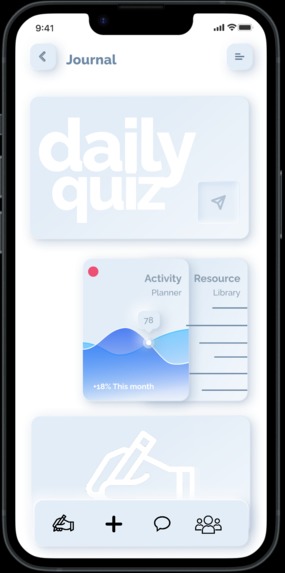
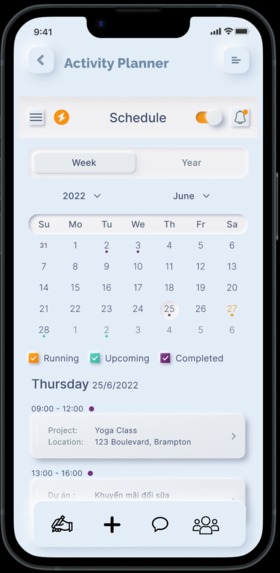
We Created a full-fledged designed prototype using Figma.
Challenges We Ran Into
Throughout the journey of developing these ideas, there were several challenges that we as a team encountered:
Deadlines: Time constraints posed a problem in efficiently managing our time and ensuring timely completion of various activities and deliverables. To reach project deadlines, we needed to prioritize and distribute resources efficiently.
Design and prototyping: Creating a functional and visually appealing prototype using design tools like Figma brought its own set of obstacles. To properly portray the MentaLink concept, we had to learn and master the technology, construct intuitive user interfaces, and design interactive features.
User involvement and Adoption: It was difficult to create an engaging and user-friendly experience that would drive user adoption and long-term involvement. To retain user interest and motivation, we had to carefully consider user preferences, build intuitive interfaces, and add gamification components.
Collaboration and Communication: Working effectively as a team, especially in a remote setting, presented challenges in terms of coordinating efforts, sharing ideas, and ensuring clear and timely communication. We had to establish effective channels of communication, schedule regular meetings, and utilize collaboration tools to facilitate seamless teamwork.
Ideation and Decision-making: Generating innovative ideas and making informed decisions as a team involves diverse perspectives and opinions. We had to navigate through various ideas, consider their feasibility and alignment with the prompt, and reach consensus on the best approach to develop the MentaLink concept.z
Adapting to Challenges: As unforeseen challenges arose, such as technical limitations, resource constraints, or changes in scope, we needed to be adaptable and flexible in adjusting our plans and finding alternative solutions. Problem-solving and finding creative workarounds became essential to overcome unexpected obstacles.
Accomplishments We’re Proud Of
Innovative Concept: We believe that the idea of MentaLink itself is an accomplishment, combining cutting-edge technology to deliver personalized assistance and suggestions. MentaLink marks an important milestone since it has the ability to favorably affect the lives of individuals, improve well-being, and build a sense of empowerment in managing their mental health.
Collaboration and Teamwork: Developing an idea of this magnitude required effective collaboration and teamwork. We are proud of the collaborative spirit within our team, as we combined our diverse skills and expertise to bring the MentaLink idea to life. Each team member played a crucial role in contributing to the overall success of the project.
What We Learned (technical)
Throughout the process of developing this idea and ironing out the details, we were able to learn more about the process of developing an app and learn new skills in UI design.
Machine Learning foundations: Developing MentaLink required a thorough understanding of machine learning foundations. Understanding principles like supervised learning, unsupervised learning, feature engineering, model selection, and assessment metrics was critical for developing the personalized recommendation system. Exploring different machine learning algorithms and methodologies aided in determining the best ways for the unique use cases inside MentaLink.
User Interface and User Experience (UI/UX): Developing an intuitive and aesthetically appealing user interface was critical to MentaLink's success, which necessitated mastering Figma, a prominent interface design programme. We found ourselves absorbed in online lessons and documentation while studying Figma for the MentaLink project, exploring the interface and polishing our design abilities. We developed a better knowledge of Figma's strong design tools, such as layers, components, and grids, and how to apply them to create aesthetic user-friendly interfaces. The iterative process of developing, collecting feedback, and revising helped us polish our design abilities and acquire a strong competency in Figma, allowing us to visualize and bring our app to life.
Security: As we built MentaLink, we recognised the importance of security programming in protecting user information and privacy. To assure data security, we investigated safe coding, encryption, and authentication approaches. We were able to prioritize security by learning about potential weaknesses and remaining up to current on developing threats.
Real-World Use Cases
→ Rural mental health outreach in places such as India → Can be used in areas where access to counseling and mental health support may be limited → Individuals may be able to utilize MentaLink to access personalized resources, participate in virtual therapy sessions with professionals, or connect with other communities, bridging the gap in mental health care for these underserved populations who may not pay attention to it
→ Postpartum depression support in countries such as the US → In 2023, 5.9% prevalence, 17,491,047 of 339,996,563 cases → MentaLink can be utilized by new mothers experiencing postpartum depression → Personalized resources/coping strategies specific to postpartum mental health challenges → Offers convenience for this under-supported and vulnerable demographic, as teletherapy sessions can be facilitated with specialized therapists who have expertise
→ Refugee mental health care for communities currently experiencing trauma or displacement (i.e. Ukraine → about a third of refugees pass the diagnostic threshold for post-traumatic stress disorder (PTSD), depression, and anxiety) → Individuals from communities that may currently be experiencing war/conflict → Refugees who’ve arrived in a new country/setting
→ Student support in places such as South Korea → In 2022, well over 35.6 percent of the surveyed students answered with high stress in their university life during the past two weeks alone → Support MH of students facing academic pressure → MentaLink can potentially try and bridge the high prevalence of MH issues among ex. University students → It can offer resources for stress management and target mental well-being specifically catered towards the individual, providing a platform for students to engage in peer support communities, etc.
Implementation in a school system: → Morning routine where mood assessment or some sort of survey is hosted → Based on this, mentalink will help students with a little something for the day → Wellness breaks in the day → Specified student peer support given from the community feature; can talk and share → School counselors can have access to chats with students through Mentalink → Goal setting and general mental health education → Celebrating achievements in classroom and gamifying things amongst students
Can coop with healthcare system such as some sort of EMR (i.e. for Canada): → Share patient info → Mentalink receive medical history, diagnoses, and treatment plans → Provide daily and more consistent and smaller records of information from mentalink → professionals can monitor changes, adjust interventions, and collaborate with other healthcare providers to deliver comprehensive and coordinated care
Built With
- figma
- pitch.io


Log in or sign up for Devpost to join the conversation.