-
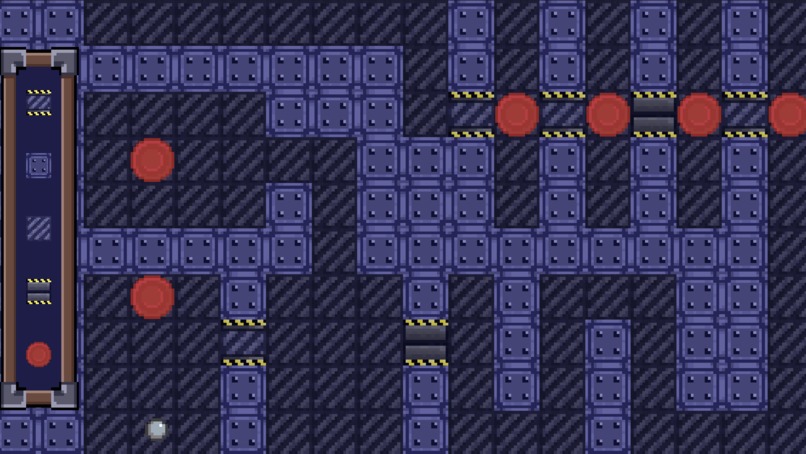
One demo level that we tried to make with primary elements

Inspiration
We've gained inspiration from various types of games, such as 2D pixel games. Some of the mechanics are similar to how red stones work in Minecraft. We've gained art style inspiration from a variety of pixel games and we were aiming to have a dark and punky feel to it. When we see one of the topics as educational, we are thinking of teaching children how to know the basic concept of creating a game, designing simple games, and, even creating their own games.
What it does
As the title indicates, the MindBoxed is a tile-based game with allows players to create levels. The basic mechanism is picking pre-designed tiles and implementing that to the actual level completely made up by the user. What makes it different is the community system, the reward system from the community and _ "Best of the Day" _ such social features. The purpose of the project is to let kids learn the basic method for designing and let them feel a sense of achievement by receiving external recognition. Also, each level designed by others only takes "one shot". If the player failed on the first try, then he cannot play this level anymore. This allows players to think before they actually get down to the project and not be too addicted to the game.
How we built it
We started building the project by brainstorming some ideas we had, after deciding on a general topic, we began to write some documentation for the project and outlined different steps and sections we had to complete. We created a Website template to introduce and demonstrate the project. The other main tool we used was Unity, we've utilized it for basic functionality and believe that we can meet our future needs via this engine We operated on Aseprite and procreate to create pixel-style artistry to use as sprites in the game.
Challenges we ran into
How to make the game actually "fun"? We figured out solutions to this by adding more puzzles and stages to demonstrate the possibility of the game. The entertainment of the game could be enhanced by adding a system to record its social aspects, such as; a way to record high scores, likes, ratings, leaderboards, etc. Those are some of the next steps that can be a solution to this challenge. How to achieve what we wanted? To achieve what we wanted, we specifically designed this program to allow users to freely compose its objects and even alternate the environment. This project required us to learn about a number of new and unfamiliar things, including the familiarization of Unity, the C# language and utilizing git to work together as a team. How to design the specific tiles that we need? To do this we first had to decide on a generated art style, in order to achieve the visuals we wanted which allowed us to decide what specifically we wanted. Especially for the distinctive top-down view, we've decided to draw and create our own graphics. This made us learn and utilize the GUI system. Besides the visual aspects of the specific tiles, coding they were also a challenge. We had to research and learn many things in sequence to complete ours envisions.
Accomplishments that we're proud of
We created the visuals and art of the sprites ourselves. Creating the appearances of objects we need in the game in a style we designed is one aspect of this project that makes us proud. Also, the core concept of presenting such a project targeting fixed-age audiences sounds novel as a sand-box style game. The art part is satisfactory, both the music and the graphics are made by ourselves and start from scratch.
What we learned
We learned how the actual project and the approaches might vary much due to the restriction of our skills. Working on this project improved a lot of our skills and we've learned numerous things. Each of us had to pick up something new, they included understanding the basics in Unity, learning how to work with GitHub, researching algorithms needed for the codes, pixel art and unifying them to one style and etc.
What's next for MindBoxed
In order to make the game more interesting, there are several branches that we can consider. To make the production process more creative and offer more chances, we are trying to add more possible obstacles to the existing games; speeding up, traps, and doors that only allow to pass through fixed times. To make the game not restricted to one mode of just passing the stage, it is feasible if we add more modes to the existing game; speed-racing, puzzles, rush mode and challenges, to add to the variability of the game. For the last part, if the game needs more social features and brings the creators a sense of achievement, we will add a special limited trap if someone created one level which was played by more than 10 people and get a liked rate of more than 70%.
Built With
- c#
- css
- googledoc
- html
- javascript
- unity




Log in or sign up for Devpost to join the conversation.