-
-

The hassle-free mood tracker
-
-
-


Inspiration
To promote good mental health especially during these trying times of the COVID-19 pandemic.
What it does
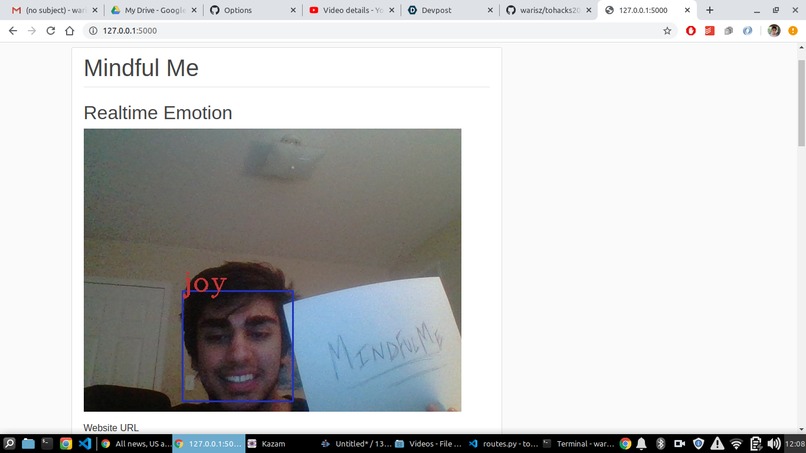
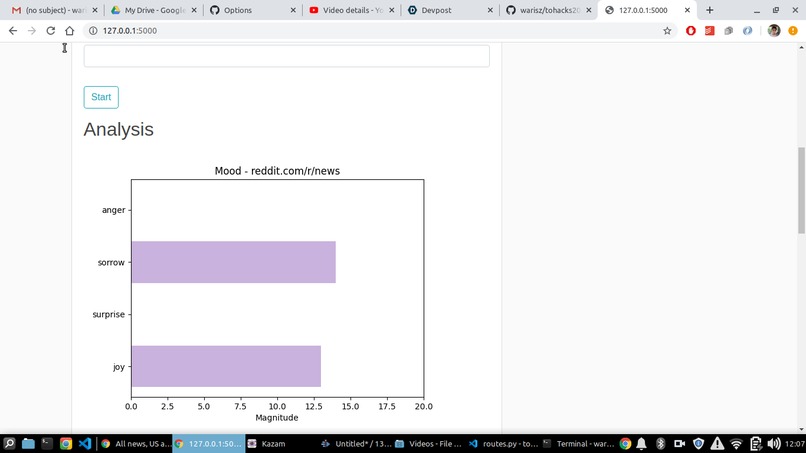
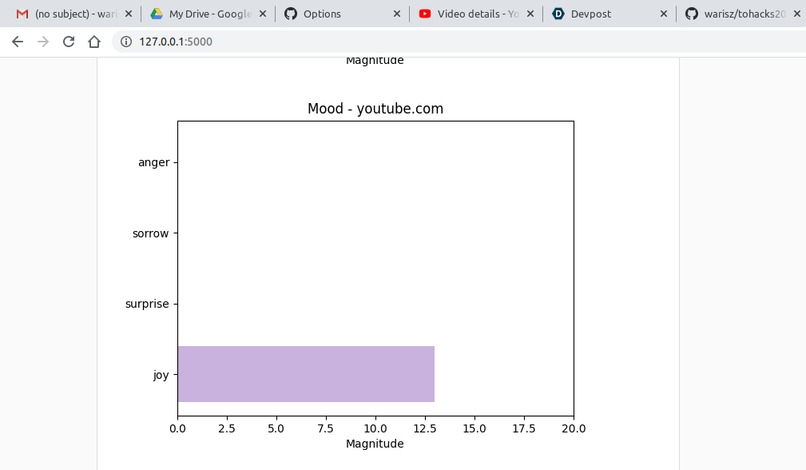
MindfulMe tracks your moods across different websites, suggesting which ones are beneficial or are detrimental to your mental health. Knowing is the first step to action.
How we built it
Using Python Flask as the webserver backend, we used the OpenCV library to access the face camera and take snapshots of the user. These snapshots were then analyzed using Google Cloud's Vision API that suggests the likelihood of certain moods like joy, sadness, surprise, and anger. This is then plotted through the data analysis libraries NumPy and Matplotlib. This is then again shown using Python Flask for the user to see.
Challenges we ran into
We have never used OpenCV nor any Google Cloud product before - figuring them out was a challenge. We were able to learn how to implement these and to integrate them all into one big project.
Accomplishments that we're proud of
Implementing the Google Cloud Vision API, using Python Flask and Matplotlib all in one project. Getting it to actually work!
What we learned
How to use the Google Cloud Vision API, familiarize ourselves with the use of the Google Cloud SDK, and the different deployment services available.
What's next for MindfulMe
To actually deploy the website for all to use. To make it into a chrome browser extension instead of a website. We would also like to create new features like having a login system so that people can save their moods and websites. Also to use a web driver like Selenium to discover the web traffic so that the user doesn't need to manually put in the website that they are visiting.
Built With
- flask
- google-cloud
- google-cloud-vision
- matplotlib
- numpy
- opencv
- python






Log in or sign up for Devpost to join the conversation.