-

1st logo version (illegible)
-

2nd logo version
-
Logo (finalized)
-
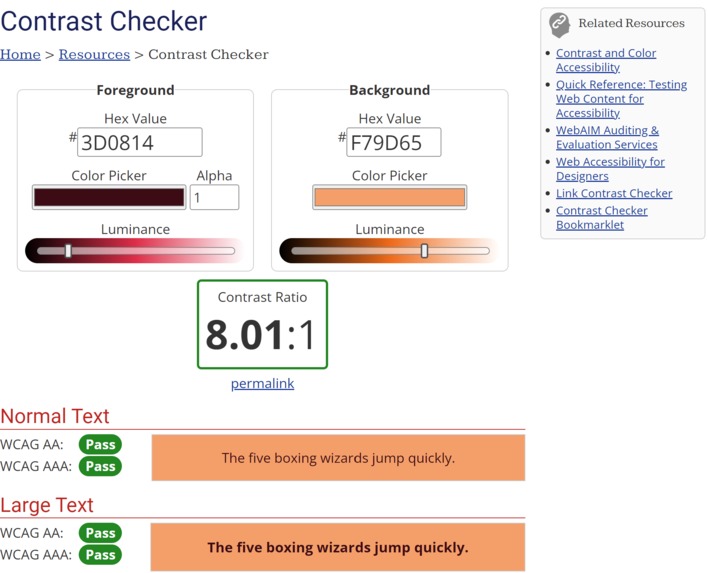
Fulfilling WCAG colour contrast rules
-
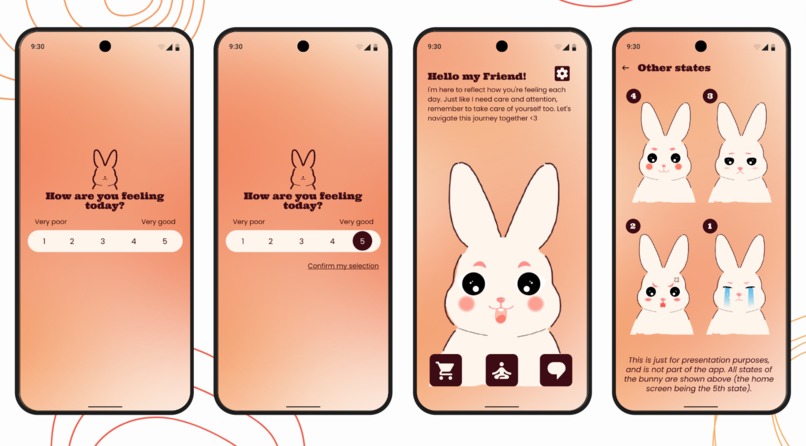
App pages


Inspiration
When we heard “seasons”, we thought “seasonal affective disorder”. As we did our research and tried to think of what could affect people’s mood, we came up with more and more issues that could aggravate the symptoms of SAD, some of which are particularly prevalent in the time of winter festivities. In addition to the lack of vitamin D that comes with shortening days, some people who are not celebrating these holidays may feel socially isolated from their peers, while others who have to attend one social event after another may struggle to keep their social battery high. Furthermore, looking at students, this is a particularly demanding time, with many examinations and projects to complete. The winter blues hits each person differently, and we want to address the individuals with the unique emotional struggles that accompany them this time of year. Hopefully, with our app, they can feel a little less alone.
What it does
We present mirari, an app dedicated to supporting individuals during these harsh winters, as they fight seemingly never-ending battles through the bitter cold. Each day, mirari asks you to reflect on how you feel. Upon revealing a pet bunny in a similar state of mind, the app asks you to take care of it. In addition to buying items to interact with the bunny, the app has a guided meditation section that promotes relaxation, allowing the customer to take a breath and enjoy the present, improving concentration and mental clarity. The pet bunny plays as a mirari – the Latin word for “mirror” – reflecting the mindset that you should give yourself the love you give others. Ultimately, through taking care of the bunny, we hope users can learn to better care for themselves.
How we built it
Our prototype was developed by Gayathri and Sumaiya in Figma, where we aimed to portray our ideal final product. The code itself (found on GitHub) was developed by Ainia and Alice in IntelliJ-IDEA, using JavaFX and various online tutorials.
Challenges we ran into
Using Figma for the front-end development of our app posed various challenges and trials in regard to creating a desirable and appropriate design. The cropping mechanics, adjustment to the colour scheme, and understanding exactly what tools to utilize to create visuals were some of the most challenging aspects when using Figma. Mastering Figma's cropping tools to achieve the perfect visual framing proved to be a significant challenge, requiring severe attention to detail and precision. Additionally, customizing the colour scheme to enhance accessibility and aesthetic appeal presented its own set of complexities; it demanded not only a keen eye for colour harmony but also a deep understanding of colour theory to ensure inclusivity for users with visual impairments.
As for the back-end team, initially, our goal was to implement our app using Android Studio, a technology that we thought would facilitate the process of building a mobile app. Various tutorials and sticky errors later, in light of the time restrictions, we made the swift decision to use IntelliJ and JavaFX instead. We implemented JavaFX to create a Windows page that replicates some of the goals displayed in our Figma application. Although it is currently not a mobile application, we hope that more time and experience will bring us to the day where we can successfully build it using Android Studio.
Accomplishments that we're proud of
We feel that the inclusive design of our app has great potential to become widely used by the public audience. In creating an app, we made sure to focus on it being accessible to everyone. The app features various accessibility features to enhance the user experience for individuals with different needs. Users can mute or unmute audio settings, as well as turn on audio cues for improved app navigation. The app also offers voice-to-text in the AI chat, catering to users with various disabilities. We also have multilingual support in the AI chat, allowing users to interact with the ChatGPT-3.5 Turbo integration in their preferred language. Additionally, the app offers display settings that have contrast and brightness, and adjustable font sizes for improved readability. The app also has a colorblind access feature that allows the user to modify their icon colour for clarity. Although mirari does not qualify as professional support, we believe in the importance of making mental health resources such as our app more easily accessible by others.
What we learned
The numerous types of software tools used throughout our project broadened our development knowledge, and the attempted implementation of OpenAi API benefitted all of us positively. For one, we were able to understand a little more about how AI works behind-the-scenes. For another, we have discovered yet another field for us to further explore. Attending workshops has also exposed us to other technological fields we may not have considered beforehand, giving us a better idea of what we might want to work towards in the future. The most memorable one was the CTF workshop, which showed the fun in using decoding code and critical thinking skills to find hidden answers. We loved the incorporation of rubber ducks as a motivation to practise rubber duck debugging!
What's next for mirari
In the future, we hope that mirari can become a more interactive and socially engaging platform. We plan on creating new updates introducing multiplayer features that will allow users to visit each other's pets, fostering a community where they can share the joys of caring for a pet and witness the growth and well-being of their companions. We are also planning on developing multiplayer mini-games, creating opportunities for friends to come together for playful competition and collaboration within the mirari community. If possible, we would also like to create a section for users to organise in-person meet-ups (starting locally, and possibly going global in the future). These upcoming features are designed to deepen the connection not only between users and their pets but also among the users themselves, adding a new layer of interaction and shared experience to the mirari application. For these new features, we would likely have to increase security features through functions such as age restrictions and log-ins in order to decrease the likelihood of potentially dangerous circumstances.
Built With
- figma
- intellij-idea
- java


Log in or sign up for Devpost to join the conversation.