-
-
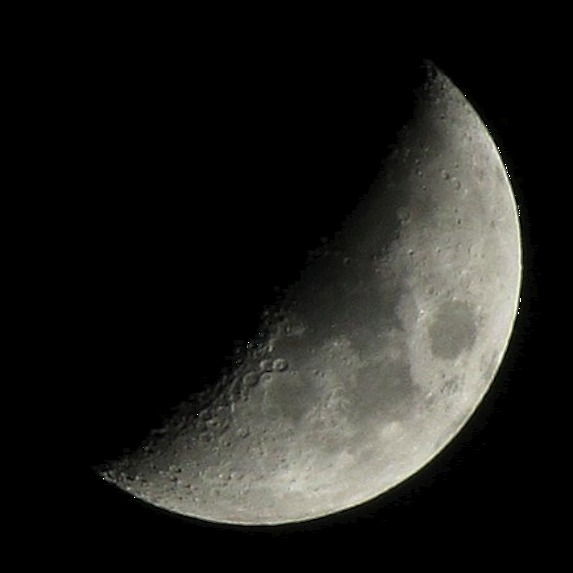
crescent moon

Inspiration
When you look up at the sky, what is the most beautiful thing you see? The Moon, of course! It's ever-changing but every night it is still always there, whether it be behind clouds or just not visible, it is there nonetheless. We humans are just like the Moon; ever-changing and ever-growing. We adapt to our environments and deal with our emotions because we are here, just like the Moon. And because we are ever-changing, no one mindfulness exercise or meditation style can help us be as calm and content with change as the moon. Just as the moon has many stages, so do we, and that is what inspired moonful.
What it does
In order to be content with change we must be mindful. Mindful of our surroundings and of ourselves. We can practice mindfulness and meditation through breathing techniques, many of which cater to a certain emotion or time. However, it is a roadblock for many who do not know how to begin to be mindful. Instead, I think it is easier to be moonful. moonful learns from how we react to different breathing exercises and learns to cater to our emotions, allowing us to be content with change, just like the Moon.
How we built it
The entire moonful platform was created in Python. The main algorithm is a Deep Reinforcement Learning Algorithm (DRLA) created with PyTorch. The DRLA learns from your responses to breathing exercises and is able to predict, given a short survey that you answer before and after being moonful, the best technique to employ at that time. The front end was created with pygame, a python module that, as its name suggests, is usually used for creating games in python, however, it also has its use cases in other things. Together, the moonful platform was created.
Challenges we ran into
There were a whole lot of challenges in creating moonful. At first, I had no idea how I was going to do it. I decided on a random python module called kivy for the front end, however after realizing i didn't know what I was doing, I gave up so as to not waste any more time. I landed on pygame after deliberating for a while but then came the next obstacle, the DRLA. While I have some limited experience with it, I definitely needed to learn a lot to be able to manipulate the model into doing what I wanted. The biggest challenge overall was the User Interface. It took me about 12 hours to do it, and it still isn't that good. While pygame is easier than kivy, it is still not easy, by any means.
Accomplishments that we're proud of
I am proud of everything I accomplished today. I think my idea was very creative and I am proud that I was able to create a prototype in such a short amount of time. I'm proud that I was able to do it all by myself. While it would have been nice to have teammates, I'm glad to know I have the capability to do things on my own and not rely on others. Overall, I'm super proud of the project and everything I did to make it become a reality.
What we learned
I learned a whole lot about DRLAs and some random Python packages that I didn't even end up using. I learned that I can stay up 24 hours coding. I learned how to make something from start to finish because I usually quit on my projects. I learned what a hackathon is since this is my first one ever (It was a great one by the way, even though I didn't sleep).
What's next for moonful
I think I'm going to bring some friends on to work on moonful with me because while I might be able to do it alone, there is a lot that others know that I don't, so they can help me do things I didn't even think were possible. I definitely want to improve the DRLA, because it is not the greatest. If the project can become an actual app and become larger, I think the extra date from more users would make the predictions so much more accurate and helpful. I also really want to make the graphics better, because they are a bit choppy at this point in time. Overall, I plan to continue developing moonful, which I would have never discovered if it wasn't for this hackathon.


Log in or sign up for Devpost to join the conversation.