-
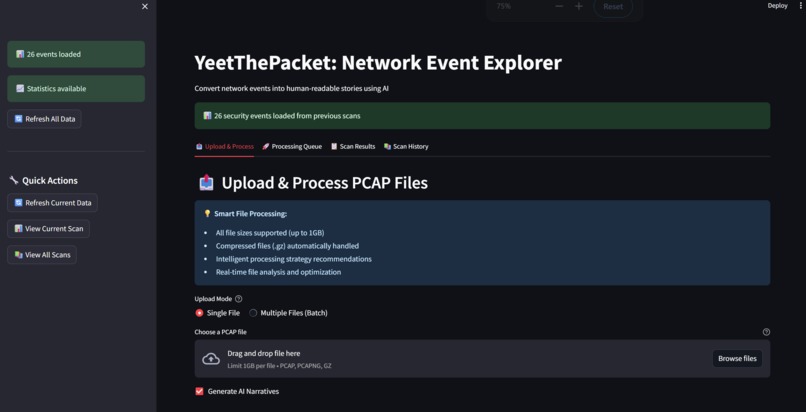
YeetThePacket Homepage
-
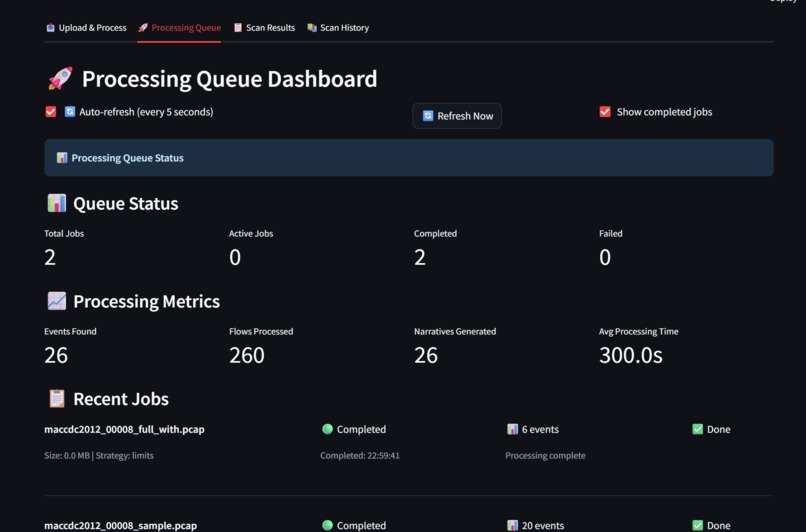
Processing Queue Statistics
-
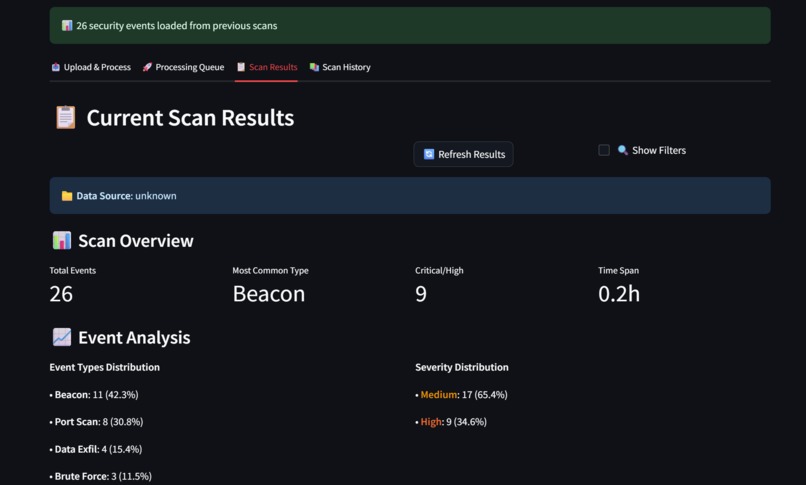
Scan Results
-
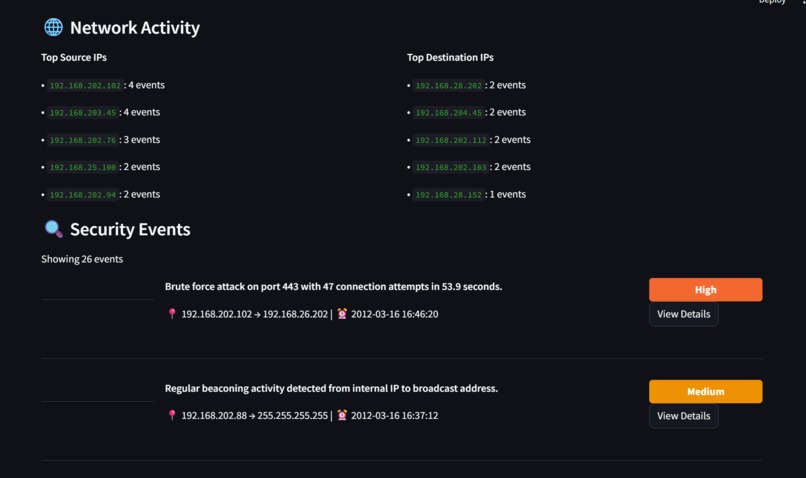
Information on Network Activity
-
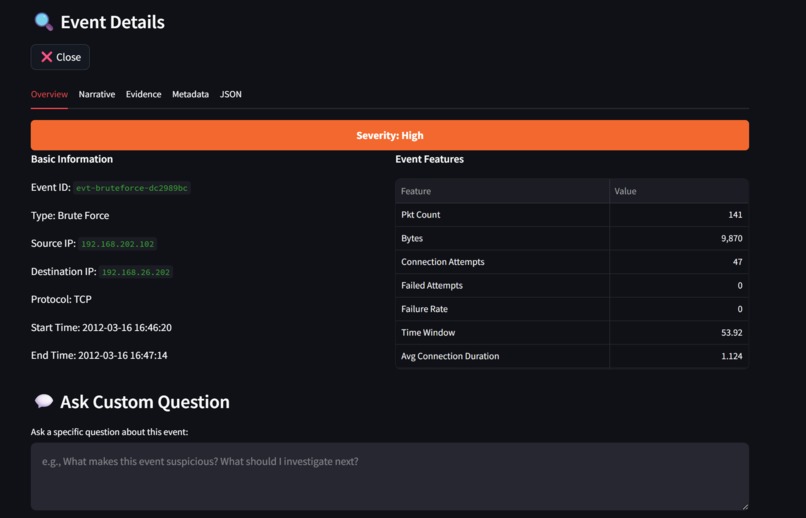
Event Details Overview
-
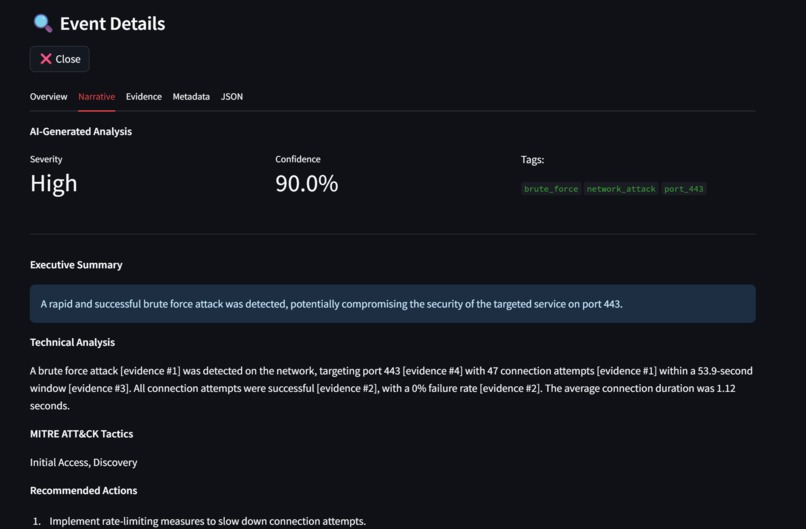
Event Details Narrative
-
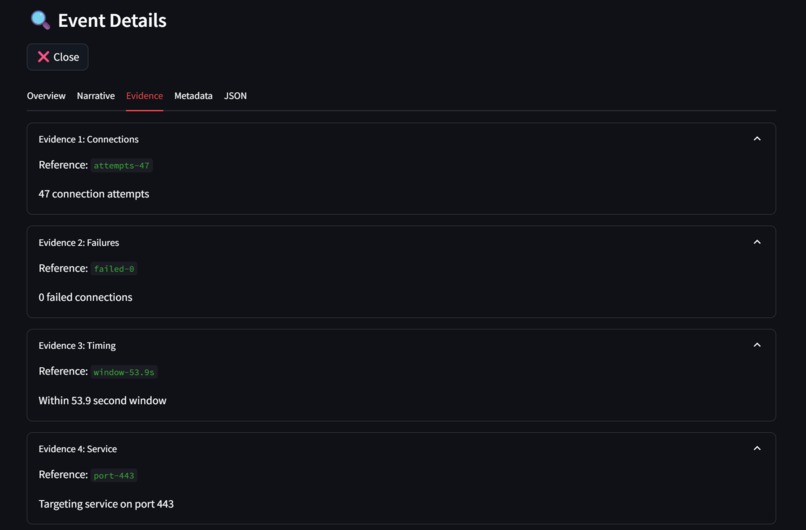
Event Details Evidence
-
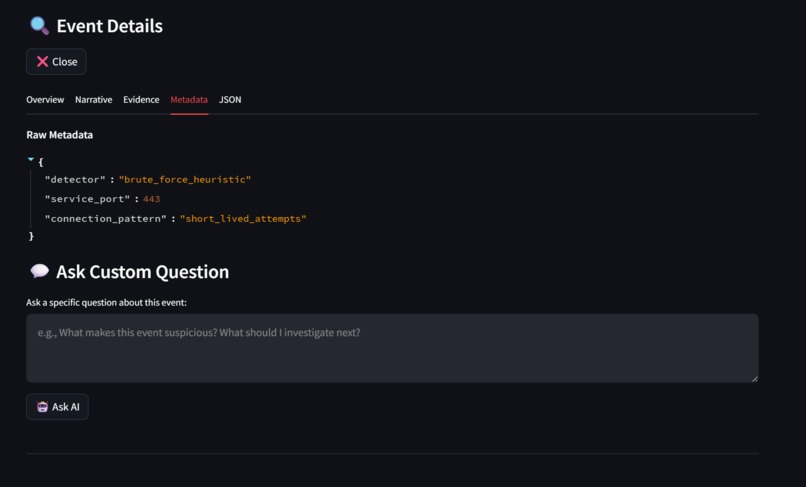
Event Details Metadata
-
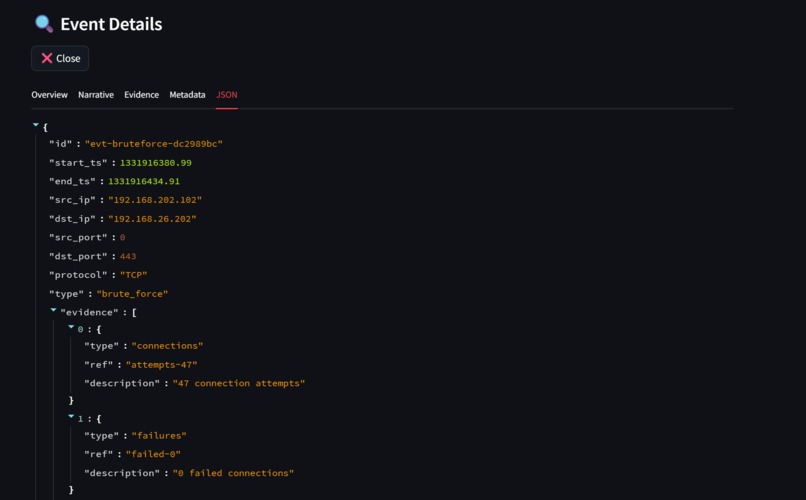
Event Details Json
-
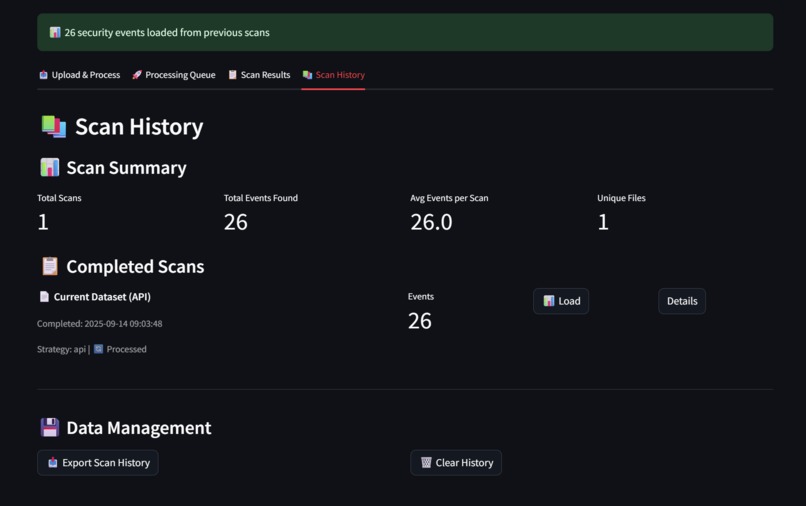
Scan History
-
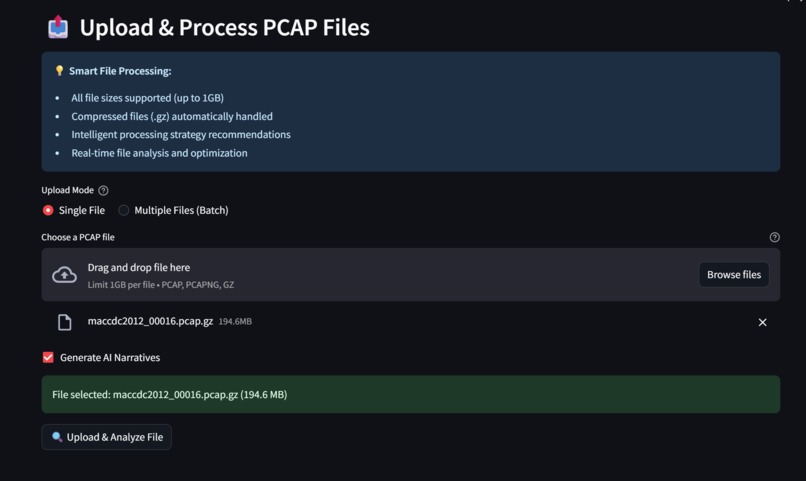
Upload PCAP Files
-
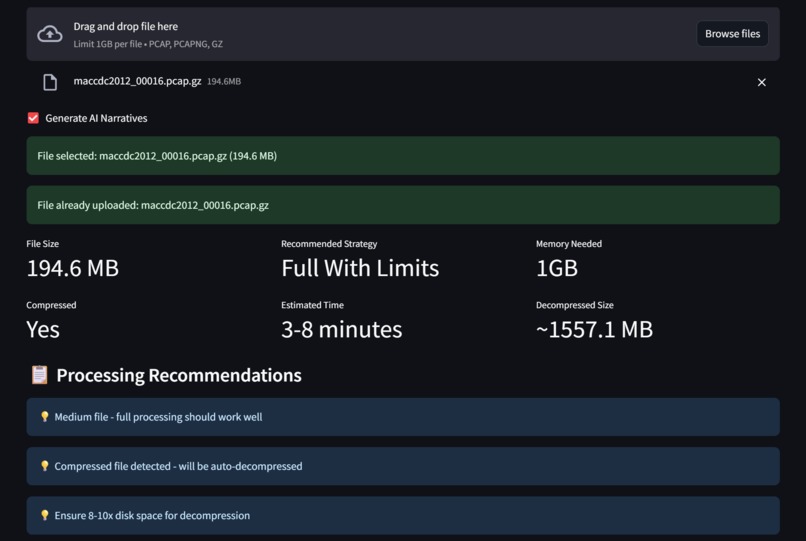
Information on Uploaded File
-
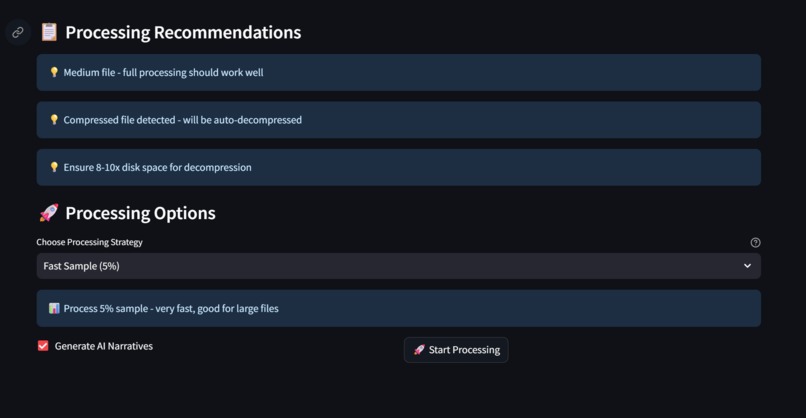
Processing the Uploaded Packet File
-
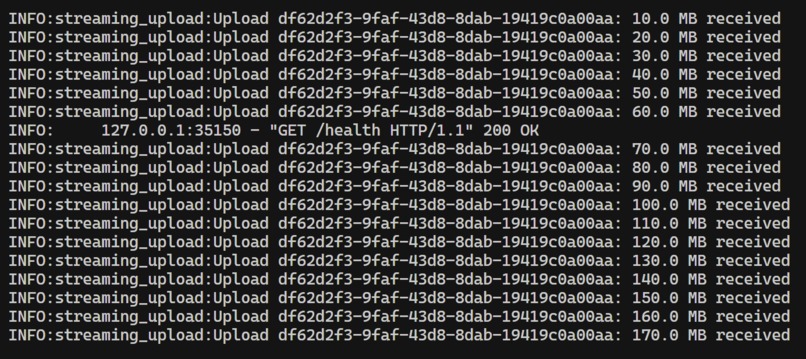
Uploading Data in Chunks
-
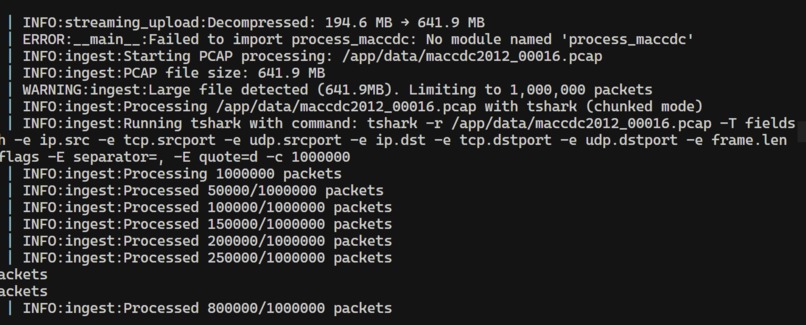
Uncompressing and Ingestion using Tshark
-
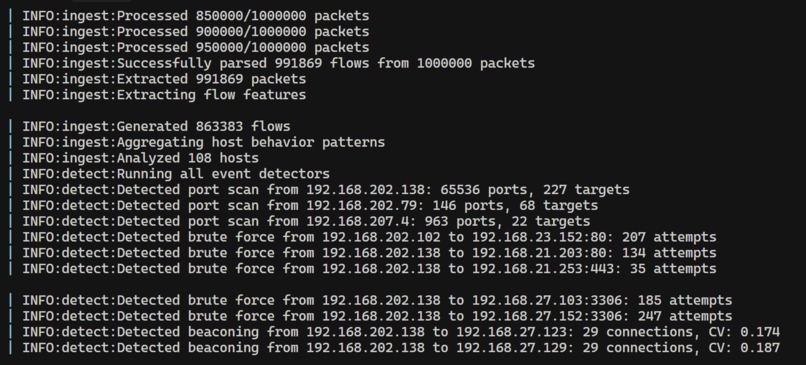
Ingesting and Detecting Events
-
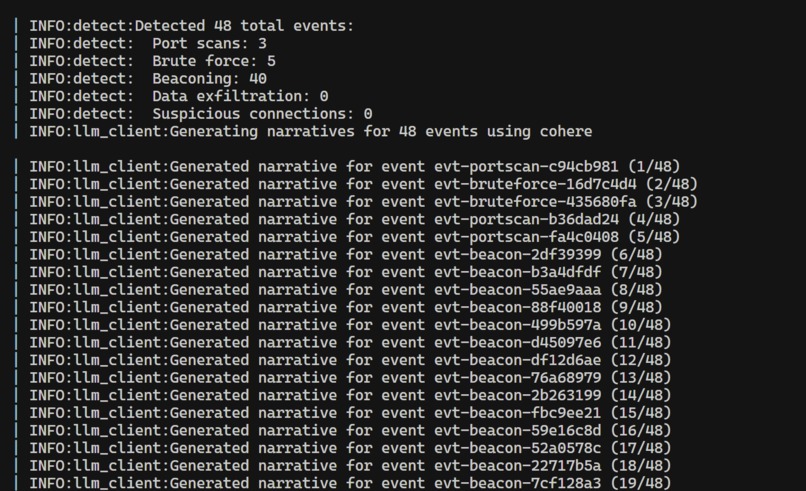
Generating Narratives For All The Detections


Inspiration
We’ve watched analysts spend hours sifting through packet captures, then struggle to communicate findings to non-technical stakeholders. We wanted to bridge that gap: turn raw network traffic into clear, defensible stories that responders and decision-makers can act on. Using the MACCDC 2012 dataset as a proving ground, we set out to show that AI can explain incidents without guesswork.
What it does
- Detects events like port scans, brute-force attempts, beaconing/C2, suspicious connections, and data exfiltration from PCAPs.
- Generates evidence‑backed narratives with a one‑line summary, technical analysis, executive summary, severity, MITRE ATT&CK mapping, remediation steps, and a confidence score.
- Provides an interactive UI: timeline exploration, filters, search, and a network graph of host relationships.
- Exports incident reports (PDF) for briefings and documentation.
How we built it
- Ingestion and ETL:
tshark/pysharkto extract flows and features from PCAPs;pandasfor normalization. - Detection: lightweight heuristic rules (e.g., high unique destination ports, periodic beacons, failed-auth bursts).
- AI narratives: a pluggable LLM client (Cohere, Gemini, OpenAI) with evidence‑grounded prompts and structured outputs.
- Backend: FastAPI for upload, processing, and narrative endpoints; background tasks for longer jobs.
- Frontend: Streamlit for rapid iteration with timeline, detail panes, and graph visualizations.
- Packaging: Docker and docker‑compose for one‑command setup; JSONL storage (optional SQLite planned) for portability.
Challenges we ran into
- Grounding LLM outputs to evidence to avoid overclaims.
- Keeping performance reasonable on larger PCAPs (batching/streaming).
- Consolidating noisy signals into coherent incidents with sensible severity.
- Maintaining UI responsiveness with thousands of flows and events.
- Handling provider rate limits, timeouts, and behavioral differences across LLMs.
What we learned
- Evidence‑first prompts dramatically improve reliability and clarity.
- Simple, transparent detection rules are highly effective for a first pass.
- Clean UX (timelines and summaries) makes complex investigations approachable.
- Strong schemas for events and narratives unlock reporting and search features.
- Investing early in containerization and scripts pays off during demos.
Accomplishments that we're proud of
- End‑to‑end pipeline from PCAP ingestion to evidence‑backed AI narratives, running reliably on real data (MACCDC 2012).
- Multi‑provider LLM integration (Cohere, Gemini, OpenAI) with a structured, grounded prompt design to minimize overclaims.
- Interactive UI with a timeline, filters, search, detailed event views, and a network graph for host relationships.
- Exportable PDF incident reports that combine executive summaries with technical evidence and remediation steps.
- One‑command Docker deployment and documented FastAPI endpoints with live docs, enabling quick setup and demos.
- Heuristic detection for port scans, brute force, beaconing/C2, suspicious connections, and data exfiltration.
- Background processing and streaming/batching patterns that keep the UI responsive on larger PCAPs.
- Clean event and narrative schemas (JSONL) that make reporting, search, and downstream integrations straightforward.
- A complete demo script and smoke tests to validate the flow and reduce demo risk.
What we learned
- Evidence‑first prompts and structured outputs dramatically improve reliability and trust in AI narratives.
- Transparent heuristic rules are highly effective for a first‑pass detection layer and easy to reason about.
- Strong schemas are leverage: once the data model is right, features like reporting and search come naturally.
- Performance tuning (batching, streaming, and incremental processing) matters as PCAP size grows.
- UX clarity—timelines, severity, and concise summaries—makes complex investigations accessible to all stakeholders.
What's next for YeetThePacket
- Real‑time analysis: streaming ingestion, incremental detection, and live narrative updates.
- Data layer: PostgreSQL/SQLite for indexing, queries, caching, and long‑term storage.
- Scalability: Redis task queues, horizontal workers, and Kubernetes deployment manifests.
- Detection depth: DNS tunneling, DGA, TLS fingerprinting/JA3, lateral movement, and exfil heuristics by protocol.
- ML‑assisted anomaly detection to complement heuristics with explainable features.


Log in or sign up for Devpost to join the conversation.