-
-
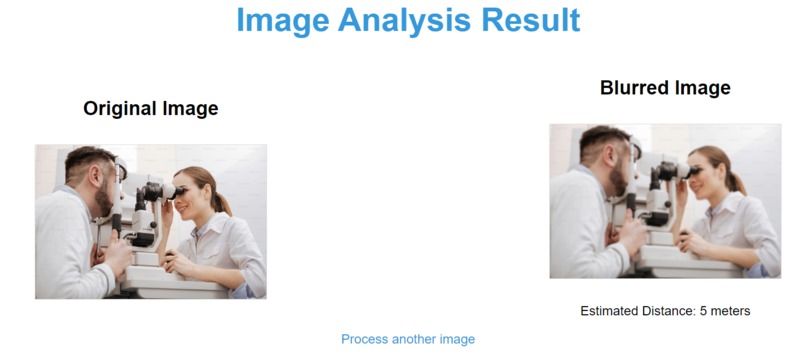
Image blurring webpage
-
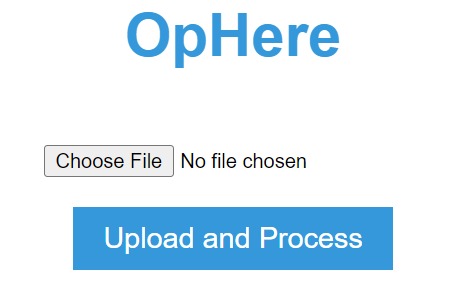
Homepage


Inspiration
The inspiration behind OpHere came from recognizing how inconvenient and time-consuming traditional eye care can be. Many people, especially those with busy schedules or limited access to optometrists, struggle to find the time for regular eye exams. We saw an opportunity to make this process more accessible and user-friendly by bringing the eye test directly to the user’s home.
What it does
OpHere allows users to perform a simulated refraction test, similar to one that an optometrist would give you in an eye exam from the comfort of your own home. A refraction test is a key part of traditional eye exams that determines the corrective lens prescription. OpHere allows a simple guided test that users can complete on their own time through a simulated myopic blur and simple hand gestures.
How we built it
We simulated a refraction test by convolving the image with a Gaussian function to mimic the natural blurring effects caused by refractive errors in the human eye in a scalable and mathematically robust way. By adjusting the parameters of the Gaussian function, we can precisely simulate different levels of visual acuity, allowing users to experience how varying degrees of nearsightedness affect their vision. This method enables us to recreate the blurred images a person would see without corrective lenses, offering a more realistic and accurate home-based refraction test. We created the front end of our application by using React, and the back end was created using Flask. We also used Google Gemini for image recognition to recognize the distance of the user from the camera and to handle user input during the duration of the test, such as thumbs-up or down motions.
Challenges we ran into
Some of the initial challenges we ran into were accurately blurring the image in a way that would simulate what myopia was really like, instead of just blurring colors together. We also had some trouble initially getting Google Gemini up and running and to accurately handle processing images.
Accomplishments that we're proud of
We are all proud of what we have created, especially the technical challenge around blurring images in a way that simulated real myopia. We take pride in designing a seamless and intuitive user interface that guides individuals through the testing process with ease, even for those without technical expertise.
What we learned
This project was a great way for us to build our technical knowledge, especially in react which members of our team had not used before. We also learned how to dynamically change the response of our application based on user response.
What's next for OpHere
Moving forward, we look forward to innovating the user experience. One of the changes we want to adopt is creating a more interactive and clean front that is more appealing to a user. We also plan on creating a virtual simulator with a slider that will allow people who don't have myopia can upload images to simulate what others would see.


Log in or sign up for Devpost to join the conversation.