-
-
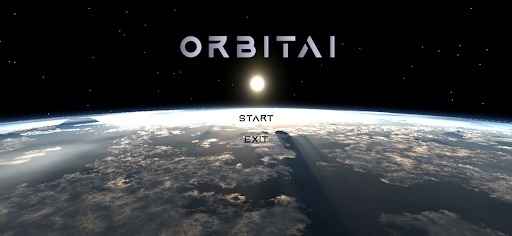
OrbitAI Simulation
-
Nickie Sethi, Adam Mouedden, David Orejula, Kenta Festag
-
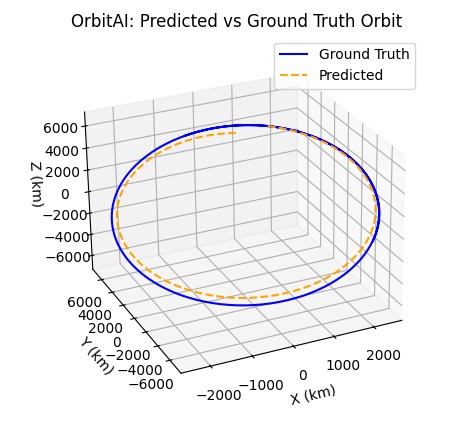
Final GRU Prediction Accuracy
-
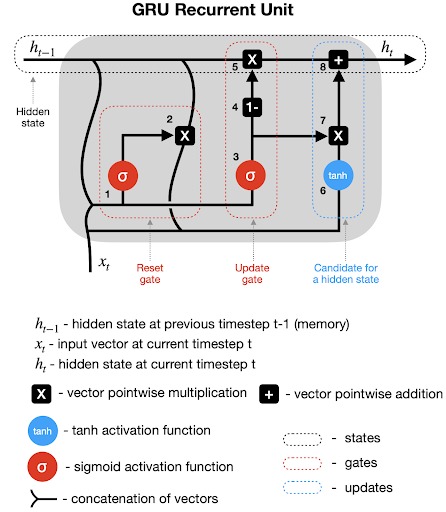
GRU Architecture
-

Nickie Sethi, David Orejula, Dylan Wilkins, Adam Mouedden


Inspiration
One day, I was walking on campus and randomly met with a PhD student studying astrophysics and told me about how he was attempting to use traditional programming for debris avoidance. Months later, I remembered this interaction and was sparked to begin researching how we could use Machine Learning to solve this problem.
Space is becoming dangerously crowded. There are currently over 10,000 satellites but over 100,000 active satellites are projected to be in LEO by 2030, the risk of catastrophic collisions—like the Iridium–Cosmos crash or future Kessler Syndrome events—is rising fast.
Current collision avoidance systems are either manual or reactive. We envisioned OrbitAI as a real-time, AI-powered satellite traffic controller to keep low Earth orbit accessible and safe.
What it Does
OrbitAI predicts and prevents satellite collisions through a custom built hybrid AI system:
Gated Recurrent Network (GRU)
- Predict position trajectories in real-time
- Scalable to be embedded onboard satellites for backup real time prediction
Graph Neural Network (GNN)
- Coordinates satellites as a dynamic graph
- Predicts high-risk interactions between satellites
- Nodes are the satellites, edges are the distance between them
Unity Simulation
- Visual sandbox to visualize collision and avoidance
- GRU Model ran on Flask web server deployed on AWS
- Web sockets used for communication in real-time
- Visual sandbox to visualize collision and avoidance
How We Built It
Modeling
- Custom Gated Recurrent Network trained on synthetic LEO satellite data
- Input: last 20 timesteps → Output: 180-step trajectory
- Transformer model architected, built, and trained but never fully implemented
- Custom Gated Recurrent Network trained on synthetic LEO satellite data
Backend
- Deployed GRU model on AWS EC2
- Flask server with Flask-SocketIO for real-time inference
- Gunicorn + Eventlet for scalable async performance
- Deployed GRU model on AWS EC2
Frontend (Unity)
- Visual orbit simulator with live GRU-based predictions
- Detects possible trajectory conflicts in 3D
- Visual orbit simulator with live GRU-based predictions
Communication
- WebSocket pipeline from Unity → Flask → GRU → back
- WebSocket pipeline from Unity → Flask → GRU → back
Challenges We Ran Into
Deep Learning Models → Built the model, had countless retraining attempts, predictions were too inaccurate for production use → Transitioned to Gated Recurrent Network, the team plans to correctly train and implement the Transformer in the near future
Unity lacks GRU support
→ Solved with cloud-hosted Python model and WebSocket bridgeStability in long prediction rollouts
→ Switched to predicting delta-position and added scheduled samplingSimulating meaningful collisions
→ Needed realistic satellite behavior to test avoidance logic
Accomplishments that We're Proud Of
- Deployed a live inference pipeline for space-grade AI
- Designed an architecture that could scale to 100,000+ satellites
- Simulated orbit correction based on GRU predictions
- Built a feedback loop between simulation and inference
- Took a solo project and turned it into a full system demo
What We Learned
- Orbital Mechanics
- AI Model/Architecture research
- Data preprocessing
- How to use PyTorch to build custom AI models
- Deep Learning models:
- Transformer Neural Networks, Graph Neural Networks Gated Recurrent Networks, Recurrent Neural Networks, LSTM Neural Networks
- Cloud deployment through AWS
- Unity simulation design and C#
- Improved our Python skills
- Overall software engineering
- Overall AI engineering
What's Next for OrbitAI
- Train a centralized GNN to coordinate constellation-wide predictions and recommend safe maneuvers
- Optimize and properly train a Transformer model for better sequence trajectory prediction
- Simulate autonomous constellations (e.g. Starlink-scale) in Unity
Additional Notes
- This project was a first for many of the OrbitAI team. I am absolutely honored to have worked with them over the past 3 months to develop the MVP for this project. I am even more excited that the team shares my desire to want to continue to develop this project until all advanced features are implemented! Best team ever.


Log in or sign up for Devpost to join the conversation.