-
-
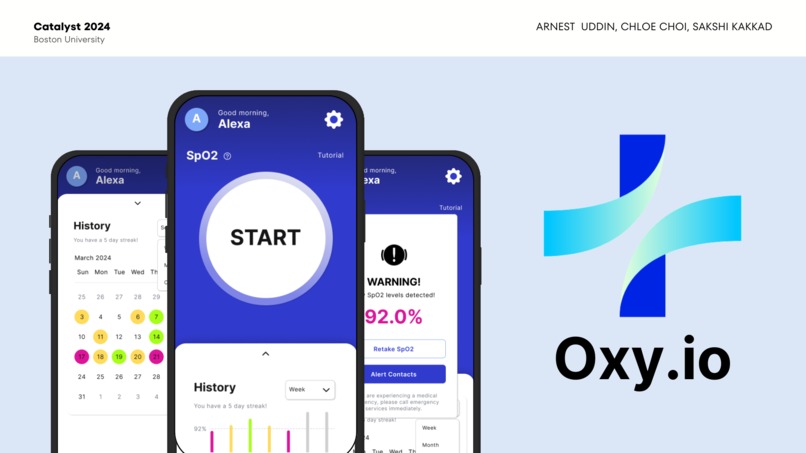
Mockup 1
-
Oxy.io 1
-
Oxy.io 2
-
Oxy.io 3
-
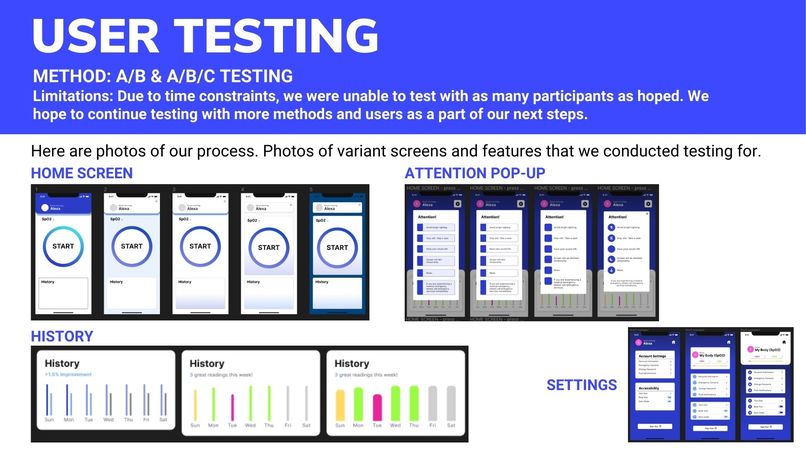
Oxy.io 4
-
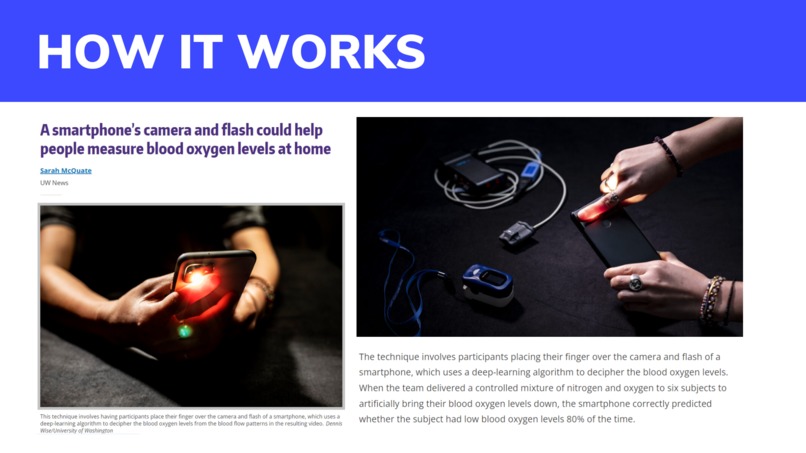
Oxy.io 5
-
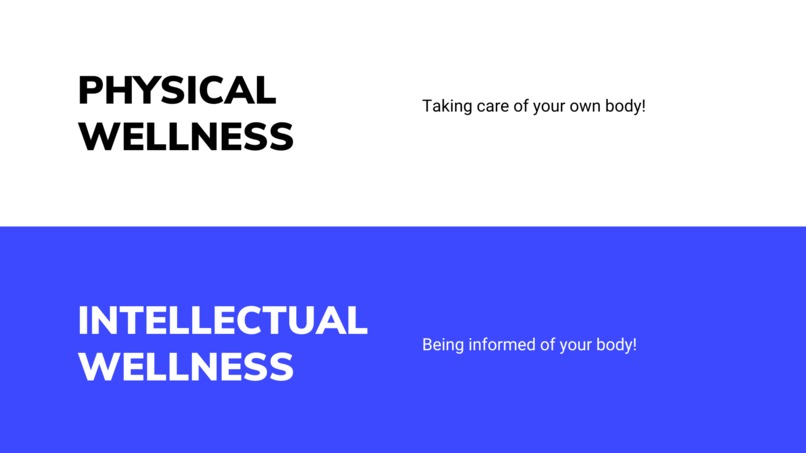
Oxy.io 6
-
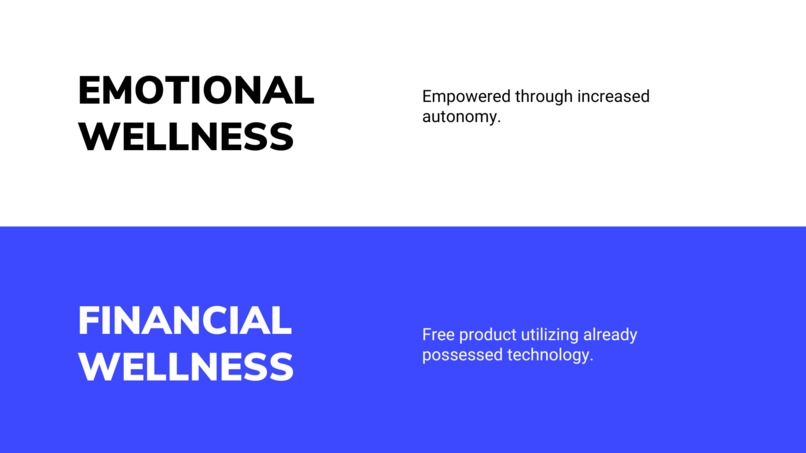
Oxy.io 7
-
Oxy.io 8


What is the problem?
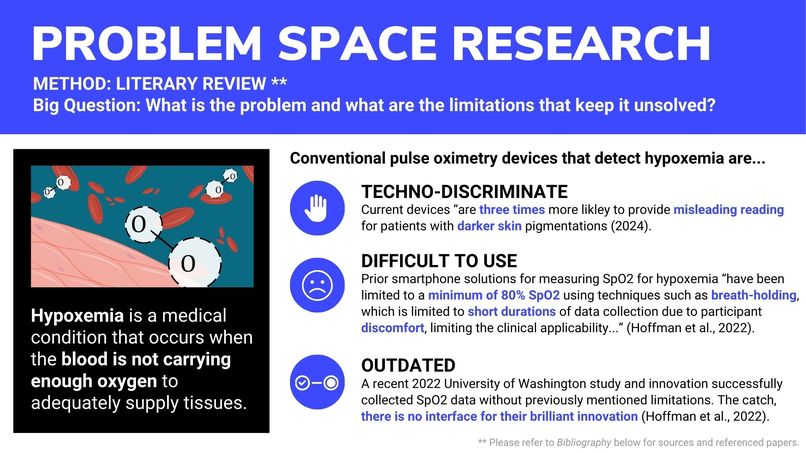
Hypoxemia, a common disorder characterized by insufficient blood oxygen levels, manifests in varying intensities including acute, chronic, or both. While it can affect anyone, hypoxic populations often include those with asthma, heart/lung conditions (such as cancer or pneumonia), COVID-19 history, or reliance on supplemental oxygen devices. Notably, conventional pulse oximetry devices "are three times more likely to provide misleading readings for patients with darker skin pigmentations" (2024).
Recent advancements in SpO2 monitoring smartphone camera technology have shown promise in enhancing accuracy across diverse skin tones (Hoffman et al., 2022). However, existing mobile interfaces have yet to integrate this innovative data collection technique and still require users to hold their breath during data collection.
Tl/DR: Current hypoxemia detecting technology is techno-discriminate, outdated, and difficult to use.
Why did you choose this problem and how are you solving this problem?
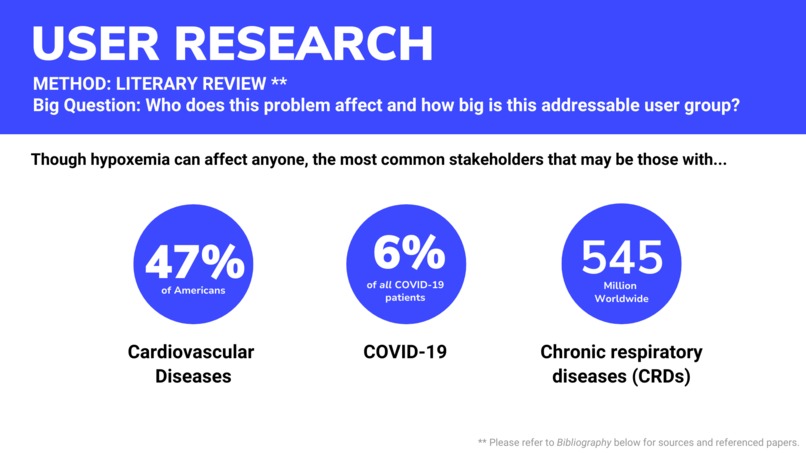
The hypoxemia space is one that intersects techno-discrimination, inaccessibility, and usability issues, all across a large population.
Oxy.io has quite a big helping hand, serving a large hypoxic audience. With nearly half of Americans suffering from cardiovascular diseases and a growing need for monitoring blood oxygen levels post-COVID-19, Oxy.io can help millions. (American Heart Association, 2022).
Oxy.io fights against techno-discrimination by utilizing new 2022 technology that is non-discriminate across 10 diverse skin tones.
Oxy.io is readily accessible by being valuable in remote and impoverished areas where access to traditional medical devices, such as a pulse oximeter, is limited and costly.
Oxy.io uses newly discovered 2022 technology, which has proven to be more usable and accurate.
All in all, Oxy.io navigates well being by increasing usability, accessibility, and accuracy. It promotes the wellness dimensions: physical, intellectual, emotional, social, spiritual, vocational, financial, and environmental (2017). We empower individuals to attend to their own needs, encouraging autonomy.
Bibliography
American Heart Association. (2022). Heart Disease and Stroke Statistics—2022 Update: A Report From the American Heart Association. Circulation, 145(8), e1209-e1210. https://doi.org/10.1161/CIR.0000000000001209
Hoffman, J. S., Viswanath, V. K., Tian, C., Ding, X., Thompson, M. J., Larson, E. C., Patel, S. N., & Wang, E. J. (2022). Smartphone camera oximetry in an induced hypoxemia study. Npj Digital Medicine, 5(1). https://doi.org/10.1038/s41746-022-00665-y
Howard, J. (2024, February 3). FDA panel recommends more diversity in pulse oximeter trials. CNN. https://www.cnn.com/2024/02/02/health/pulse-oximeters-skin-color-fda/index.html#:~:text=%E2%80%9CStudies%20have%20shown%20that%20pulse,Association%2C%20said%20in%20Friday’s%20meeting.
Stoewen, D. L. (2017, August). Dimensions of Wellness: Change Your Habits, change your life. The Canadian veterinary journal = La revue veterinaire canadienne. https://www.ncbi.nlm.nih.gov/pmc/articles/PMC5508938/
Track: Wellness
Built With
- figma
- freetts


Log in or sign up for Devpost to join the conversation.