-
-
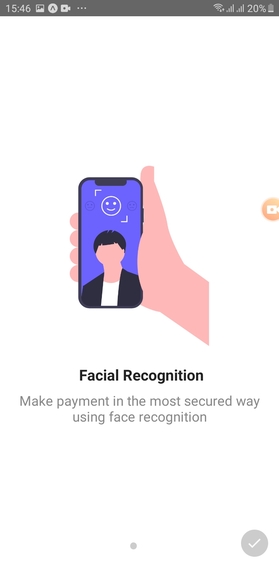
Facial Recognition
-
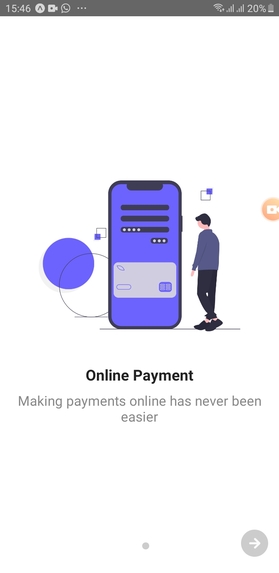
Online Payment
-
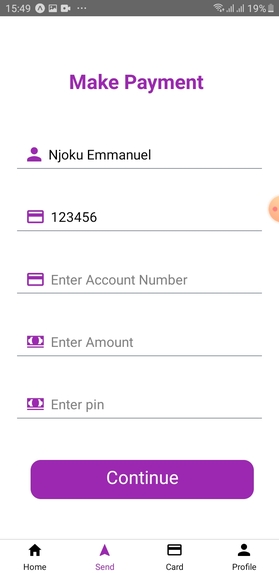
Payment Screen
-
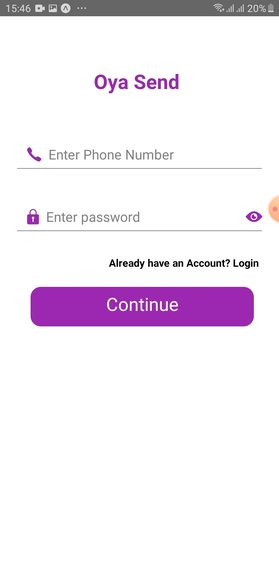
Sign in Screen


Inspiration
We were inspired by the lack of biometrics authentication for added security in the already existing payment systems. We were also excited to work with banking APIs provided by the sandbox.
Solution
Oya Send is a highly secured payment system that would allow users to integrate different biometrics authentication methods with the traditional passkey for making payments. The biometrics authentication methods include facial recognition, voice authentication, and fingerprint authentication options.
Our solution also includes a robbery prevention measure that secretly prevents the transaction from completing when the passkey is entered in the reverse order. It also includes a fraud detection measure which includes techniques to detect behaviour anomalies by identifying transactions that do not conform to the majority.
We hope to create a solution that is more inclusive and accessible to users of different ages hence we made facial recognition our primary biometric authentication method because of its ease of use and seamless integration.
Goal
Our goal is to make payments secure and seamless. To achieve this, we hope to create multiple biometrics authentication methods using facial recognition as the primary biometric authentication method. Other biometrics authentication methods exist as add-ons that could be added on top of the primary authentication method to achieve extra security. For example, a user whose already using the default facial recognition authentication would have the option to add more biometric authentication (i.e. voice recognition and/or fingerprint recognition) to add more security layers to his/her payments.
We hope to build a safe, as well as an easy to use application for users across any age range. Our solution would make payments to be easily accessible by the disabled people too.
What it does
It adds biometrics authentication to the already adopted passkey authentication method in order to tighten up security.
How we built it
We built it by creating a mobile app using react-native, a back-end api using nodejs, express and mongoose. The client-side integrated the fsi-sandbox while the server-side integrated the Microsoft Cognitive Services for the biometrics authentication.
Challenges we ran into
Having to integrate different systems to work together within the time frame (24 hrs) was stressful. We had a technical challenge when we were integrating the facial recognition authentication method. We also encountered a specific platform bug in react native where some features work better in some android version than others.
Accomplishments that we are proud of
We are most proud of how we were able to work together concurrently; even in the midst of technical issues we faced, we were able to solve it together as a team and emerged strong. Regardless of the limited time we had, we were able to build a working prototype portraying our Minimum Viable Product (MVP). We are also happy to have integrated the facial recognition biometric authentication using Microsoft Cognitive Services.
What we learnt
We learnt about the problems in the financial sector. We also learnt how to implement the face-api from Microsoft Cognitive Services with its nitty-gritties. We learnt how to work together as a team.
What's next for Oya Send
Oya Send awaits its wide adoption in the informal sector. We hope to implement the remaining biometric authentication methods (i.e. voice recognition and fingerprint authentication), in order to give our users more options to incrementally add security to their transactions. Robbery is also a major concern so we hope to implement a security measure by halting a transaction when the passkey is entered in the reverse order. This would give people in distress (e.g robbery) a way to halt their transaction without the knowledge of the robber. We also hope to implement the above-stated fraud detection measure.
Built With
- adobe-xd
- axios
- bcrypt
- dotenv
- express.js
- face-api
- fsi-sandbox
- heroku
- javascript
- jsonwebtoken
- microsoft-cognitive-services
- mongodb
- mongoose
- morgan
- multer
- node.js
- nodemon
- react-native




Log in or sign up for Devpost to join the conversation.