-
-
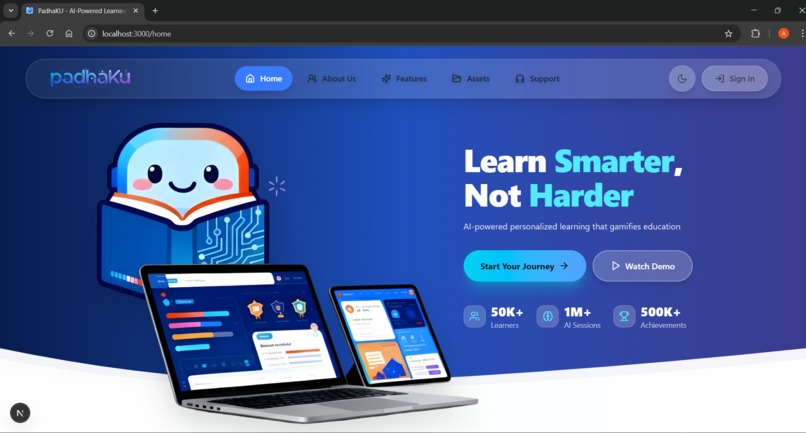
Landing Page
-
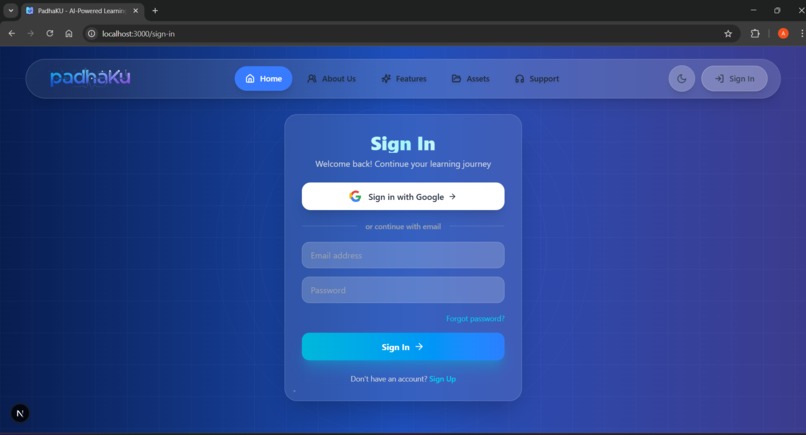
Sign-Up Page
-
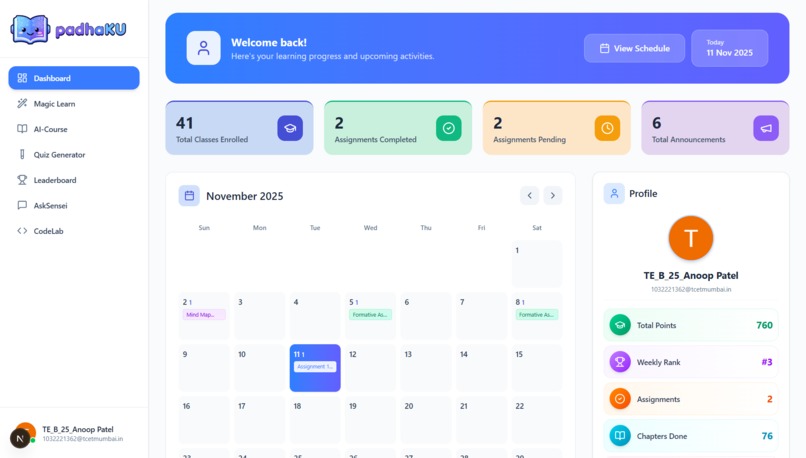
Dashboard - 1 (Count of classes joined, announcements etc)
-
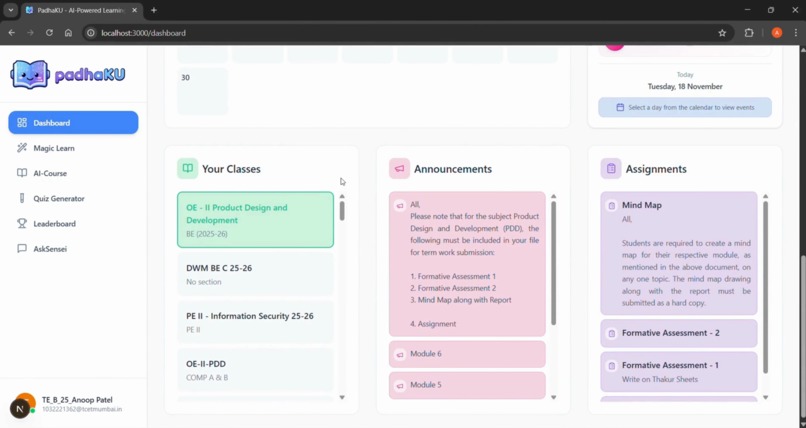
Dashboard - 2 (Detailed overview of classes joined, announcements, etc)
-
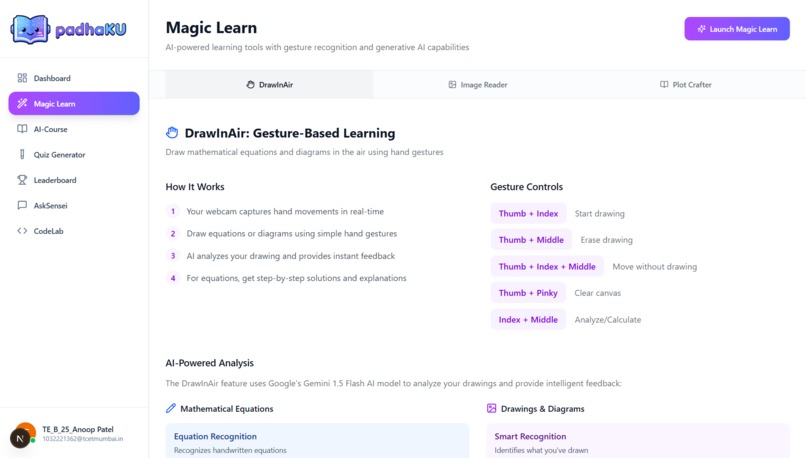
Magic Learn - 1
-
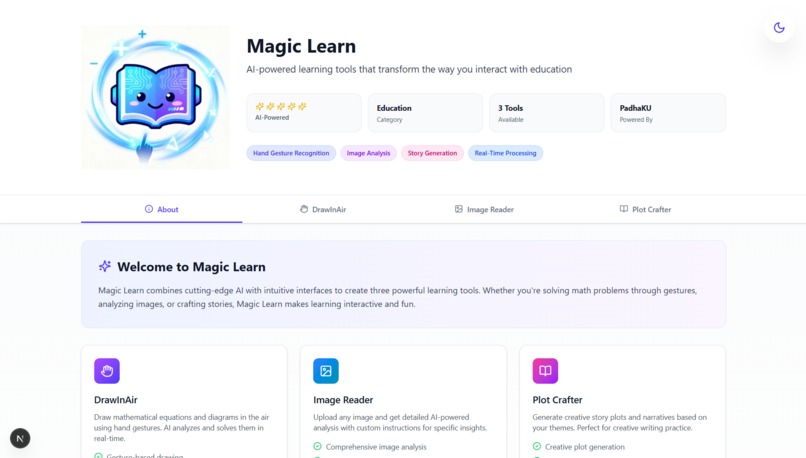
Magic Learn - 2
-
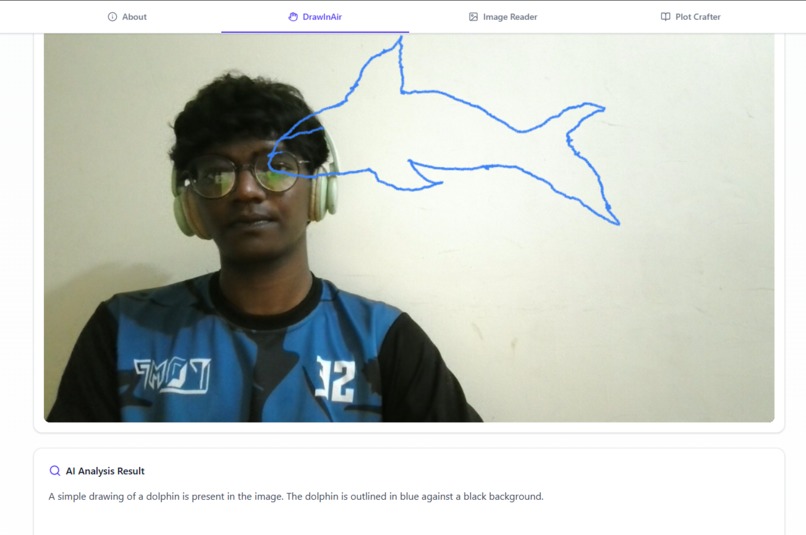
Draw-in-air (Gesture based learning)
-
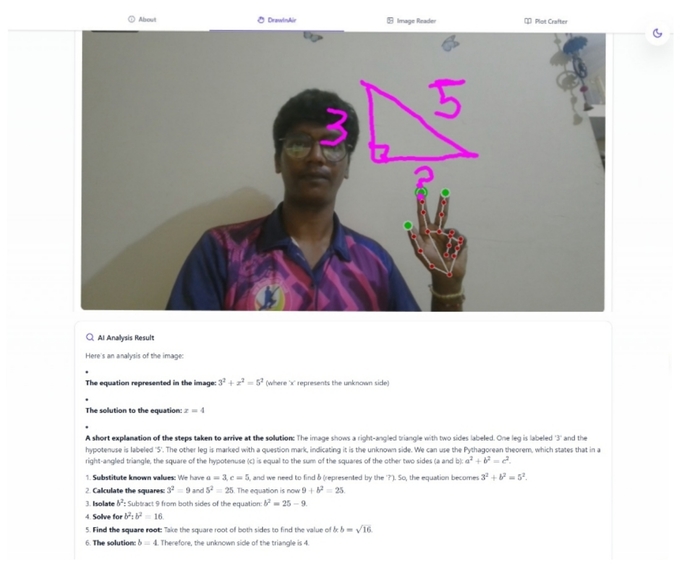
Draw-in-air-2
-
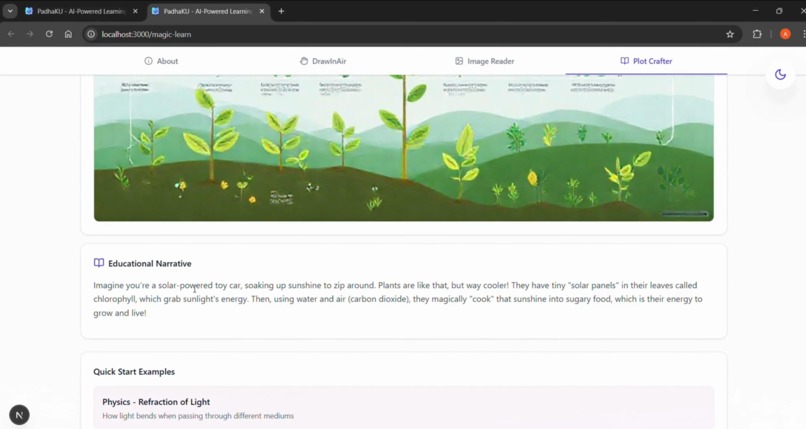
Plot Crafter
-
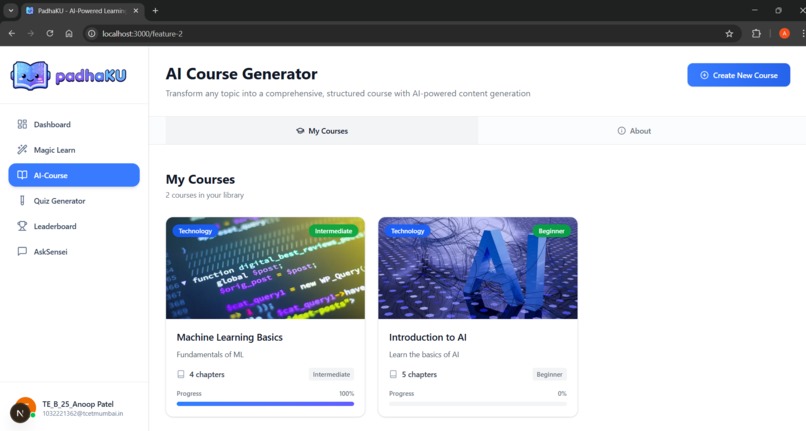
AI Course Generator
-
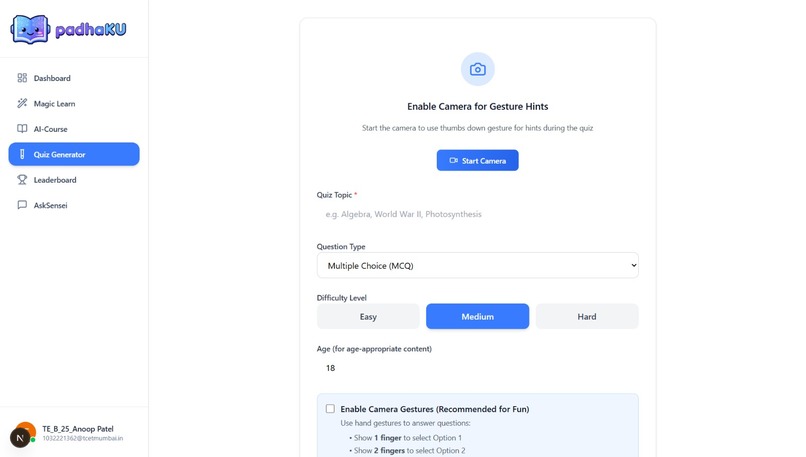
AI Quiz Generator
-
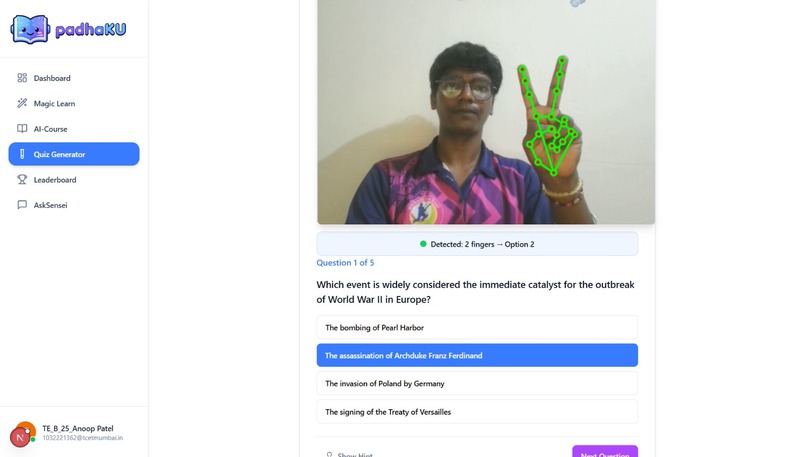
Gesture controlled quiz
-
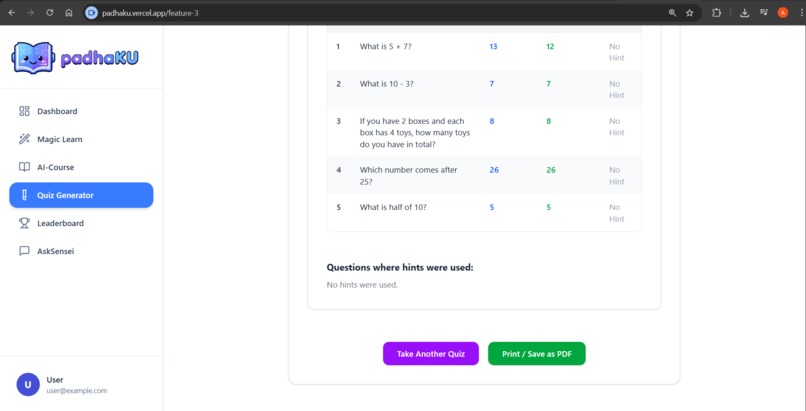
Quiz Generator Results Analysis
-
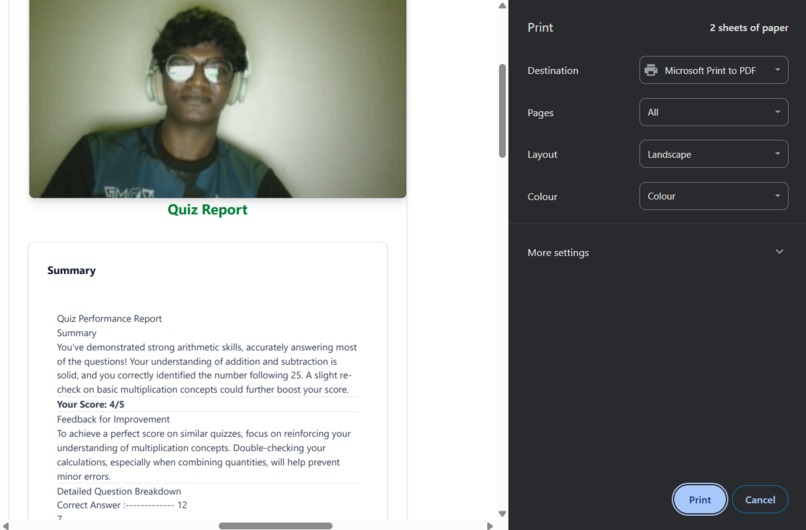
Quiz Generator Results PDF
-
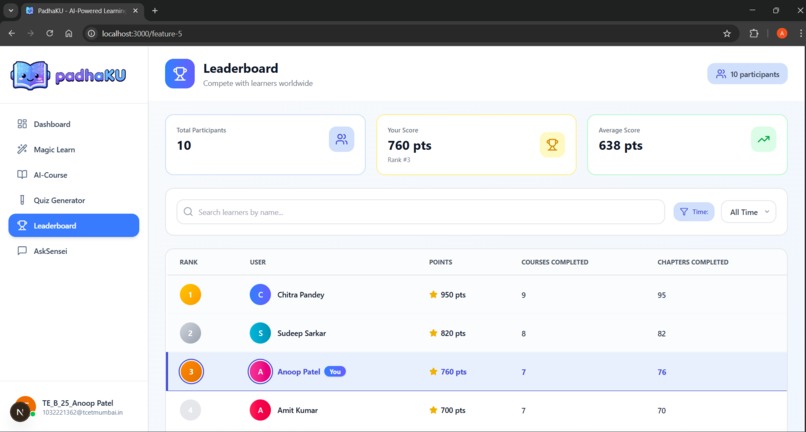
Leaderboard
-
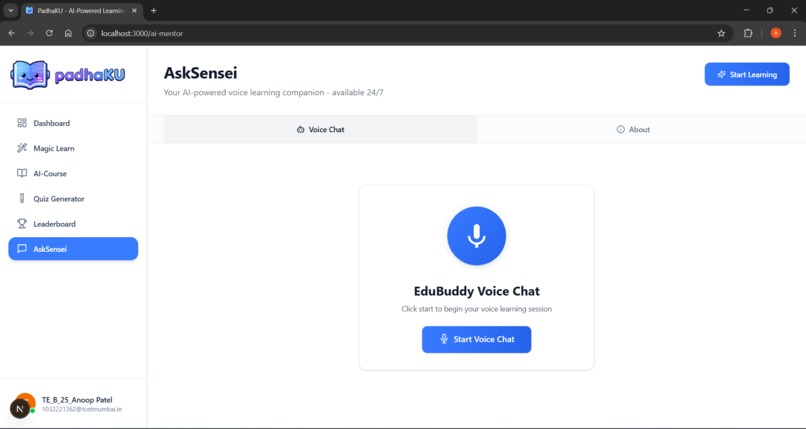
Voice Assistant


PadhaKU: Learning, Reimagined for Everyone
Inspiration
The inspiration was not a grand vision to revolutionize education. It started with a simple, uncomfortable question we could not ignore: What if you were passionate about learning but could not use the primary tools everyone else takes for granted - a mouse, a keyboard, or a pencil?
We saw that existing Learning Management Systems were just digital versions of old methods: passive and built for a standard student. For a student with a motor impairment, this was not just boring; it was a locked door. We did not want to build another flashy study app. We wanted to build a key - a new way to interact with learning that started by including those who were being left behind. We built for the edges, knowing it would improve the experience for everyone.
What it does
PadhaKU is a learning platform where the interface adapts to the student, not the other way around. It has standard features like a dashboard that pulls live data from classrooms, but its core is different:
Magic Learn: This is not an answer generator. It's an accessible whiteboard. A student can solve a math problem by drawing it in the air. Using MediaPipe, we track their hand gestures, digitize their work, and our AI focuses on understanding their problem-solving process. This is kinesthetic learning, and for a motor-impaired student, it's their notebook.
Gesture-Based Quizzes: Students can take entire quizzes using only hand gestures - pointing to select an answer, giving a thumbs-down for a hint. This removes the physical barrier of traditional input devices.
AI as a Support Tool: Our AI Course Generator creates structured learning paths, and our voice assistant, AskSensei, provides instant help. The goal is to unblock students, not think for them.
How we built it

We built this with a practical, dual-stack approach to ensure performance and scalability.
- Frontend: Next.js 15 with TypeScript for a robust foundation, styled with Tailwind CSS
- Gesture Engine: MediaPipe for real-time hand tracking at 30 FPS with gesture locking
- AI & Backend: Google Gemini for reasoning, with Next.js API routes and Python Flask for Magic Learn features
- Data & Auth: PostgreSQL with Supabase, NextAuth.js, and live Google Classroom integration
Challenges we ran into
The Kitchen Sink Trap: Early on, we had five small projects instead of one platform. We pivoted to connect everything through a unified user journey.
Gesture Reliability: Different lighting conditions and accidental triggers required weeks of tweaking to make gestures intuitive and reliable.
Pedagogical Integrity: We constantly asked: "Are we building a better way to cheat, or a better way to learn?" This forced us to focus on process analysis rather than just answers.
Accomplishments that we're proud of
Working Accessible Input Method: We built a functional gesture-based interface that's not a gimmick - it's a legitimate alternative input method.
Cohesive System: We integrated all features into a single logical workflow that feels like one product.
Sticking to Our Why: We never compromised on making learning accessible, testing every feature against our core inspiration.
What we learned
- Accessibility Improves Everything: Designing for edge cases creates better products for all users
- Process Over Answers: The real value in educational AI is understanding reasoning, not providing answers
- Power of Constraints: Having a clear, difficult target user forced us to be more creative and focused
What's next for PadhaKU
This isn't just a hackathon project. Our next steps are:
- Pilot Program: Get PadhaKU into special education programs for real testing and feedback
- Refine AI Analysis: Improve nuanced feedback on problem-solving approaches
- Teacher Dashboard: Build educator tools for insights into student progress and hint usage
- Expand Gesture Library: Develop more gestures for complex subjects like geometry and physics
Our goal remains simple: ensure the difficulty in education lies in the subject matter, never in the tools used to access it.
Built With
- flask
- framermotion
- javascript
- next.js
- nextauth.js
- node.js
- python
- radix-ui
- react
- shadcn/ui
- supabase
- tailwindcss
- typescript


Log in or sign up for Devpost to join the conversation.