-
-
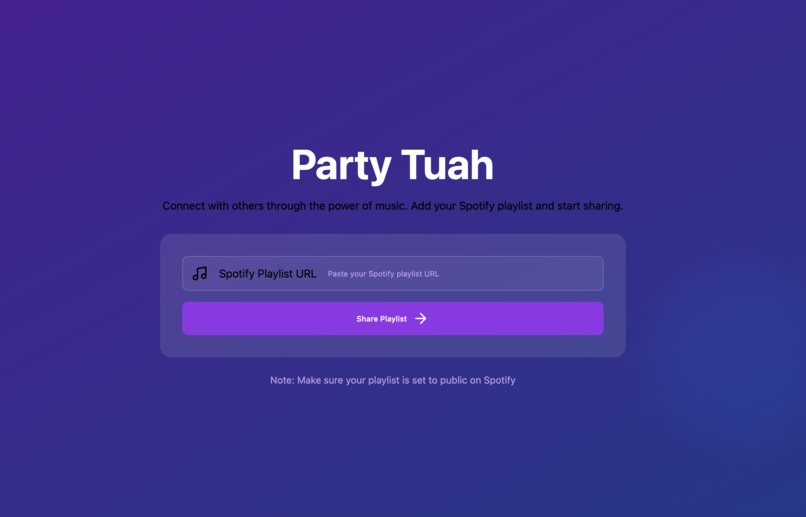
PARTY TUAH UI

Inspiration
Our inspiration stems from the vibrant energy of live parties, where music is key to creating the perfect atmosphere. For many college students, parties are a fun and popular way to unwind and enjoy their free time. We set out to design a tool that effortlessly adapts to the crowd’s vibe, ensuring every moment feels just right—without the need for a professional DJ.
What it does
Party Tuah will ask for a particular Spotify Playlist. It then queues in a track from it depending on the mood of the party. The matching works by benchmarking a specific song to show how "energetic" the crowd is. The energeticness of the song is found by spectrum analysis via RSM and crow energy is calculated via energy thresh holds.
How we built it
The front-end was built using html and css. The back-end was built using python and packages such as OpenCV and Librosa to extract information about music tracks.
Challenges we ran into
Git conflicts were a common problem especially toward the end due to being in a rush. Utilizing the Spotify Web API due to having deprecated functions forced us to create our own ranking system for songs.
Accomplishments that we're proud of
Combining components from each teammate went relatively smoothly due to discrete task allocation.
What we learned
We discovered the value of investing time upfront in planning and creating detailed diagrams of our web app. This approach significantly improved team communication, streamlined development, and minimized the risk of accidentally creating duplicate components.
What's next for Party Tuah
We are making this much more than a DJ... rather than a mood setter!


Log in or sign up for Devpost to join the conversation.