-
-
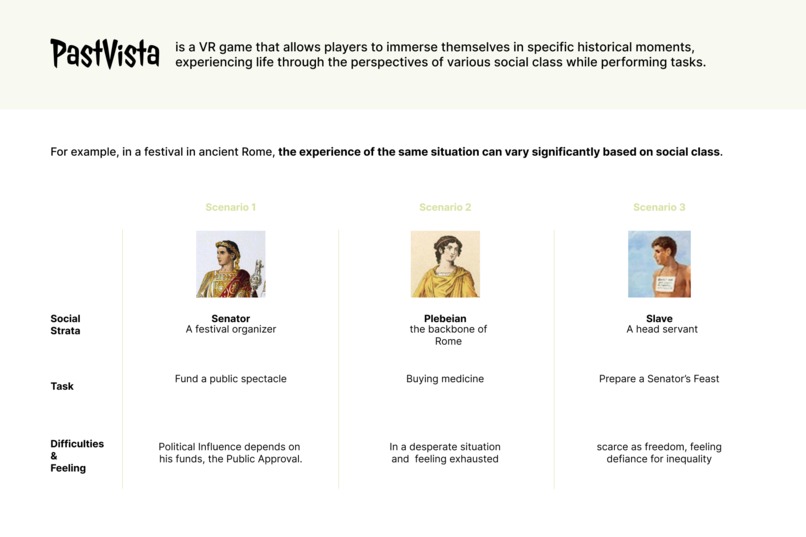
Intro and Social Class
-
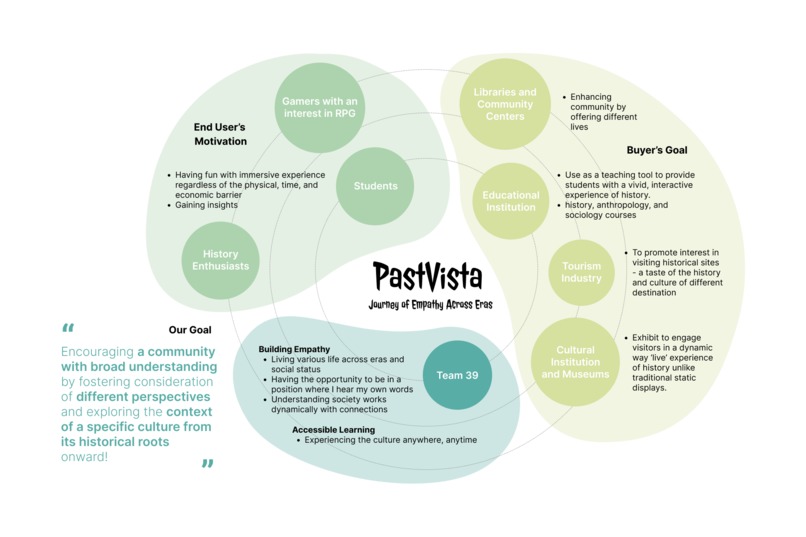
Vision Map
-
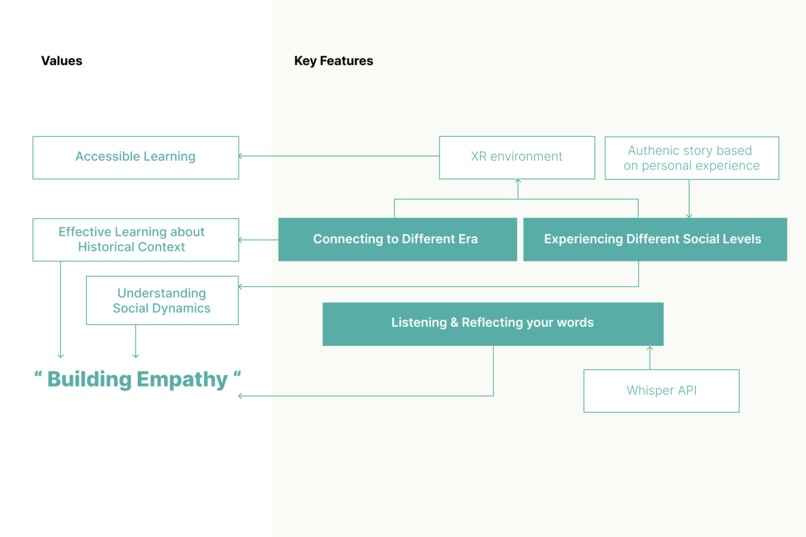
Key Feature and Values
-
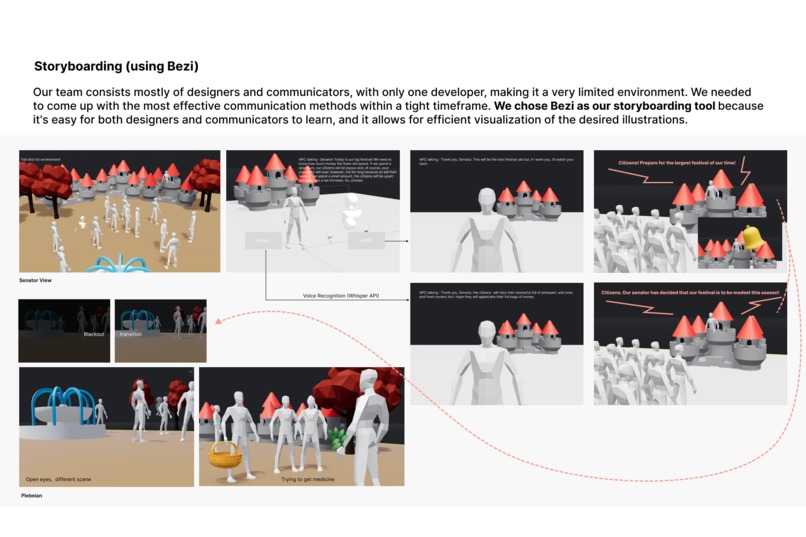
Storyboarding
-
Alternative Scenarios
-
Logo
-
Social Dynamics


What does PastVista do?
The world is now more divided than ever and we need a way to bring communities together; we need an increase in empathy, understanding, and connection. Our experience offers players a chance to embody a period of history by immersing them into an interactive snapshot of the past in VR. By interacting with a rich environment and making choices as multiple characters, users will begin to understand how their choices affect the people around them, and build connections between the past and the present. We envision this experience increasing empathy, building connection, and facilitating a greater understanding of history.
How PastVista was built?
PastVista was built using an approach to collaboration that included devising through personal experience and historical research. As the foundation of the goal of our game became clear, we divided ourselves into categories that spoke to our personal strengths and technical expertise. We agreed to circle up once every few hours to update each other on current status of each part of the project and maintained flexibility of changing focus if a team member needed extra assistance. Our research for this first version of the game included looking into Roman Empire class systems, social economics, and cultural beliefs and celebrations. From this we began to see that there was crossover of life in the Roman Empire and modern times in regards to basic human needs and desires. While our research team was exploring the past, our UX team was researching ways history can assist with increasing empathy and identifying possible diverse user base. The narrative and interactive elements were drawn directly from the research conducted and as we decided a scenario that could relate to modern times, our characters were decided upon. As the digital designing on the characters commenced, the narrative and interactive design began to inform the environmental design of the scene, including the designing of avatars and NPCs. The software used to build this games is listed below and the document listing all of the assets, sound effects, and online libraries used are listed in the document attached entitled "Attributions".
Challenges
Technical challenges included understanding the source of changing latency and working with the Quest2 such as less processing power, audio recording, and overall computation. There were also challenges with extracting and applying painted textures to models.
One challenge of the narrative that we struggled with before making a decision was which social class to highlight in the demo and the affiliated choices of those characters. The setting of the characters was also a challenge because while we wanted to show an every day experience, we also wanted to highlight culturally relevant celebrations that would add to the historical storytelling.
Accomplishments
Some technical accomplishments of this project included each individual finding personal achievements of rising above current knowledge to contribute to the project in a meaningful way. Examples include how to approach solo dev work while also learning an unfamiliar game-engine; learning how to write and record voice over for game play narratives without voice over actors; learning to render and animate avatars using an unfamiliar program; and designing and uploading assets to a scene. The accomplishments of the team itself include sustained open communication throughout the project, and choosing respectful dialogue and reflective feedback rather than confrontation.
What we learned
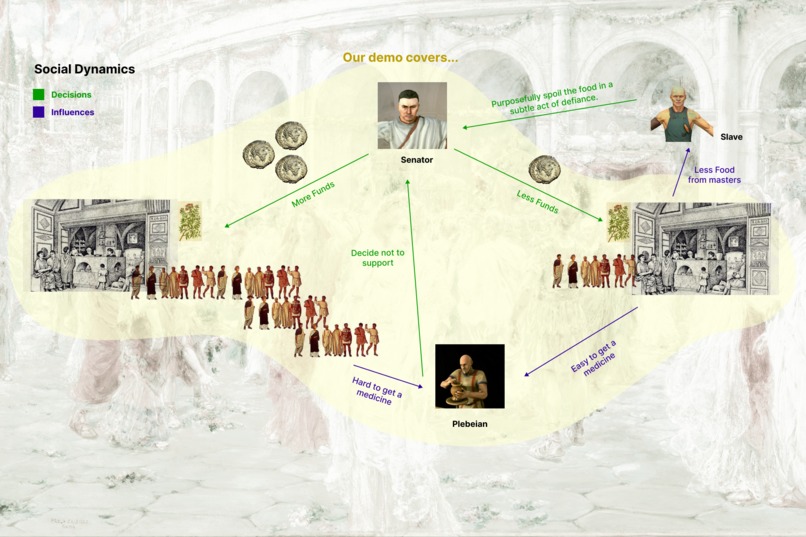
Choosing the Roman Republic as a starting point for this project at first seemed a bit of an esoteric way to explore how we can connect with history but as we did research, we noticed that we could identify cultural experiences that transcended time. Power struggles between social classes, concerns of money, social mobility, and legacy were just a few of the common themes we saw that we could identify in modern times.
What's next for PastVista
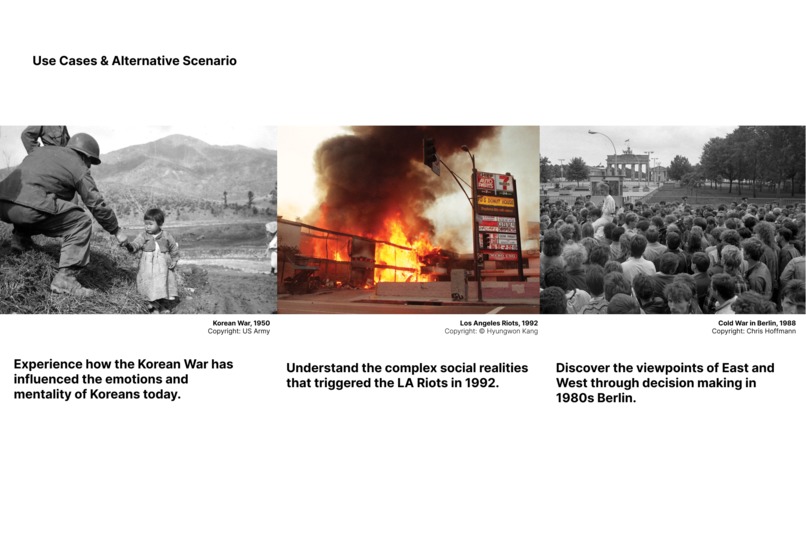
For the purposes of the hackathon, we felt using the Roman Empire was an appropriate test to see how our ideas of historical empathy transferred through first person interaction and observing cause and effect through game choice. Moving forward, we would like to explore current history including the modern day effects of the Korean War, the social complexities surrounding the LA Riots of 1992, and the exploring the lives of people living in East and West Berlin in the 1980s.
Built With
- bezi
- c#
- canva
- figma
- google-drive
- meshy
- mixamo
- playht
- procreate
- unity
- whisper


Log in or sign up for Devpost to join the conversation.