-
-
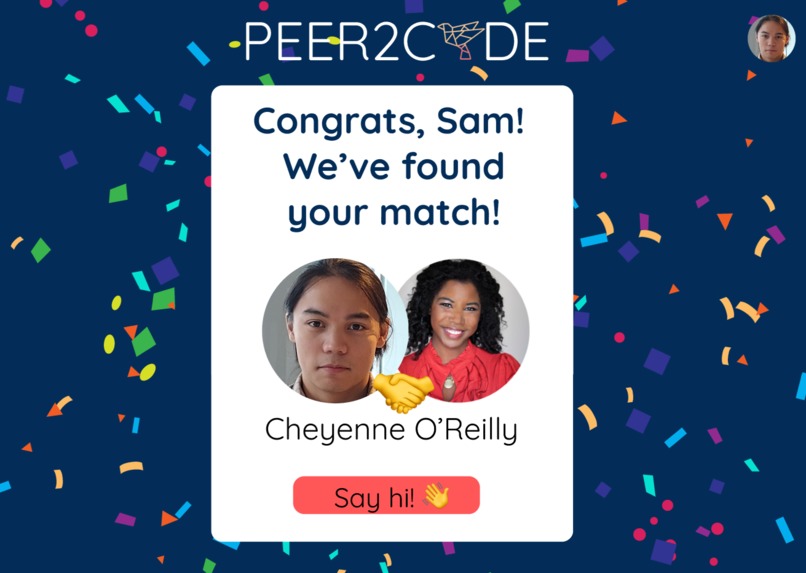
Matching
-
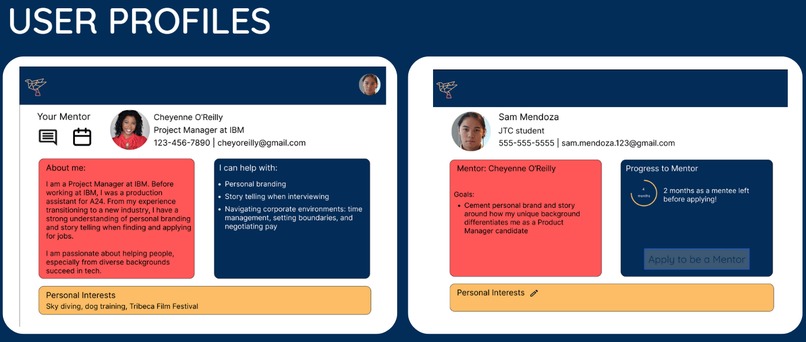
User Profiles
-
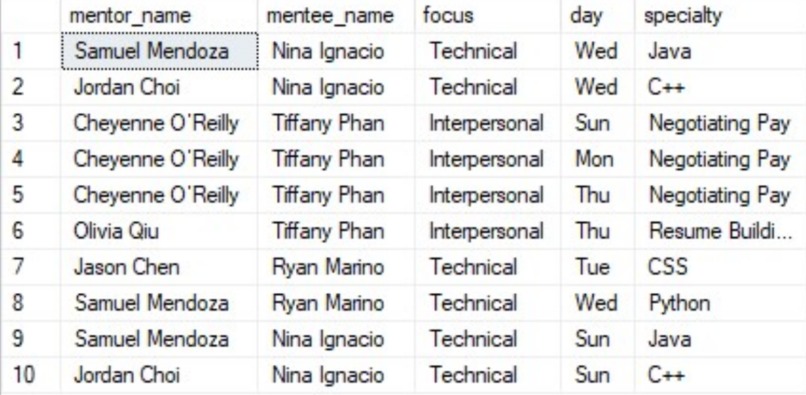
SQL Table
-
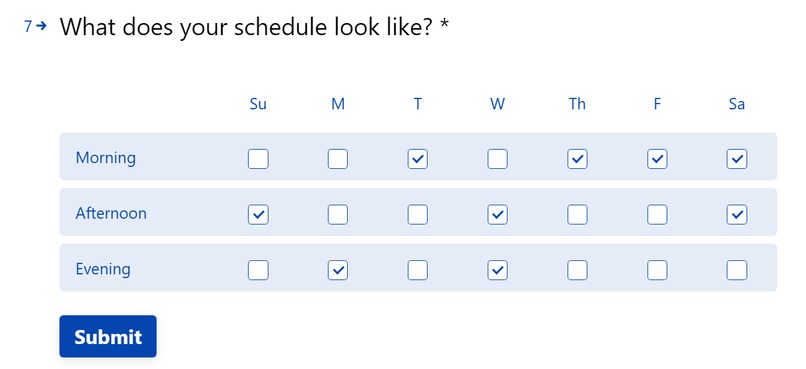
Schedule


Inspiration
While working on this project, the story of the speaker from CEO and her journey through reentry into the labor force was an inspiring story that helped motivate us towards solving one of the presented problems. The problem we chose was creating a scalable peer-to-peer program. Since the speaker talked about her becoming a mentor, it helped us introduce the idea of "paying it forward", where previously mentored people would later be given the chance to mentor others.
What it does
The tool matches mentors and mentees based on similar hobbies, interests, and skill levels. By entering information into a form, our algorithm helps filter the available mentees with suitable mentors.
How we built it
The prototyping of the program was done using various tools, which include: Figma, TypeForm, and SQL. Figma and TypeForm were used for the front-end, while SQL handed the back-end processes.
How it addresses the problem statement
The survey that prospective mentees take when first using our platform guides them in the right direction in terms of what digital literacy skills to build and a mentor helps them get started on their journey towards reentering the workforce. Our inclusive approach towards the development and objective of the application lets people of all levels and interests use our platform. Peer2code also encourages reinvestment in the community by enabling mentees to become mentors, making the program scalable and versatile.
Challenges we ran into
One challenge was deciding how to approach the task graphically. Initially, we had a plan to use Firebase website hosting, but we felt that we did not have the expertise to create a workable product. Another challenge was getting the SQL to work on time. Since the SQL queries were the most technically demanding aspect of the design process, we had trouble getting it to produce accurate output.
Accomplishments that we're proud of
The biggest accomplishment during the process was that we were able to finish an overall product while being relatively inexperienced with coding practices. Even with a lack of implemented code in our project, we were able to get a prototype that works the way we intended. Another accomplishment would be that we were able to mix together ideas in a way that helped make everyone's opinions feel substantial. We were able to get most people's suggestions into the project, which made us feel like this project is "our own".
What we learned
One thing we learned was that time management is an important step when dealing with time crunch situations. At first, we spent a lot of time generating ideas and making outlines. While this was helpful in its own way, it left less time towards the actual building of the project. Dividing our time more equally is something that we think is important going into the future.
What's next for Peer2Code
Peer2Code is currently a very basic prototype. That is, it has the bare minimum in terms of features and usability. If we were to take steps to improve this application, we would definitely consider learning how to use Python or Javascript to write code to handle the front-end of the project. With this implementation, we could also add in SQL functionality, where we could actually utilize the database and queries in conjunction with the front-end scripting.


Log in or sign up for Devpost to join the conversation.