-
 GIF
GIF
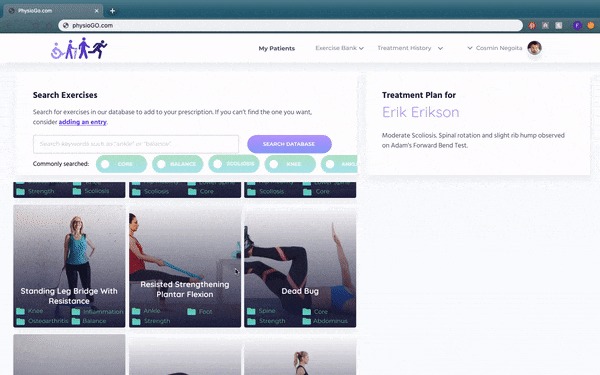
Recording of the database with the GIFs displaying the exercises as well as the different tags you can use.
-
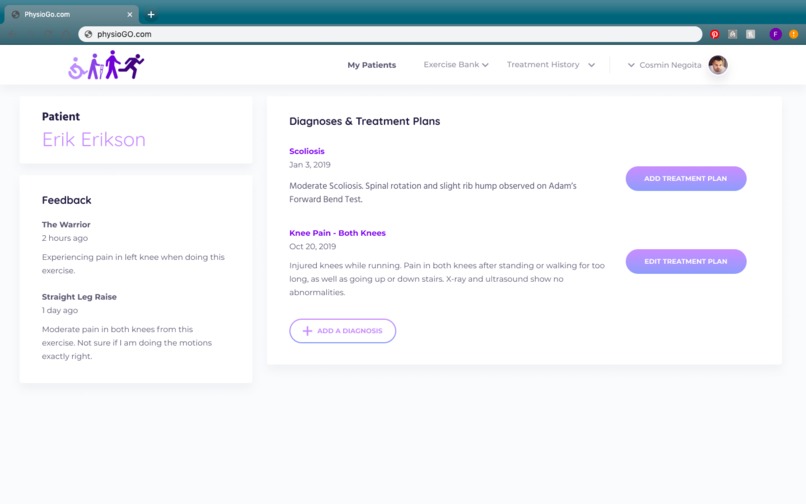
Screenshot of the website as the physiotherapist views the patient history and can add to the treatment plan.
-
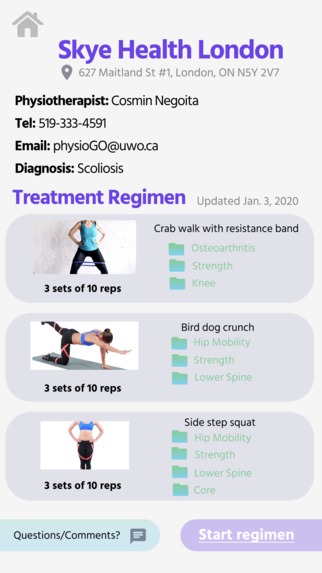
Overview of treatment plan the patient is able to see.
-
 GIF
GIF
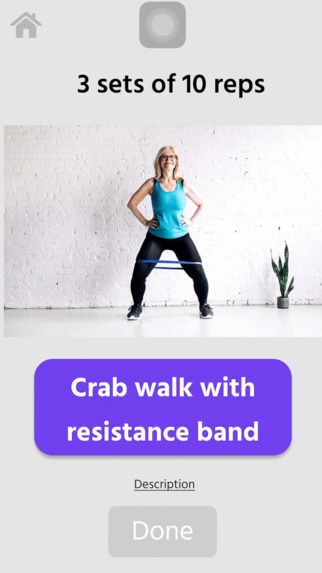
Patient is able to follow along with the exercises and the app tracks when you complete. There is an option to add questions or comments.
-
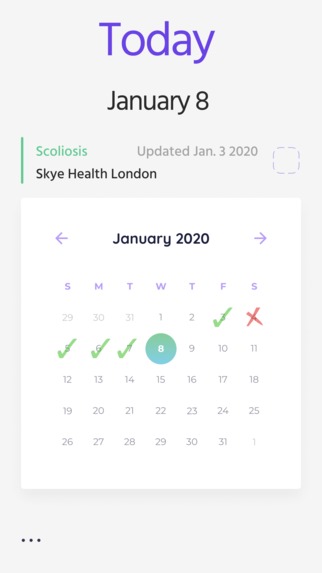
App as visible from phone so the number of times the patient does the exercises is recorded and available for the physiotherapist to see.


Inspiration
One of our group members has broken her ankle six times. The first time, she injured herself while going down a slide; however, the recurring injuries are definitely linked with how her treatment regimens were delivered in inconvenient formats that were difficult to follow. The majority of physiotherapy clinics continue to give printed hardcopies of treatment plans to patients. Paper copies are easy to lose and damage, and are not very effective in demonstrating exercises. The inspiration for physioGO was to create a centralized system that makes it as easy as possible for the patient to stay on track and give feedback on their recovery plan.
Our online treatment tracker allows patients to have a copy of their scheduled exercises with them at all times on an application through their phone or computer. This reduces paper waste because physiotherapists will no longer need to print out treatment regimens for their patients and patients will not run the risk of misplacing their schedule.
What it does
physioGO provides an interactive and centralized space for patients and physiotherapists to access treatment plans. The interface used by the physiotherapist is a desktop website. Registered physiotherapists create an account where they can easily build treatment plans from an exercise database. Exercises are tagged with relevant keywords so that suitable exercises are quickly filtered out by searching for key terms. The physiotherapist can add personalized comments for each exercise before sending it to the patient’s account.
The patient side of physioGO is a mobile app. The app keeps track of the patient treatment plan completion and provides daily reminders to do the prescribed exercises. It also provides GIF demonstrations of each exercise to accompany the textual descriptions.
How I built it
We used figma.com to plan out our website and app design. Figma allowed us to organize various aspects of our physiotherapy helper such as user login, treatment regimen, and exercise details.
Challenges I ran into
We initially planned to implement a website and an application with various functions such as login and commenting. However, we knew that as beginner coders, building the entire website within the <24 hour timeframe was unrealistic. We opted to build a prototype on figma.com to get a basic demonstration of how the finished app would work, though it is a much more limited platform as it only simulates actual UI interaction.
Accomplishments that I'm proud of
We were proud of our user interface design for our website and app because it would give us a solid foundation for implementing our project.
What I learned
Although some of use had explored figma previously, there are so many more features that we didn't know were possible such as integrating the gifs, scrolling features, smart transitions. We researched a lot of different tools we could possibly use for the development such as google cloud, java, blockchain, etc and learned the basics of what each tool is used for but it did not seem feasible to tackle all the moving parts of the app and website in 24 hours.
What's next for physioGO
The next step would be to implement physioGO as a website and application. We would also integrate physioGO across platforms to allow physiotherapists monitor their patients’ progress and patients to keep track of their progress and communicate with their healthcare providers.
Built With
- figma
- gif


Log in or sign up for Devpost to join the conversation.