-
-
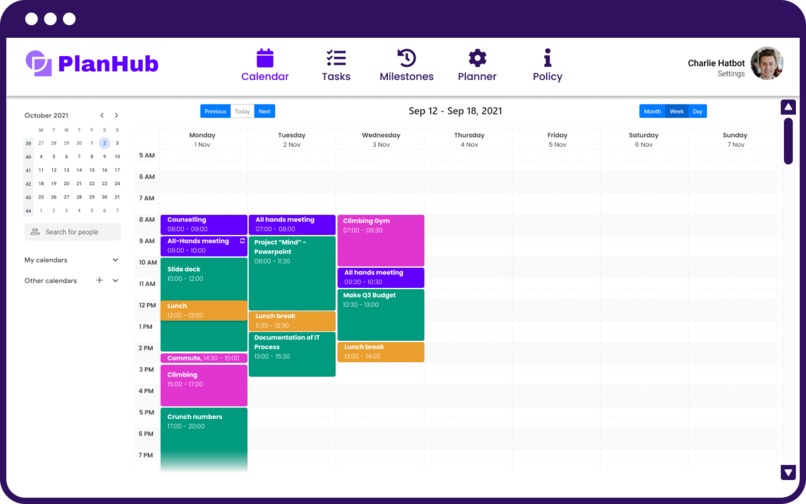
Calendar View: tasks and meetings are automatically scheduled.
-
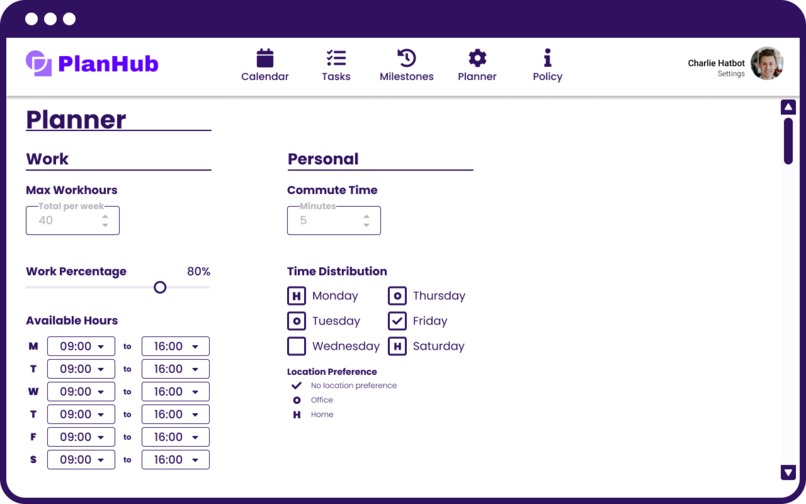
Planner View: Settings that determine your individual schedule.
-
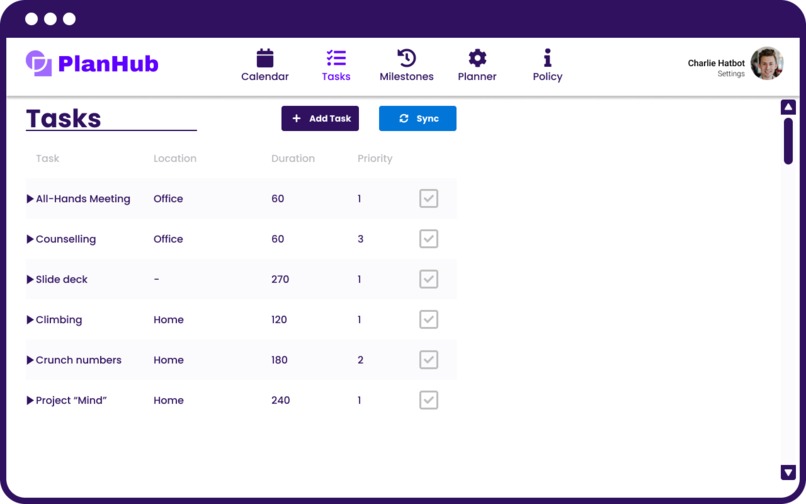
Tasks View: A global tasks and events list.
-
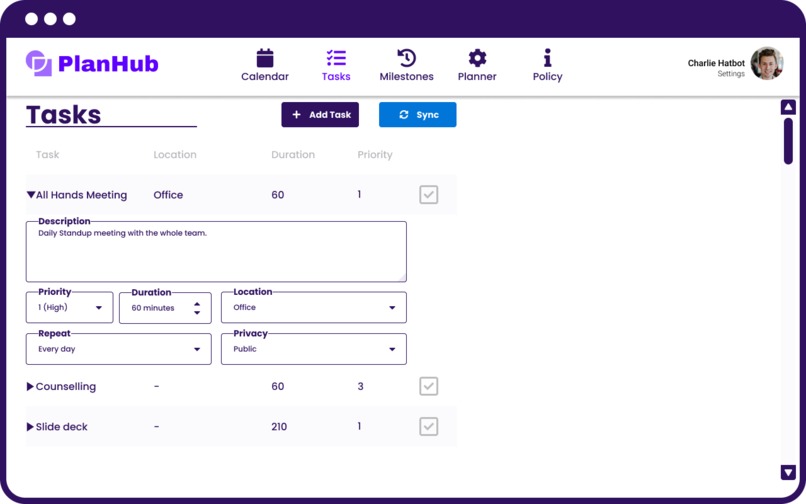
Edit Tasks: For each task or event, a duration and other parameters can be set.
-
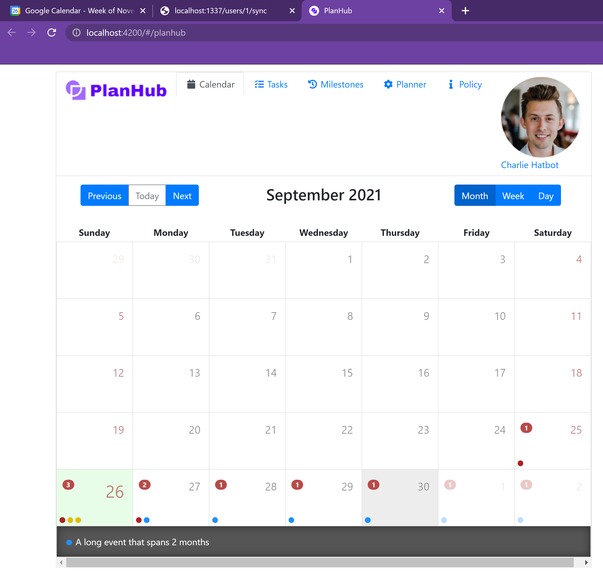
In-app view: Calendar month
-
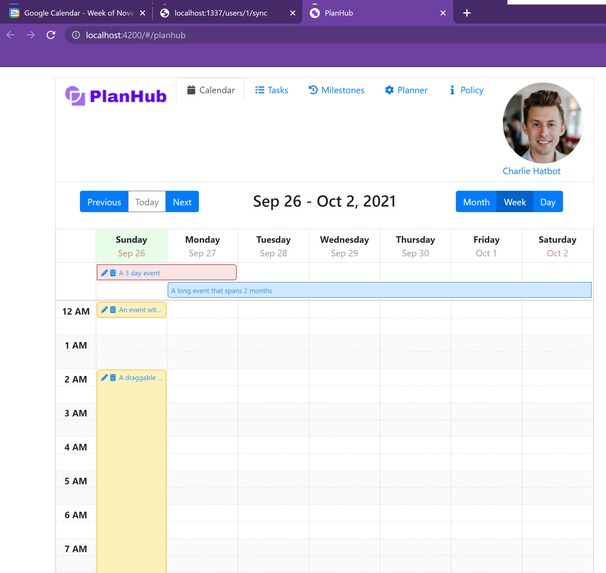
In app view: Calendar week
-
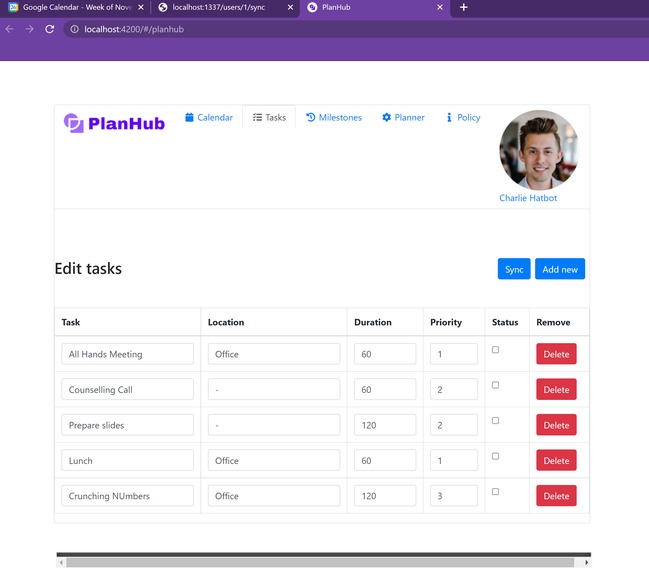
In-app view: Tasks
-
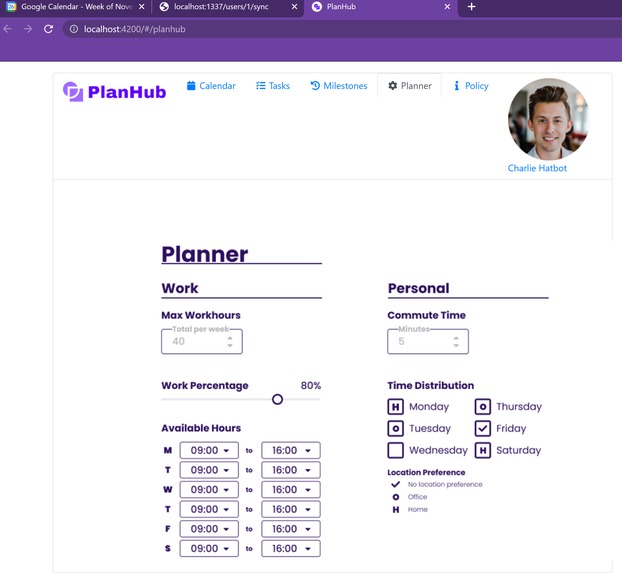
In-app view: Planner UI outlook


Inspiration
We wanted to create a tool that helps people navigate the new hybrid work environment in a way that enables them to benefit the most from it and thereby improve mental health and decrease burnout risk.
What it does
Our tool allows employees to own their time and seamlessly integrate personal and work-related appointments and tasks to truly leverage the new way of hybrid work. By inputting preferences around work location, work-time distribution, availabilities and commute times, our smart scheduler creates individualized and dynamic schedules for every employee that maximises efficiency and minimises stress. With one single click this is all synchronized to the Google Calendar.
How we built it
The wireframe was written in Figma. We used Angular with bootstrap elements to build the frontend. This was combined with a Python Flask Server that is running and providing the backend endpoints. The standard used is REST-API. The backend accesses the mysql database which is also running locally. The core of the implementation is the backend planning scheduler which is written in python and organizes tasks in the calendar. It then synchronizes directly to a personal Google Calendar with their API. The version control system was managed with github. We have used an agile approach and organized small stand-ups in a Scrum fashion.
Challenges we ran into
The time constraint is a big issue. Coming prepared into the hackathon with all tools and extensions already downloaded is a must. Some technical issues like accessing and hosting the mysql database locally on 3 different operating systems.
Accomplishments that we're proud of
We have used a complete full-stack with all steps automated to create a 3-tier solution. The architecture is well thought through and can directly be used for a prototype and production setup. The infrastructure and setup is fully done and working.
What we learned
We have acquired skills in the tech stack (mysql, angular, python, pyflask, REST-APIs and Google Calendar API). On a management level we have learned to use agile approaches with Scrum ceremonies.
What's next for Planhub
We plan on fully completing the smart scheduling algorithm and expanding the feature set:
- optimizing office usage
- predictive analytics for burnout prevention
- definition of milestones and deadlines as well as the planner-UI
- third-party app integration (Calendly, JIRA, etc.)
Built With
- angular.js
- figma
- flask
- google-calendar
- mysql
- pyflask
- python


Log in or sign up for Devpost to join the conversation.