-
-
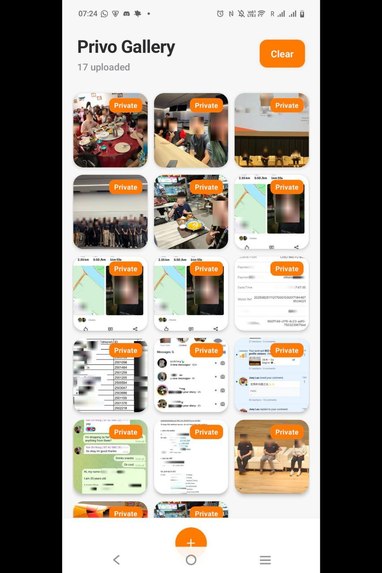
Main Gallery
-
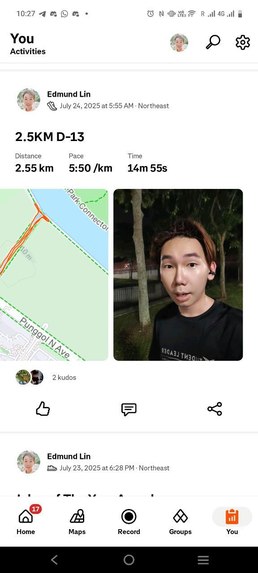
Strava Screenshot Original
-
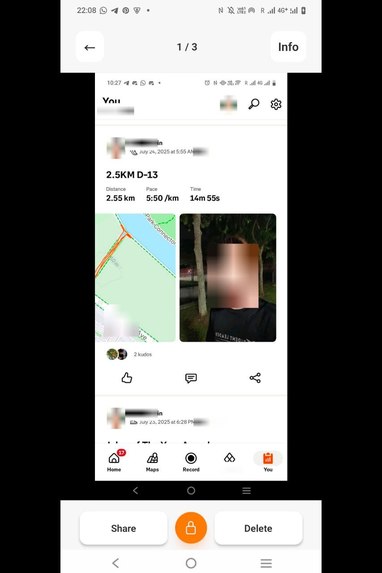
Strava Screenshot Censored
-
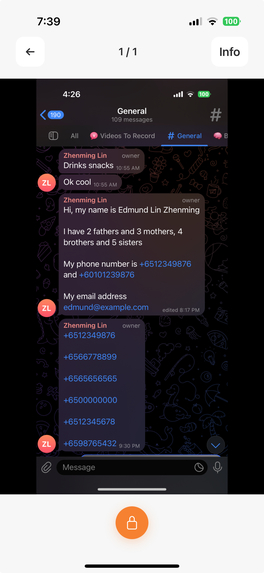
Text Message Original
-
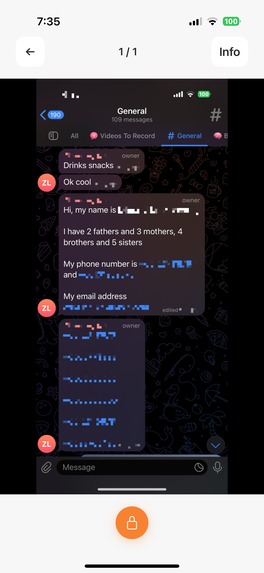
Text Message Censored


Inspiration
We live in a time where AI is everywhere making our lives easier but also putting our privacy at risk. Every day, people share photos with personal details like faces, credit cards, or addresses to AI like ChatGPT without realising the dangers. The moment we saw how AI was being used to collect and even misuse personal data, we thought: instead of AI being the problem, what if AI could be the solution? That’s how Privo was born AI-powered privacy protection that works for people, not against them.
What it does
Privo is a mobile app that automatically scans your photos for sensitive information and protects it before you share. It detects faces, text, and personal details (like emails, phone numbers, or credit cards) and blurs them out. Everything happens on your phone, so your data never leaves your device. You get two versions of your photo the safe, shareable one and the original that’s protected with authentication.
How we built it
We used React Native to build one app that runs on both iOS and Android. For the AI side, we combined Google ML Kit for face and text detection with Apple’s Natural Language framework for advanced text analysis. We also created custom algorithms (Regex) to reduce false positives and applied native image processing tools (Core Image for iOS, Kotlin for Android) to blur sensitive areas. All files and metadata are stored locally using Expo’s secure storage no cloud, no leaks.
Challenges we ran into
- Cross-platform AI differences: iOS and Android handled detection results differently, so we had to build a unified system to keep results consistent.
- False positives: Early on, words like “May” or “Angel” were wrongly flagged as names. We solved this with contextual analysis and confidence scoring.
- Native bridging: Passing image data between JavaScript and native code in React Native was tricky, so we built a reliable bridge layer with strong error handling.
Accomplishments that we're proud of
- Built a privacy-first AI app where all analysis happens on the device, with no internet required.
- Achieved fast performance most photos are scanned and blurred in under 2 seconds.
- Created a multi-layer PII detection system that goes beyond simple regex and understands context.
- Delivered native-quality performance from a single React Native codebase.
What we learned
- Combining different AI methods (computer vision, NLP, regex) gives better results than relying on one.
- On-device AI is more powerful than most people think and is often underlooked.
- Balancing accuracy and power is key a small model that produce “good enough” result is often better than a perfect but one that cannot run on a phone reliably.
What's next for Privo
- Add biometric authentication (Face ID/Touch ID) for secure access to originals.
- Can look into more native support such as Gemini Nano and Apple's Foundation Model to help with identifying PII in text.
Built With
- apple-vision-model
- expo-sdk
- google-ml-kit
- javascript
- kotlin
- react-native
- swift
- typescript


Log in or sign up for Devpost to join the conversation.