-
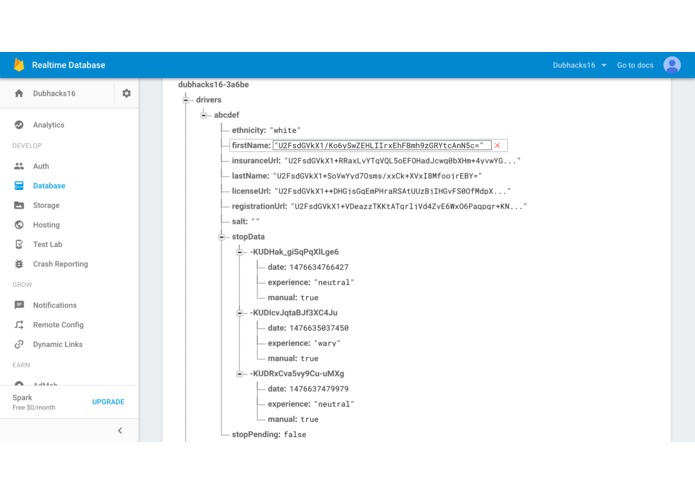
Transparency, meet security. Deeply personal data is encrypted using industry standards. Everything else is accessible by design.
-
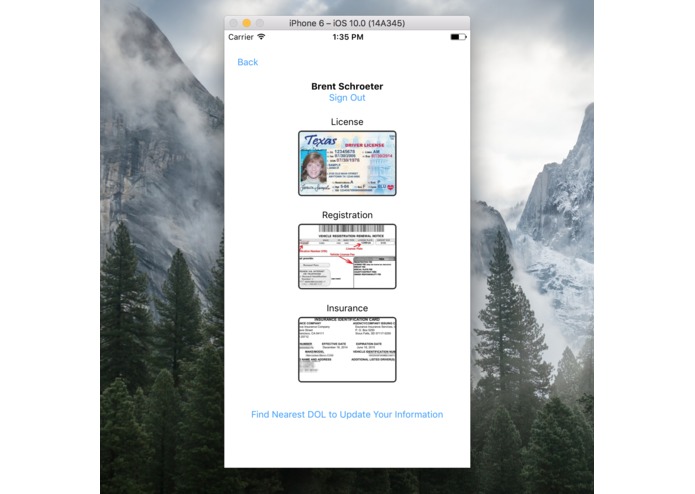
Easy to check that your information is up to date.
-
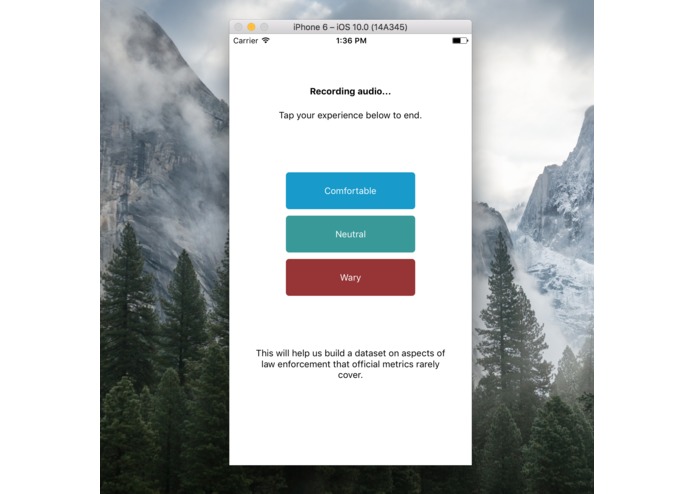
We are uniquely positioned to capture the data we need to fight discrimination and police brutality.
-
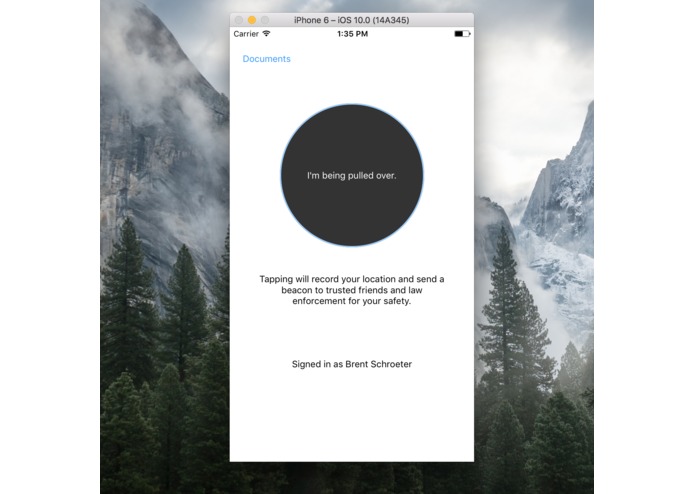
Safety through and responsible documentation.
-
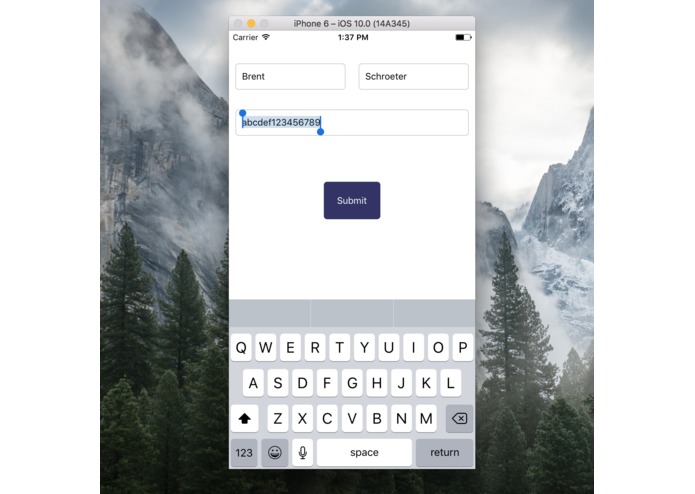
One-time authentication keeps identity secure.


Inspiration
The idea for this app came out of a necessity to innovate the way policing is done; increasing safety for officers and citizens alike. When brainstorming how to innovate this highly complex process, we thought of how we might automate certain aspects of the process.
This lead us to realize that ech time there is a traffic stop, the officer asks for the same information: Driver’s License, Registration, and Insurance. Since this information is such a standard request, it is a no-brainer to our team that this information gathering should be an automated process.
After speaking with multiple officers, the atomization of this step of the process is not only feasible, but is also much needed. This inspired us to pursue the development of such a software system during Dubhacks 2016.
What It Does
The PullOver software will increase safety for both officers and citizens by simplifying the average traffic stop.
During a normal traffic stop, the officer will make two separate trips to the citizen’s vehicle. During the first trip, the officer asks for registration, drivers license, and insurance. During the second trip, the officer returns these documents and issues the citizen a ticket or warning.
We wish to eliminate the need for the first trip; allowing the officer to quickly move on to the second trip. We will do this by giving the citizen the ability to upload their license, registration and insurance on to the PullOver system. Once these documents are on the system, they will be easily accessible to the officer on site via a connection between the citizen’s smartphone and the officer’s laptop. The citizen’s information will be verified by the DOL and will be regulated in order to insure that it is up-to-date.
At a high level, this is how we plan on eliminating the first trip that the officer makes. Once that trip is eliminated, the officer only needs to make one trip to the citizen’s vehicle (in order to issue a ticket or warning). Using the PullOver system, half of the face-to-face interaction is avoided and this will increase efficiency as well as decrease the probability of an altercation.
How We Built It
We use React Native to create a native app that can easily be scaled to support all major smartphone operating systems. In 20 hours we were able to code a prototype, wire it to our real-time database, and deploy it to a physical test device with encouraging success. There is a lot of work to go, namely the implementation of a real-time video exchange to establish friendly rapport between both parties, as well as provide the officer with critical visibility into the suspect vehicle interior, without placing either party in an uncomfortable or dangerous situation. Twilio Video and VoxImplant are potential candidates.
For data persistence we rely on Firebase Database. We do not make use of Firebase Authentication for drivers. Instead, we incorporate salted SHA256 and AES encryption for sensitive data, while leaving more general fields such as ethnicity and traffic stop data as plaintext. That's correct: the entire database is anonymized and made 100% available for public oversight as an innate property of its design. Firebase Auth is still used for officers, who need access to driver information without restriction.
Challenges we ran into
We ran into many different challenges conceptualizing and developing Pullover. When we came together as a team, we had a constructive discussion on the values and vision of our project. This was a crucial part of the process which usually drives the direction of the project. Coming together on a consensus while focusing on the main, high level outcome was a unique challenge which was achieved though excellent collaboration and communication from all team members. Another main challenge was developing the logistical framework for the application service. Knowing our application would be used by police departments and co-exist within government agencies, we needed to know how we would safely and securely access and distribute sensitive information, map out both civilian facing, and officer facing app, while working in a highly regulated field. Because our app aims to reduce a high stress, high stakes situation, we had to be very cautious of identifying unintended consequences of application functions.
Accomplishments that we're proud of
We are incredibly proud of developing an idea that has a direct social impact, which we as a team feel deeply passionate about. Within the technical realm, we honed in on a specific vision, mission, and detailed SWOT, projecting for future on the co-design end. Our development of the app was very satisfying as we developed a functional native iOS and Android application, which can be installed and demoed.
What We Learned
During our time here, we learned about the ideation, product specification, and software development process, as well as the challenges of working on projects that rely on the cooperation of third parties. Since PullOver would be used in high risk situations and at a governmental level, we had to regularly consider security implications and regulation compliance. Despite the challenge of having to work with different partners and sets of information systems, we wanted to persist on working towards a solution for a problem we hold passion for.
What's Next For PullOver
The next steps for PullOver will be honing in on feasibility questions, and understanding how the existing information systems and technology works for things like criminal records, driver’s registration information, and in-car hardware for police officers. We would like to engage in more user research to understand the values and realities of the stakeholders in this space, as well as a technical understanding of how we can implement PullOver best.


Log in or sign up for Devpost to join the conversation.