-
-
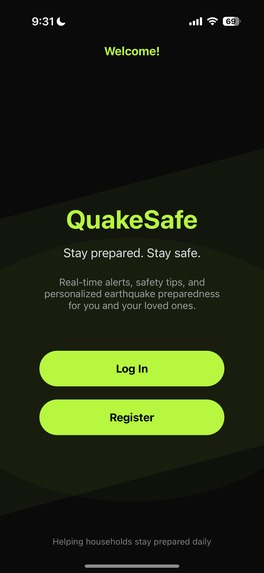
Landing Page
-
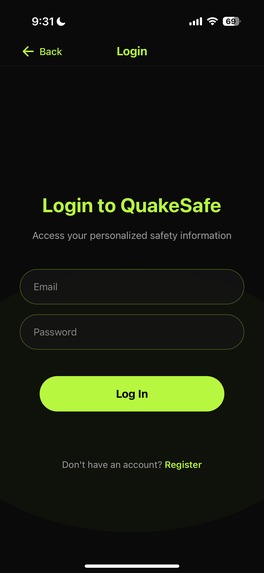
Login
-
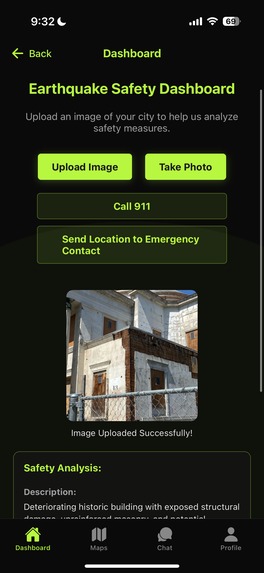
Dashboard
-
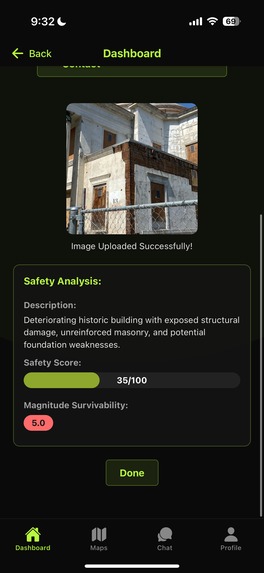
Earthquake Analysis
-
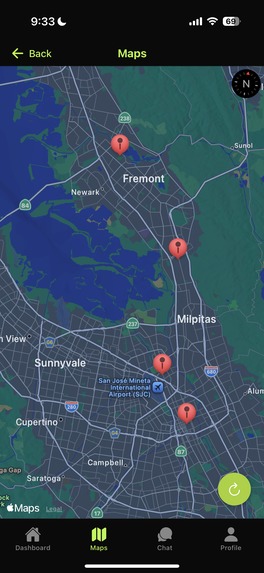
Map Pins for Each Image
-
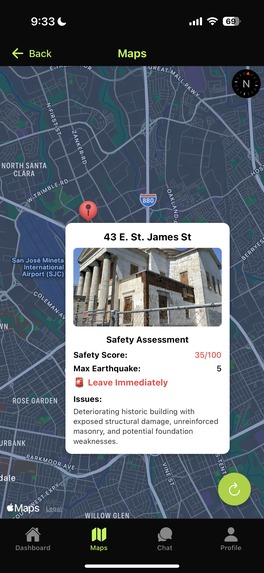
Detailed Insights for Each Pin
-
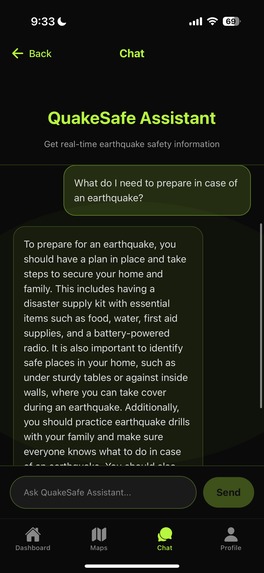
AI Chat Assistant


🌟 Inspiration
Per the United States Geological Survey (USGS), nearly 400 earthquakes have occurred in the South Bay Area in the last calendar year alone. Due to its proximity to multiple fault lines, the Bay Area — and particularly San Jose — is at extreme risk for earthquakes year-round. 🌎 While little can be done to prevent earthquakes, which are natural and unpredictable events, society often falls short of implementing proactive measures to minimize the damage they can cause. This is especially true in metropolitan areas like San Jose, where the urban landscape raises the risk of property damage and mortality. 🏙️ That's why we built QuakeSafe, an earthquake preparation and safety app designed for the citizens of San Jose.
⚡ What it does
QuakeSafe utilizes cutting-edge AI technology to evaluate places around the city for risks of earthquake damage. 📸 Users can take a picture of an area and upload it to the QuakeSafe app, where we determine how safe the area is in the event of an earthquake. By highlighting which parts of the city are safe, QuakeSafe helps direct city leaders to improve infrastructure in areas where earthquake safety is a legitimate risk. 🏗️
Furthermore, we recognized how important it is for people to have their pressing questions answered during an earthquake. 🧠 That's why QuakeSafe comes with an integrated AI assistant, ready to answer users' earthquake-related questions before, during, and after a quake. We hope QuakeSafe can help people around San Jose stay better prepared and more poised when disaster strikes. 🚨
🛠️ How we built it
To build QuakeSafe, we leveraged a great deal of complicated technologies. 🖥️ The app was built using React Native, supporting both iOS and Android deployment. 📱 The backend was built with Python and FastAPI, while the image evaluation technology and chatbot integration utilized Claude and Groq AI models, respectively. 🤖 Finally, user authentication and data storage were handled using a PostgreSQL database via Supabase. 🗄️
🚧 Challenges we ran into
Building QuakeSafe was our first time developing a mobile app with React Native — and it was a big learning curve for all of us! 📱 We faced challenges setting up the development environment, understanding native components, and debugging across different platforms. 🐛 Despite the hurdles, we worked together, researched diligently, and grew stronger as a team. 💪
🏆 Accomplishments that we're proud of
We’re incredibly proud that we built a fully functional, cross-platform mobile app from scratch! 🎉 From setting up AI integrations to handling real-time user interactions, we turned an ambitious idea into a working product ready to help people stay safer during earthquakes. 🌍
📚 What we learned
Throughout this journey, we learned the ins and outs of React Native development, from app architecture to efficient UI design. 🎨 We also gained experience integrating powerful AI models into mobile applications and managing a full-stack project with Python, FastAPI, and Supabase. 🔧 Most importantly, we learned how much we can accomplish when we step outside our comfort zones and tackle challenges head-on! 🚀
🚀 What's next for QuakeSafe
We hope to expand QuakeSafe to help other cities besides San Jose, 🌆 as well as deploying our app to mobile app stores. 🛒 Additionally, we'd like to introduce a web interface for users to view their city's earthquake safety from outside the app. 🖥️
Selected theme
Public Safety
Teammate names
Ronald Li (yihao.li@sjsu.edu) Martin Ceballos (martin.ceballos@sjsu.edu) Adarsh Mallya (adarsh.mallya@sjsu.edu) Darren Shen (darren.shen@sjsu.edu)
Built With
- claude
- fastapi
- groq
- python
- react-native
- supabase


Log in or sign up for Devpost to join the conversation.