-
-
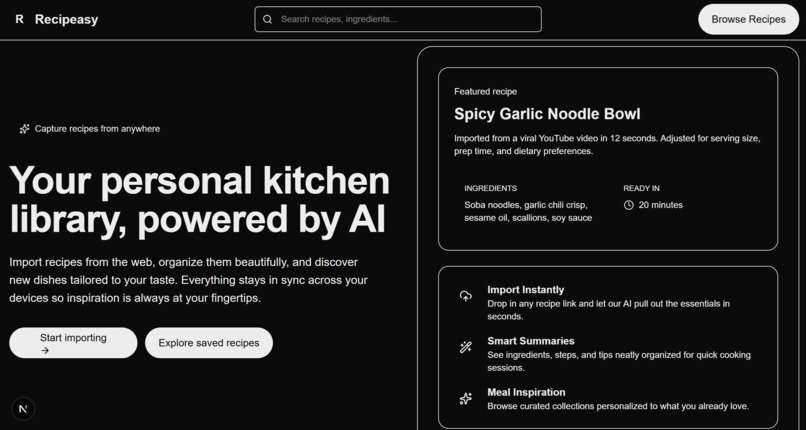
Homepage
-
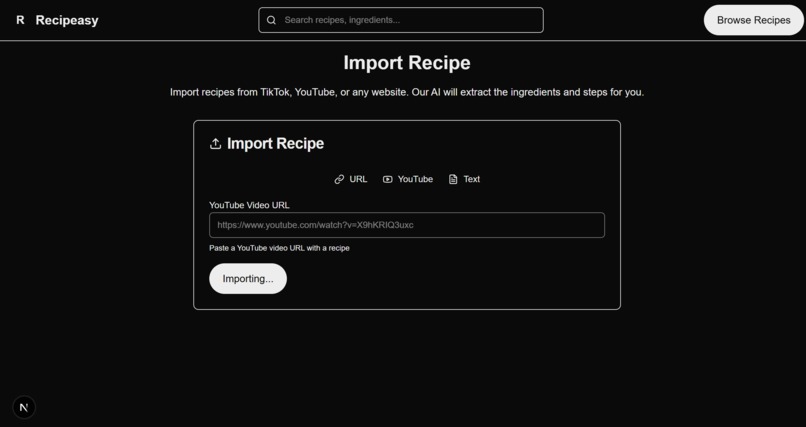
Import Recipe Page
-
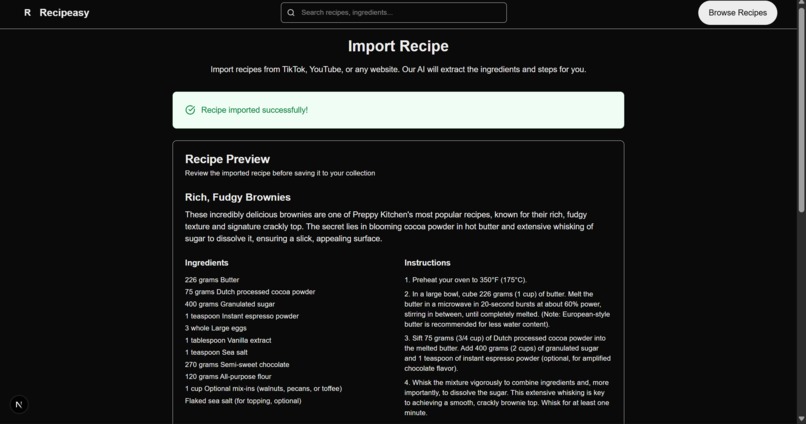
Aftermath of importing a recipe
-
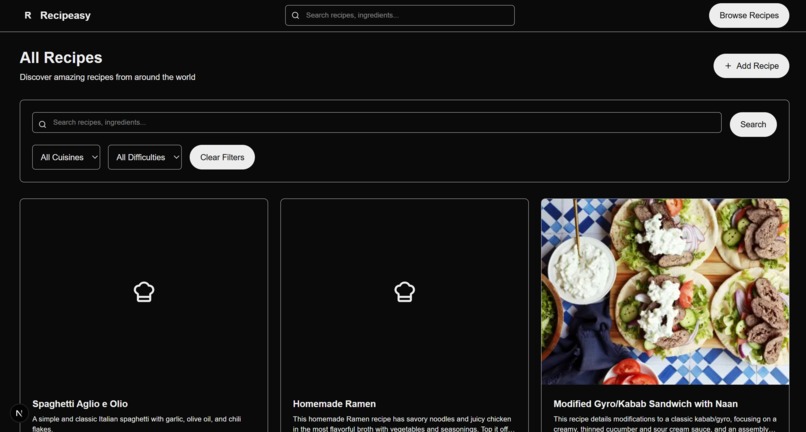
Search page for all recipes
-
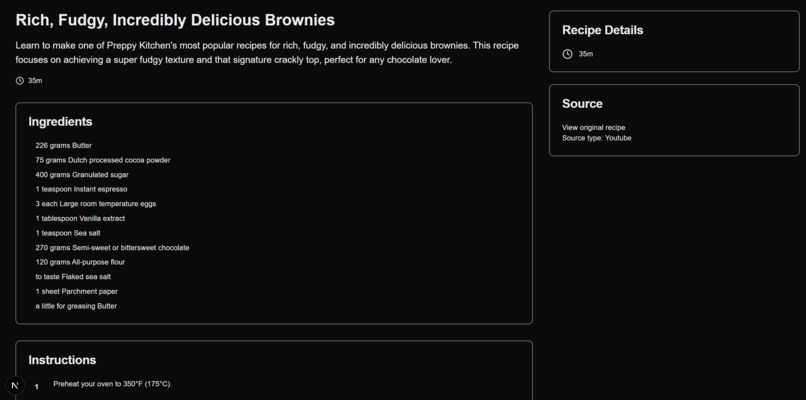
Full recipe structure


Inspiration
Our project "Recipeasy" was thought of when we realized our ambition to make learning recipes from YouTube videos easier, since most creators lock their recipes behind unnecessary paywalls or long videos. We wanted to create a platform that solves these issues by extracting recipe information directly from URLs in YouTube videos and recipe websites, as well as a way to save those recipes.
What it does
Recipeasy parses recipe data from websites and YouTube links through user provided URLs which are converted into structured JSONs that are sent into Google's Gemini AI to format recipes, resulting in a formatted recipe that includes instructions, duration, name of food, and difficulty. After generating, it provides users an option to save that recipe for future use. Users also have the option to search for recipes through Spoonacular's database.
How we built it
We built Recipeasy using Next.js for the frontend and Flask for the backend. We used Python to handle the YouTube transcript feature with tools like the YouTube Transcript API. Everything works together to process data, take user input, and make finding recipes quick and easy. We also used AI tools such as Github Copiolt and OpenAI to help create a framework and provide guidance throughout the development of Recipeasy.
Challenges we ran into
Some challenges we ran into was trying to get Google Gemini to work properly with our app and we also had a lot of issues connecting the front and back end with API calls. Through long debug sessions using trial and error and the help of AI tools, we were able to solve all of these issues.
Accomplishments that we're proud of
We came into this Hackathon not expecting to finish a functioning project, but we far surpassed our expectations. Although, our project is not fully complete, we are proud of all the features we were able to implement such as the user-friendly UI and efficient systems that allow for our structured recipe format.
What we learned
We came into this Hackathon with very little experience development and HackUTA helped us build a strong foundation in various of coding frameworks such as Next.js and Flask. We also learned how to handle API responses to process and send data between the frontend and backend.
What's next for Recipeasy
After working on this project, we don't want Recipeasy to just be a local project, we want it to be an app everyone can use. Our next steps will be a long journey that includes user accounts, faster processing times, enchanched UI, an AI cooking chat bot, and even deploment onto mobile devices.
Built With
- flask
- gemini
- git
- github
- html/css
- javascript
- next.js
- python
- typescript
- youtube


Log in or sign up for Devpost to join the conversation.