-
-
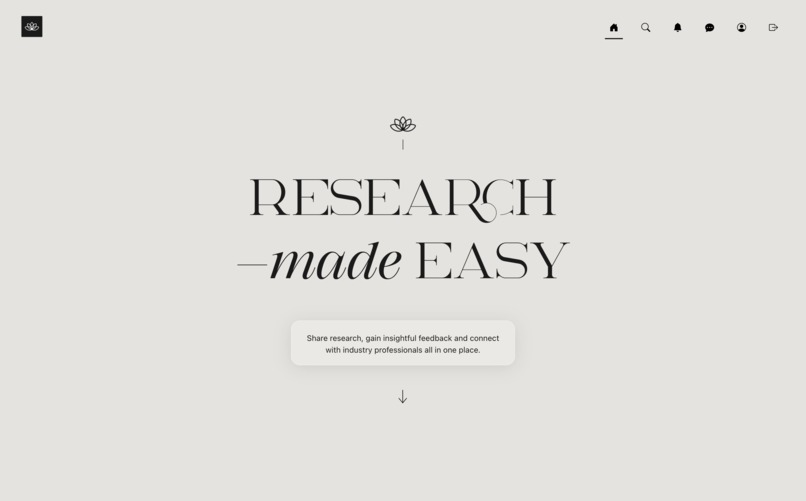
Landing Page
-
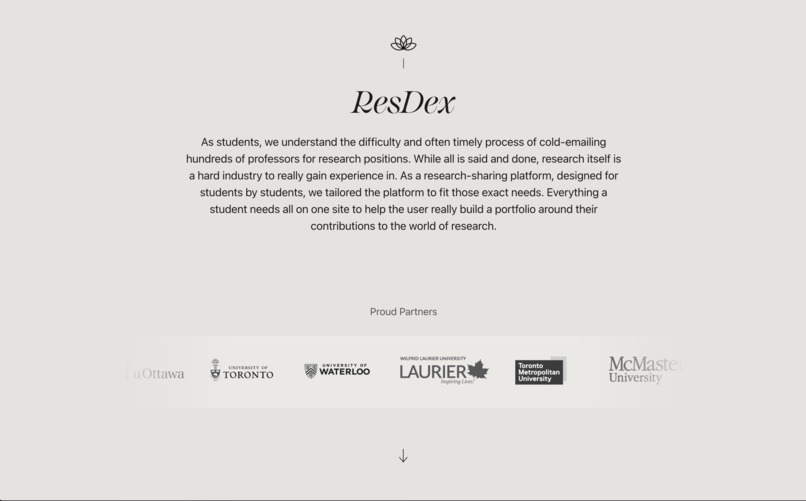
Mission Statement
-
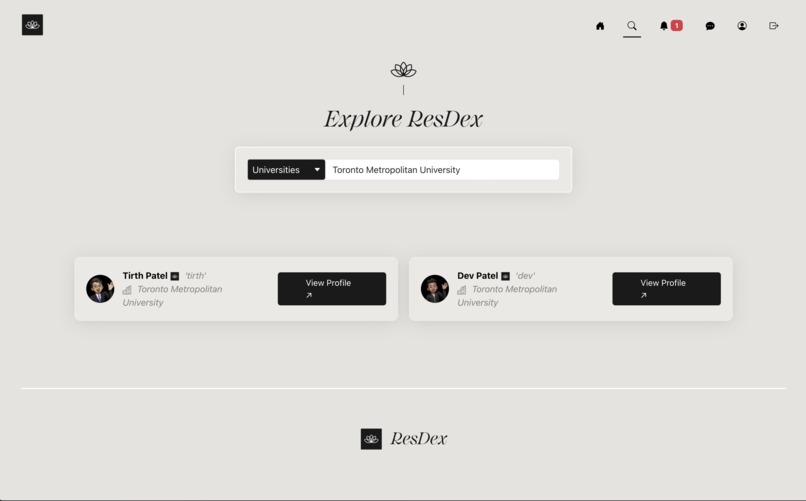
Search Engine
-
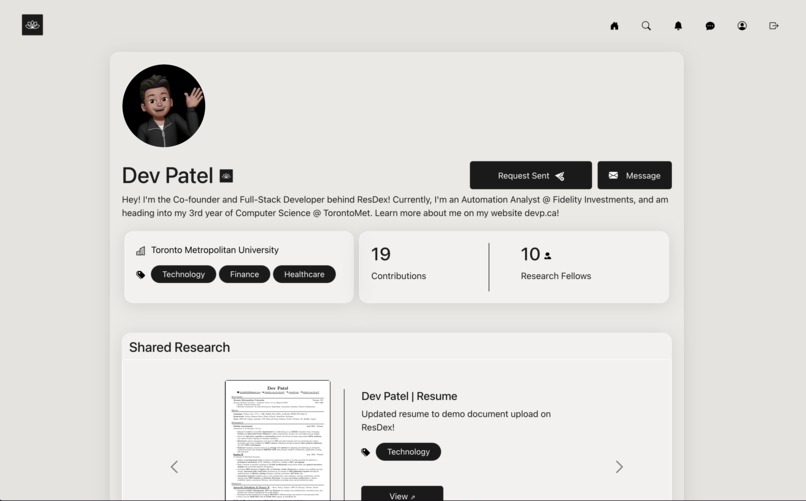
Portfolio
-
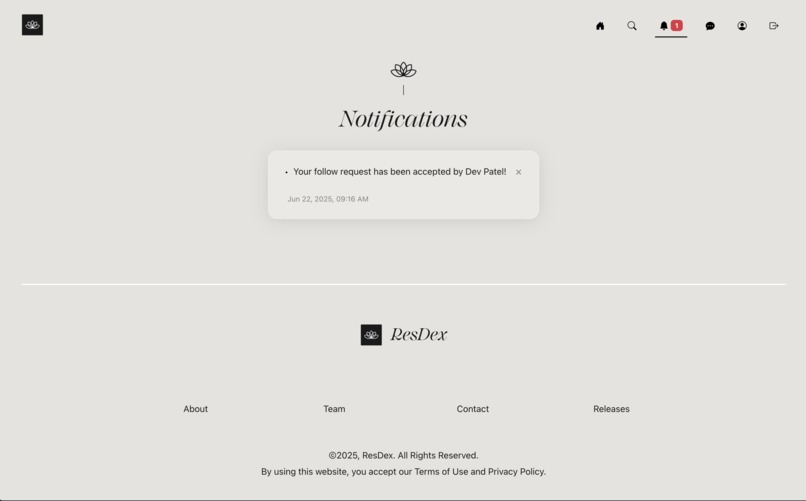
Notifications
-
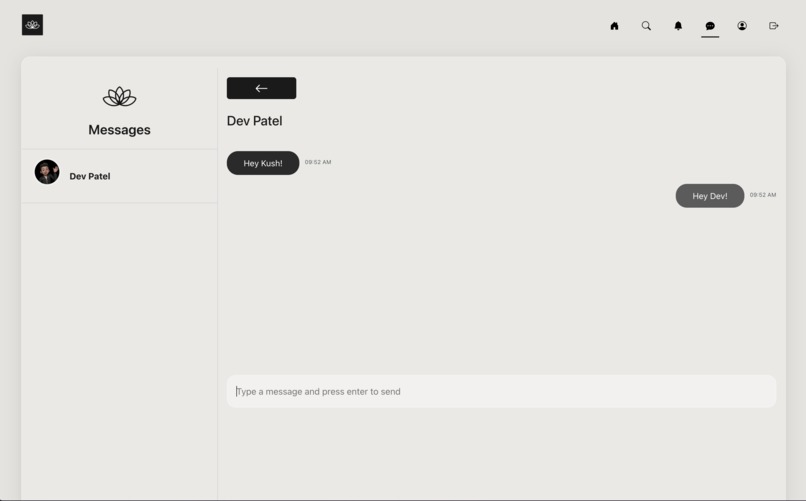
Connect & Chat


Inspiration
As students, we constantly saw our peers struggle to find meaningful research opportunities. The process felt broken: Cold emailing dozens of professors, getting ghosted, or settling for projects unrelated to their passions, this was the norm.
While Industries like tech have platforms such as GitHub to display portfolios and track contributions, no such tool exists for aspiring researchers, healthcare professionals, and the broader academic space.
We wanted to change that.
ResDex was born out of this gap. A shared frustration and a collective desire to make research accessible and rewarding. We envisioned a platform that didn't just help students find research opportunities, but also build real portfolios and connect with opportunities that truly match their interests.
What It Does
ResDex is a full-stack web platform that helps students showcase and expand their research experience. It allows users to build personalized portfolios with published or in-progress research, filter content by academic tags, and connect directly with professionals seeking research assistants.
Our system includes profile customization, institutional tagging, live collaboration through feedback tools modeled after Google Docs, and a secure framework to manage sensitive documents, all while empowering students to stand out in the research landscape. All together, ResDex serves as both a public-facing portfolio builder and a private collaboration hub, something that has long been missing in the academic space.
How We Built It
We developed ResDex as a responsive full-stack web application. The front end was built with React and Bootstrap CSS to ensure a clean, intuitive user interface. For the backend, we utilized Node.js and Firebase for authentication and real-time data management. Secure document storage and encryption methods were implemented to safeguard sensitive research files. We also designed a modular portfolio system where each user can tag research with interest areas and manage access rights to their content. From the ground up, we designed for privacy, trust, and future extensibility. Whether it's individuals, Students, Labs, or Organizations using it.
Challenges We Ran Into
One of the biggest challenges was designing a system that protects sensitive research data while remaining user-friendly. Implementing access controls, NDAs, and secure file storage required us to be very intentional with both our UI and backend logic.
Equally important was figuring out how to attract professionals, like professors, to adopt a platform built primarily for students. Making the experience seamless and valuable for both sides was key.
In a world of AI-generated content, ensuring authenticity and maintaining academic integrity is a challenge we're solving through tooling and design. That's why features like plagiarism detection and visibility tracking help maintain academic integrity.
Accomplishments That We're Proud Of
We're proud of building a platform that addresses a real and common problem for students worldwide. ResDex doesn’t just make it easier to find research; it empowers students to present their work confidently and professionally. We're especially proud of how we've integrated strong security measures to maintain confidentiality and how we've positioned ResDex as a bridge between student ambition and academic opportunity. ResDex has also been implemented at Universities like McMaster, where we've beta tested with 300+ students within the platform.
What We Learned
We learned how to design for both functionality and trust, balancing accessibility with security. We deepened our understanding of full-stack development, encryption practices, and user experience design. On the non-technical side, we also learned the importance of creating platforms that support and uplift early-stage researchers, allowing them to control how they present themselves and their work.
What's Next For ResDex
Next, we plan to implement AI-powered plagiarism detection to help users ensure the originality of their work before publication. We’re also exploring integrations with university research departments and institutional portals to build trust and expand our reach. Long term, we aim to launch a mobile version, gamify the portfolio-building process, and continue expanding our network through strategic partnerships and student-focused initiatives.
Ultimately, ResDex aims to become what GitHub is for developers and LinkedIn is for professionals: a living, evolving portfolio and connecting space, but for students.




Log in or sign up for Devpost to join the conversation.