-
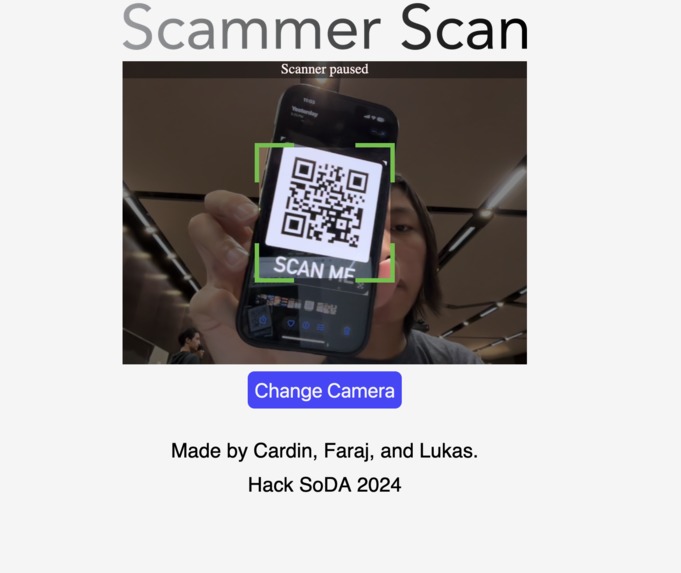
The scan is complete and analysis will begin
-
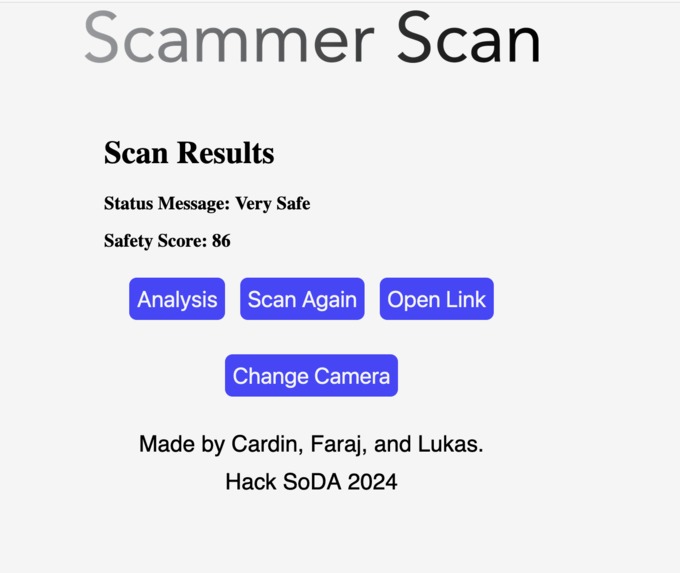
The webapp analyzes the QR-Code and deems it safe to continue


Inspiration
QR codes are a becoming very common nowadays, from restaurant menus to making payments. But no one thinks about the vulnerabilities of this tool, especially because it hides a link. Oftentimes, we do not think twice about opening QR codes, exposing us to potential bad actors. The inspiration for ScammerScan was to protect people from being victims of the exploitation of the vulnerabilities of the QR code.
What it does
ScammerScan allows users to scan their QR code and get a safety rating of the link they are trying to access. That way they can be dissuaded from going to an unsafe site. This protects again data theft, phishing, device tracking, ransomware, and spyware. ScammerScan takes a QR code as input using your camera and then analyses the link and gives you a rating and safety score.
How we built it
We built this using HTML, CSS, and Javascript on the front-end, with Python and Flask on the back-end. The front-end presents the interface and opens the link to scan the code. The back-end analyzes the url and gives the ratings.
Challenges we ran into
The main challenge we faced was validating the idea. The second main challenge was the integration. We also ran into a challenge where we kept getting a "NetworkError" when the scan attempted to run, so we had to work on the CORS.
Accomplishments that we're proud of
We are proud to have made a useful app, that is actually helpful to people.
What we learned
We learned how to make requests to APIs. We also learned a lot about JavaScript as none of us had ever worked with it before. Most importantly, we learned how to integrate backend and frontend.
What's next for Scammer Scan
We plan to make the interface more user friendly, and after more validation, we may consider commercialization, or at the very least, making it public for everyone to use!


Log in or sign up for Devpost to join the conversation.