-
-
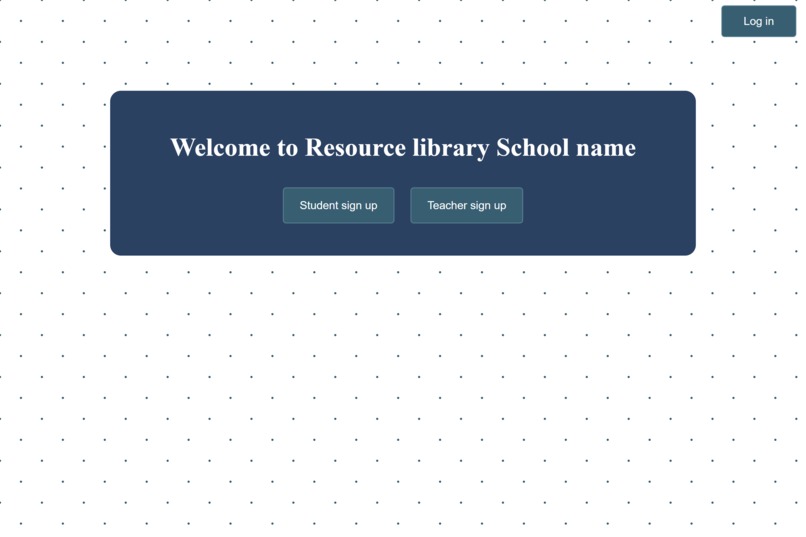
Student or Teacher
-
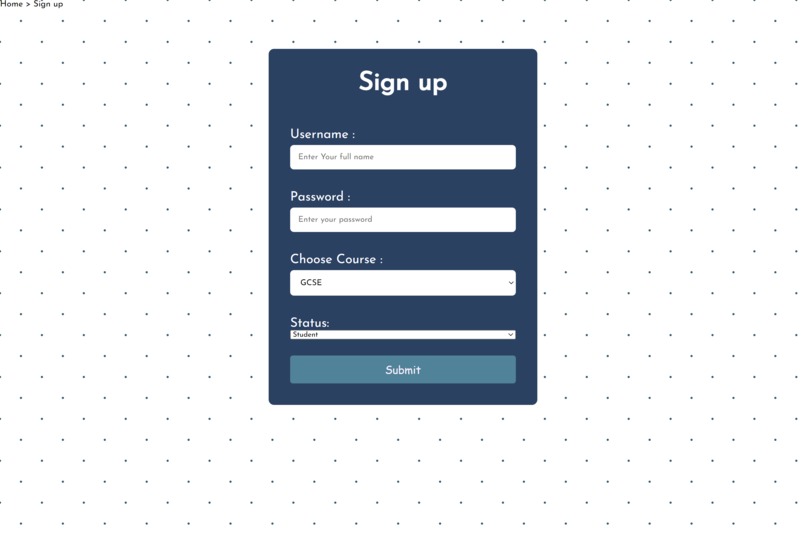
Sign up
-
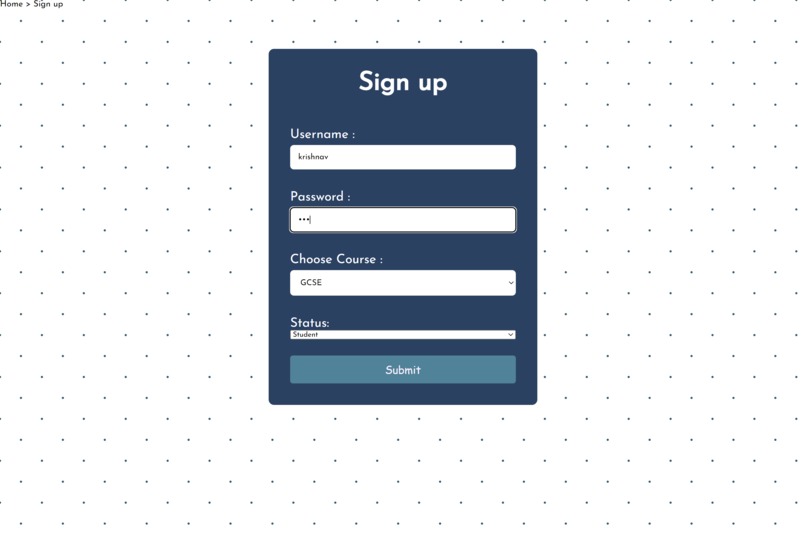
Sign up Filled
-

-
-
-
-
Login
-
All REsources 1
-
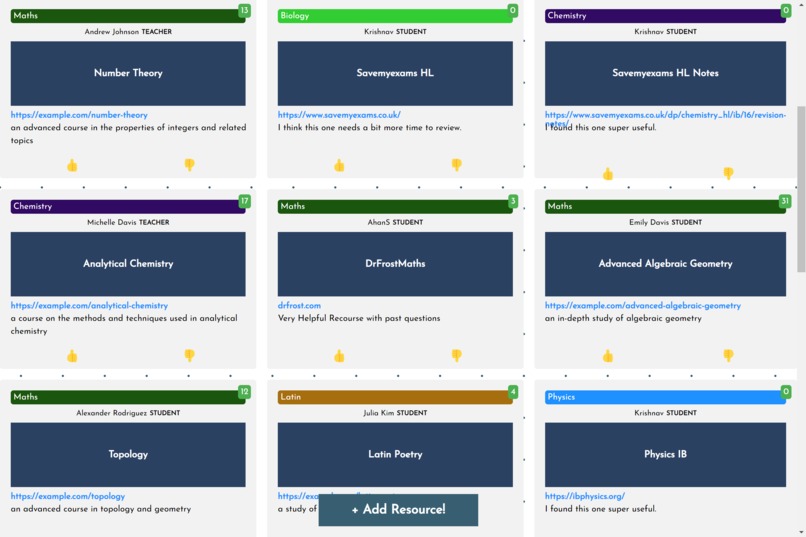
All Resources 2
-
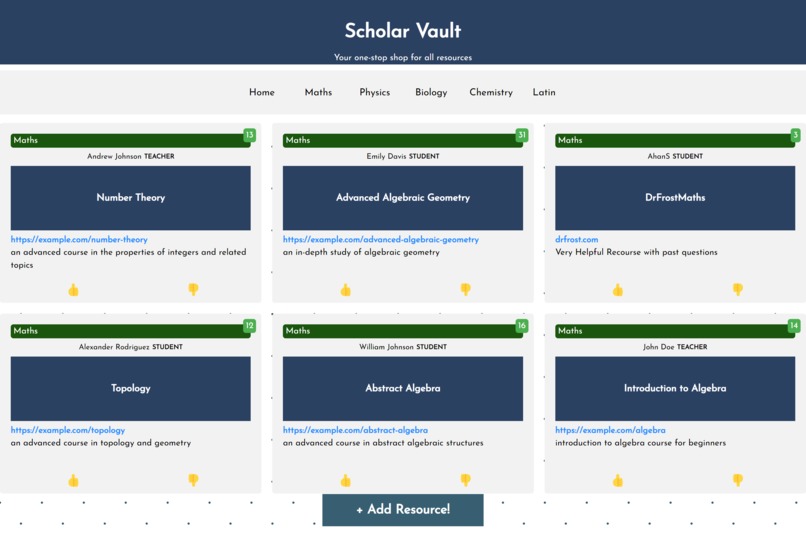
Maths
-
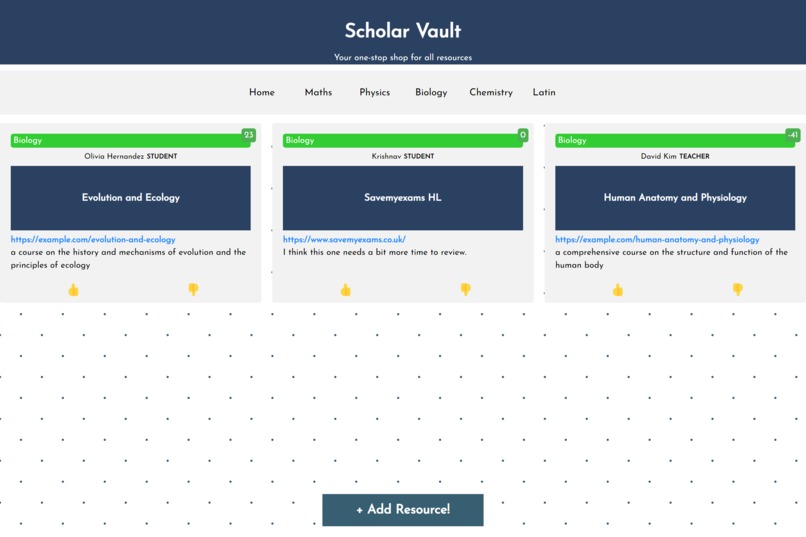
Biology
-
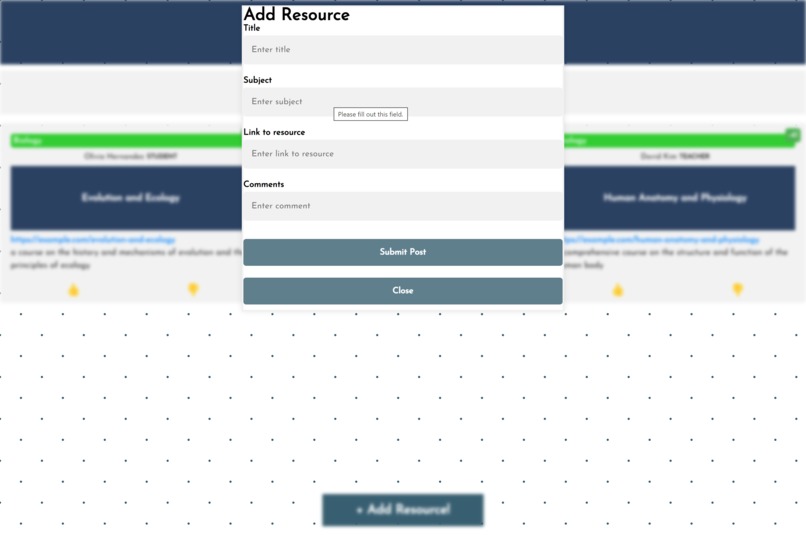
Empty Add Resource
-
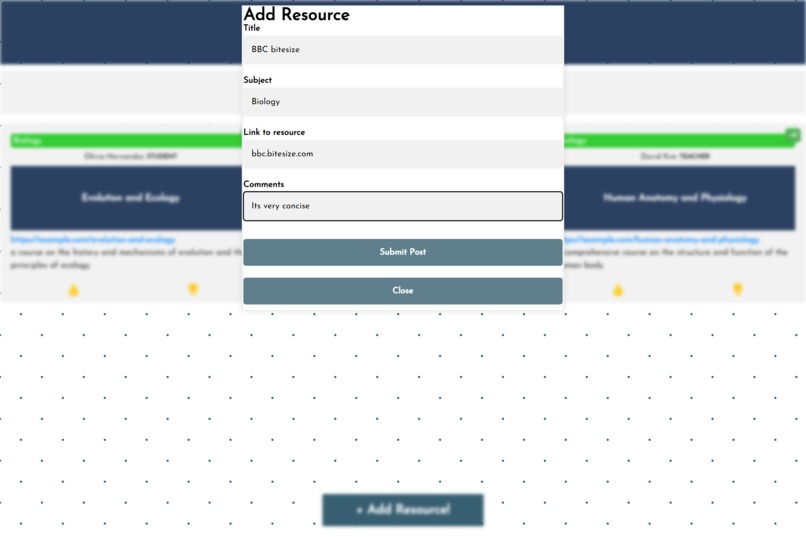
Add Resource
-
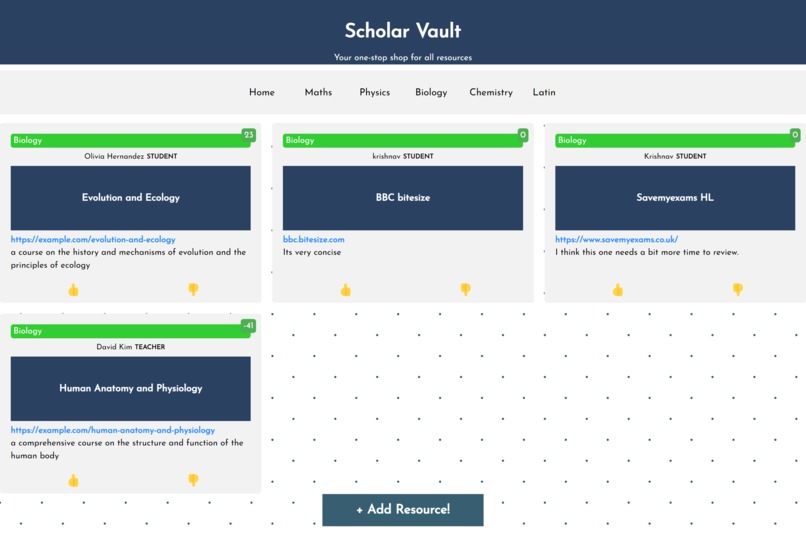
Biology new
-

Logo


Inspiration 💡
Scholar Vault was born out of our passion for education and my desire to create a platform that would address some of the systemic challenges in the way that educational resources are often shared. As students ourselves, we found that as everybody learns in a different way the resources recommend by teachers would not always be optimal for everyone. This has lead to many students all independently testing out various resources available across the web, causing much wasted time.
Through Scholar Vault, we seek to create a solution to these problems by creating an online forum where both teachers and students can share resources and collaborate to share with one another. By implementing a dynamic relevancy scoring system and a voting mechanism, I aimed to filter and highlight the most effective resources, ensuring that users have access to the best possible learning materials. Ultimately, our inspiration for Scholar Vault stems from a desire to promote collaboration and to make education more accessible and effective for everyone, regardless of their background or learning style.
What it does ⚒️
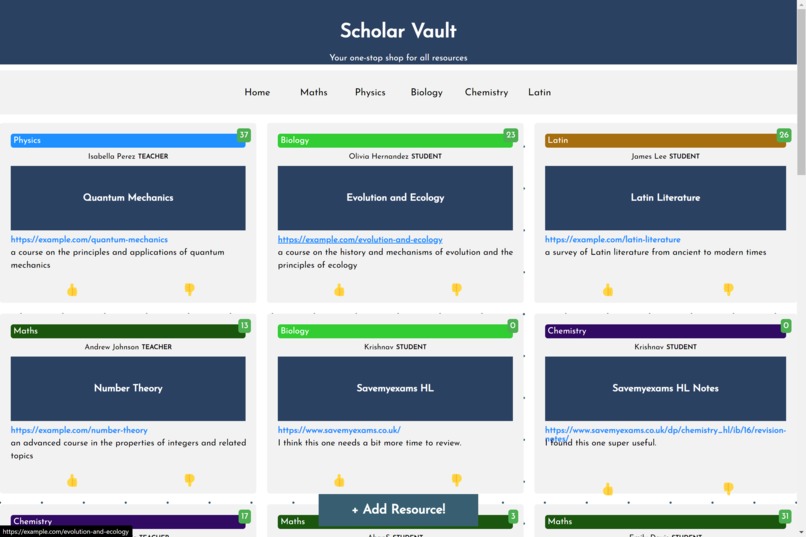
Our website allows users to find the most effective and relevant resources related to a certain subject or course that they take that through minimum time and effort. We accomplish this by creating an online community where both learners and teachers can post recourses that they have found to be effective. We then further sort the posts based on our relevancy metric comprised of various information including the number of upvotes, age of post, and the authority of the poster. This allows for newer posts to not be buried and spam to be discouraged. In the future we aim to add a comment section so people can share tips regarding the use of certain recourses, as well as tags, so that students can be recommended posts more strongly related to posts they have liked in the past. This can also help make our site more inclusive as, for example, a student with a learning disability such as dyslexia, could be supplied accommodating posts.
How we built it
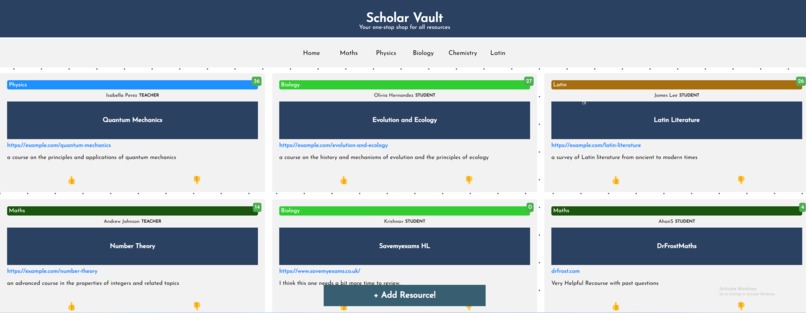
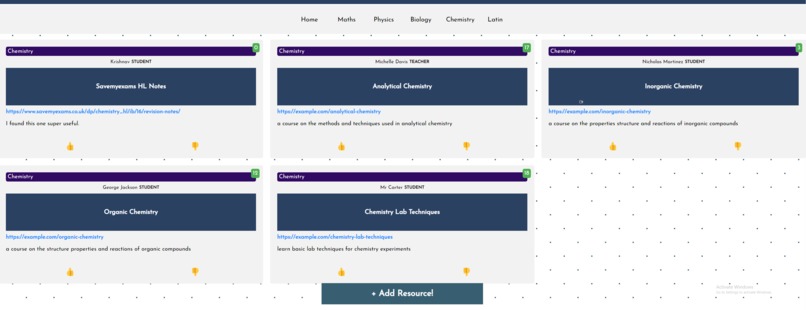
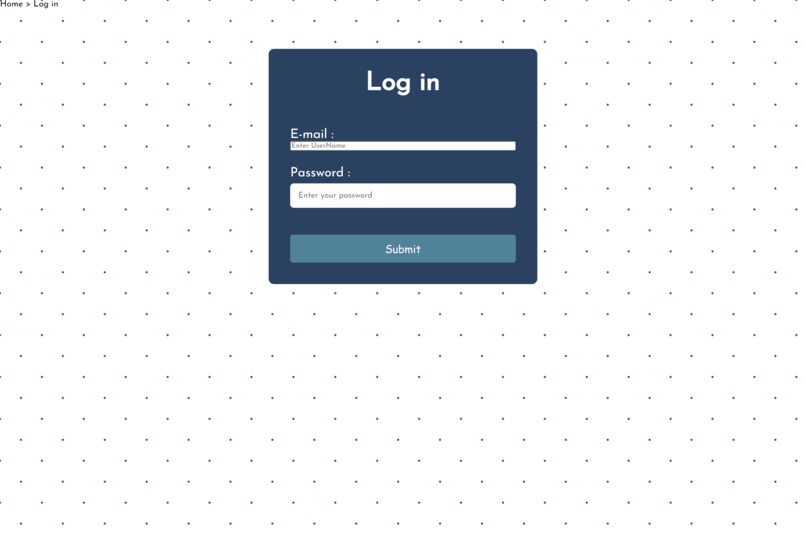
We built this app using flask. First we have a login/signup page where we store the active username in a client side session allowing us to link any actions they take to their account. Then they are directed to the home page of the website. Here we call a python function "get_relevant_posts" to get the most relevant posts related to their current subject choice if any (there are buttons on the website that uses the POST method to supply this info) . We then render the website given this list of posts (each post is a dictionary containing all the information to be displayed on a post). We are able to do this dynamically by using jninjas. On this home page we also have a add recourse button that POSTs the information for a new post. This is saved on the backend and the post will be considered next time "get_relevant_posts" is called. Finally, we also have upvote and downvote buttons that also post values to a python function causing the stored 'votes' value to change appropriately/
Challenges we ran into
The greatest challenge that we ran into was when integrating the front and back ends. We were able to create the front and back ends individually without major struggle but we were unable to pass data between the two ends. We attempted many potential solutions including using ajax and pyscript but in the end we ended up taking a short course in flask and using that to handle the integration of front and back ends.
Accomplishments that we're proud of
We are proud to have created this website as we feel that it is a step that will be part of a movement in coming years for education to adapt to new technologies become more personalized and community based.
What we learned
We learnt a great deal about putting a project together from start to finish. Beyond this we also learnt several new technologies, namely flask and jninjas.
What's next for Scholar Vault
The next steps for Scholar Vault, as I have eluded to deal largely with greater user personalization. We plan to create tags for each post which will allow us to track which types of posts are most likely to be enjoyed by any target user. This will allow our site to become more personalized, inclusive and effective in presenting relevant items to users. We also plan to create a comment section where people can discuss each post as well as a search bar, in case someone is searching for something more specific than can be found through searching by subject or tag.


Log in or sign up for Devpost to join the conversation.