-
-
-
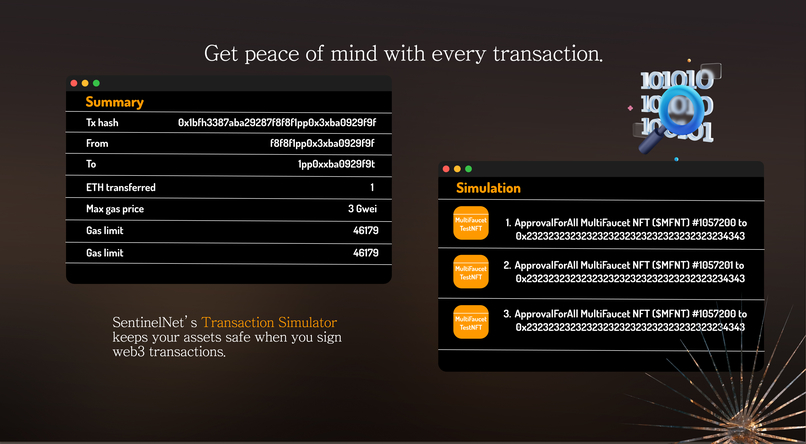
Simulator and Transaction summary page
-
-
-
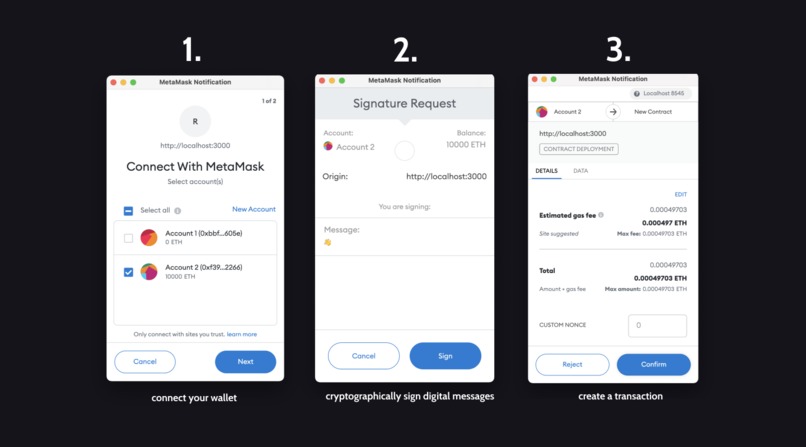
Manual
-
-


Inspiration💭
The permanence and immutability of blockchain transactions can be a double-edged sword. Once a transaction goes through, there’s no taking it back. Today, millions of wallets are stolen through phishing: fake mint sites, free airdrops, scam deals that claim for users to “send 1 eth get 2 back.”
In light of the complexity of understanding NFT transactions and the sheer scope of scamming in this space, newcomers of blockchain are left vulnerable. Even seasoned traders are not above getting scooped into a sophisticated scam. Scam protection is a top priority for both newcomers and veterans in the web3 space.
What it does💡
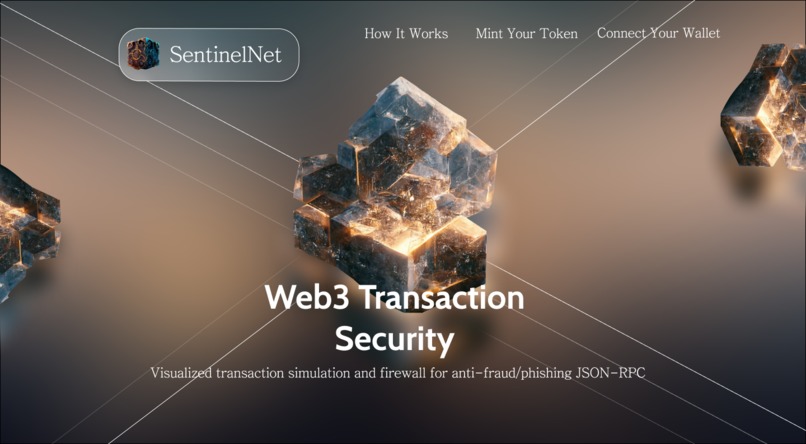
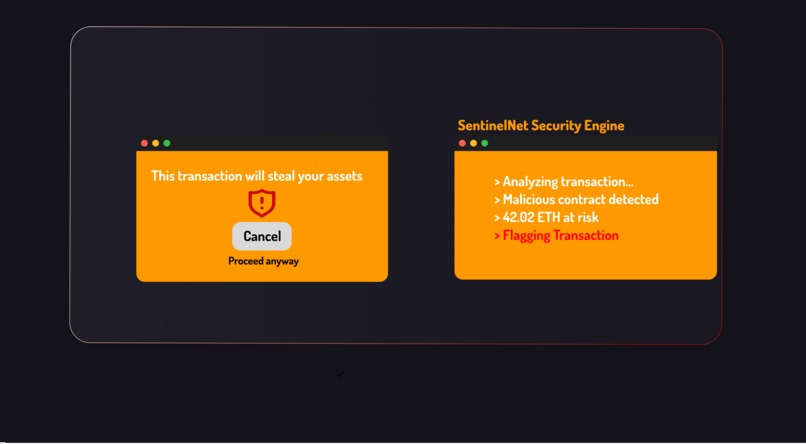
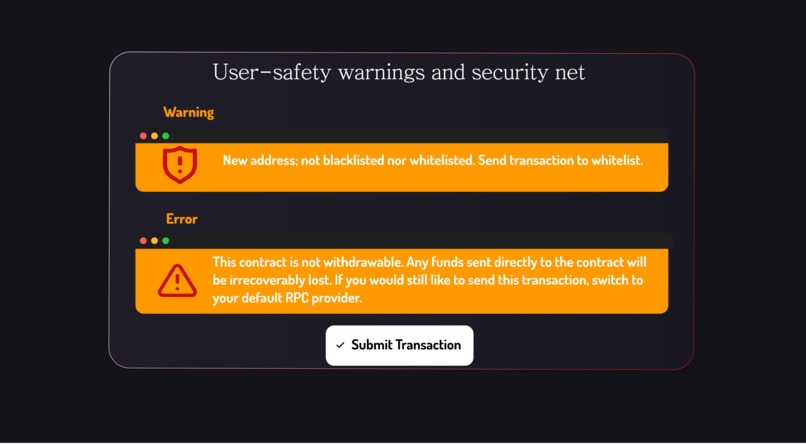
Introducing SentinelNet, a Web3 security protocol. Get peace of mind on every transaction. SentinelNet is a transaction simulator that keeps your assets safe when you sign web3 transactions. It warns you if you’re interacting with a malicious transaction that’s trying to steal your assets. It checks that you can sell the asset when you’re buying it by simulating a sale transaction. This is the main benefit of SentinelNet. We run your transaction on a forked copy of the blockchain, check the outcome of that transaction and report it back to you. This way you can check if you're signing a safe transaction.
How we built it 🔨
Built on the Solana blockchain, we initialized a Solfare wallet to detect the provider and employed a proxy server to send, receive, and process transactional data. We also made use of other Solana-native functionalities, like executing transactions in parallel. Implementing node.js on the wallet RPC handles the incoming transactions after configuring the Solana client. We connected to the Solana Cluster RPC endpoints where the target Solana cluster is accessed via the locally-hosted proxy through the Neon EVM. We used tenderly to simulate the transactions on a virtual blockchain and we processed the transactions for the sake of the hackathon on hardhat, which is a locally hosted blockchain on our computers. A combination of tenderly and hardhat allows us to validate transactions. Finally, using the worldcoin and blowfish APIs, we simulate the transaction before it’s submitted and log all events in a simulation of their transaction; including ERC20/721 approvals, transfers etc.
Challenges we ran into 📌
We faced an unexpectedly large number of challenges. From wallets removing support for development (rip phantom), to simulations not accepting the transaction requests. We overcame the challenge by resorting to solflare instead of phantom for the solana wallet since it supports integration for localhost proxy servers.
Accomplishments that we're proud of 🏷️
Our intuitive UI easily displays to users what is exactly going to possibly happen when users approve a transaction. Users don’t have to resort to the overly-complex etherscan data or try to decipher metamask as it is. Users simply add it as their RPC and block explorer in their wallet. Moreover, the “Mint your own token” allows users to mint, stake and swap fearlessly - straight from SentinelNet.
What we learned 🔍
For most of us in the group, this project marked our first foray into the world of blockchain development. Initially, we faced a learning curve, navigating unfamiliar concepts and technologies. However, through collaborative efforts and thorough exploration of documentation and resources, we were able to expand our knowledge, gaining a deeper understanding of the underlying principles and mechanisms driving blockchain.
What's next for SentinelNet ☑️
Perhaps blacklists combined with user reporting would add another layer of protection. Reporting is done through Worldcoin ’s World ID. Auditing a list of globally whitelisted contracts and addresses (OpenSea, Uniswap, Curve, wrapping/unwrapping wETH, etc.) for security and fair claims to block transactions of addresses on the blacklist.
Built With
- css
- hardhat
- html5
- javascript
- node.js
- solana
- solidity
- tenderly
- uniswap
- worldcoin


Log in or sign up for Devpost to join the conversation.